WASHINGTON, September 24, 2026 — A combination of outdated intelligence, a rushed targeting process and excessive reliance on an artificial-intelligence system contributed to the US missile strike on an elementary school in southern Iran that killed more than 150 people, including at least 123 children, according to a report on a Pentagon investigation.
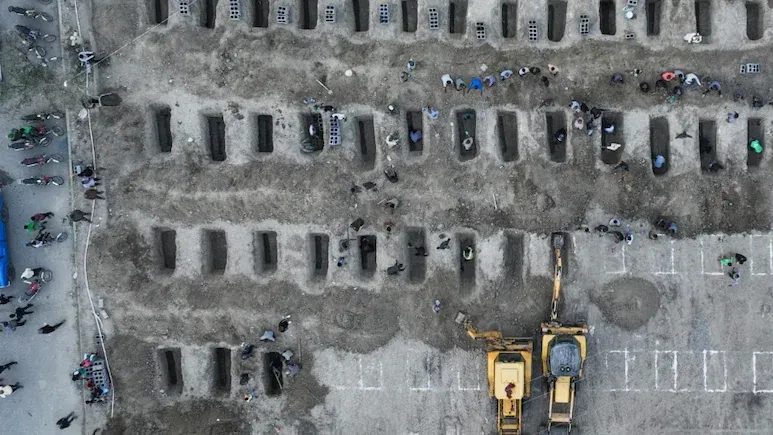
The February 28 attack on the Shajareh Tayyebeh school in Minab took place on the opening day of the US and Israeli military campaign against Iran. Two Tomahawk missiles struck the school compound, killing civilians who had gathered there.
The investigation has identified a series of failures inside the US military’s targeting process, according to officials familiar with the findings. Analysts relied on satellite imagery that had not been updated, intelligence was not properly revised as circumstances changed, and civilian-harm checks were reduced or bypassed during the rapid preparation of the strike.
The process also relied heavily on the Maven Smart System, an artificial-intelligence platform developed by Palantir Technologies. The system is designed to combine large volumes of intelligence and operational data, helping military personnel identify, assess and prioritise potential targets.
The use of the system did not mean that an algorithm independently ordered the attack. Human officers remained formally responsible for approving the strike. But investigators found that personnel at US Central Command placed excessive confidence in the information produced by the AI-assisted platform and failed to challenge errors that should have been detected during the review.
The sequence of decisions has been described as an AI-assisted “kill chain”, a term used by military planners for the stages through which information moves from initial detection to target selection, weapons release and assessment of the damage caused. In the Minab case, failures at several points combined to produce a strike against a clearly identifiable civilian site.
The school was not a concealed or newly constructed facility. Satellite images showed the character and layout of the compound, yet the information used in the targeting process did not adequately reflect its civilian status. Investigators have also examined whether an inaccurate or outdated assessment led military personnel to believe that the site was connected to Iranian military activity.
Some US personnel reportedly recognised within hours of the strike that American forces were likely responsible. The military later began a formal investigation into the attack, while Iranian authorities said the school had been deliberately or recklessly targeted.
The findings have gained further importance after a United Nations fact-finding mission concluded that there were reasonable grounds to believe the United States was responsible for the Minab strike and another attack on a sports facility in Iran. The mission said the school attack was indiscriminate and amounted to a war crime, arguing that the United States had failed to take all feasible measures to verify that the target was military.
Washington has not publicly accepted responsibility for the attack. President Donald Trump has previously said he had not seen evidence establishing that the United States carried out the strike, while the Pentagon has faced continuing questions about the circumstances of the bombing and the status of its internal review.
The Minab attack has also become a wider test of the military’s growing dependence on AI-enabled systems. The technology is increasingly used to process surveillance data, identify patterns, generate target assessments and support battle-damage analysis. Its advocates argue that such systems can help personnel manage information at a speed that would be impossible for human analysts working alone.
The risks are equally clear. An AI system may identify patterns without understanding the civilian meaning of a location, while an incorrect intelligence input can be processed quickly and presented with an appearance of confidence. If human reviewers accept the system’s assessment without independently testing it, technology can accelerate a mistake rather than prevent one.
The investigation comes as the US military has expanded its use of automated and semi-automated tools during the Iran war. The scale of the campaign placed pressure on commanders to process large numbers of targets rapidly, increasing the importance of reliable intelligence and effective safeguards for civilians.
The strike has prompted changes to the military’s lethal-targeting procedures, including closer scrutiny of intelligence used to identify targets and renewed attention to civilian-harm assessments. Officials have also examined how AI-generated recommendations are presented to commanders and how human personnel can be required to question them before weapons are released.
For families in Minab, the debate over technology remains inseparable from the loss of their children. The school strike has turned an argument about the future of military AI into a question of accountability: who is responsible when outdated information, institutional pressure and a machine-assisted recommendation combine to produce a fatal decision?