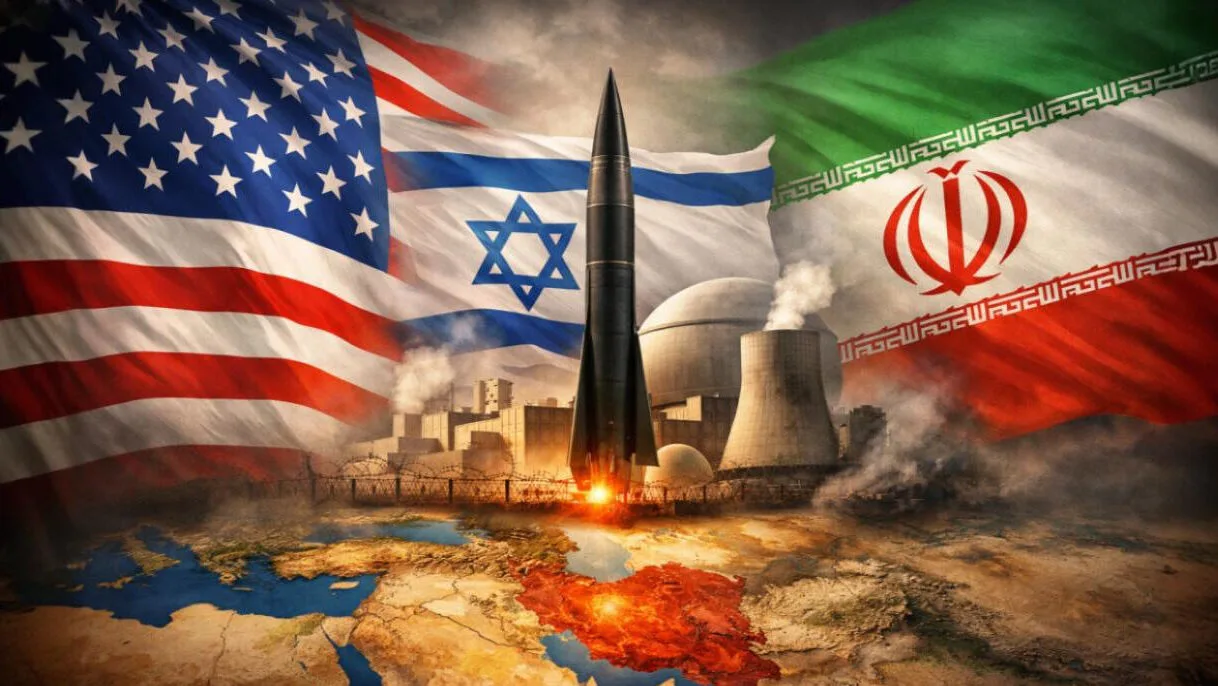
The United States is approaching a critical decision in its confrontation with Iran. President Donald Trump has temporarily held back from launching fresh strikes against Tehran following appeals from Gulf governments, while maintaining the American naval blockade. The pause has created an opportunity for negotiations, but it has also exposed a difficult question for Washington: can it pursue a diplomatic settlement with Iran without allowing its relationship with Israel to determine the limits of American foreign policy?
This is not simply a question of whether Washington should support Israel or engage with Iran. The United States has legitimate security interests in protecting Israel, preventing Iran from acquiring nuclear weapons and maintaining stability across the Persian Gulf. The challenge is to pursue these objectives without becoming trapped in a cycle of military escalation that undermines its wider strategic interests.
For decades, the US-Israel relationship has been one of the most enduring partnerships in American foreign policy. It rests on intelligence cooperation, military assistance, shared security interests and strong political support within the United States. Successive administrations have treated Israel's security as a major American commitment, irrespective of differences with individual Israeli governments.
Yet a strategic partnership does not require identical assessments of every regional crisis. Washington and Jerusalem may share concerns about Iran's nuclear programme, missile capabilities and regional influence, but they do not necessarily face the same consequences from a prolonged conflict.
For Israel, Iran represents an immediate and direct security threat. Its missile arsenal, regional partnerships and nuclear ambitions have shaped Israeli defence planning for years. For Washington, the confrontation carries a much broader set of responsibilities. American forces, diplomatic relationships, energy markets and international shipping routes are all exposed to the consequences of escalation.
The Gulf states have become particularly important in this calculation. Qatar, Saudi Arabia and other regional governments have appealed to Washington to avoid renewed military action. Their concerns are not merely diplomatic. Their economies depend on stable energy exports, secure maritime routes and continued international investment. A renewed confrontation could threaten ports, energy infrastructure and shipping operations, with consequences extending into the global economy.
The Strait of Hormuz remains central to this vulnerability. Any sustained disruption to maritime traffic through the waterway would affect energy supplies and increase uncertainty across international markets. Even without a complete closure, attacks on commercial vessels, higher insurance premiums and shipping delays could impose substantial economic costs.
Washington therefore has reasons to pursue a settlement that extends beyond the immediate military confrontation. A ceasefire or temporary reduction in hostilities may offer relief, but it cannot provide lasting stability unless the underlying security concerns are addressed.
This is where the relationship with Israel becomes particularly sensitive. If negotiations with Tehran advance, Washington will have to establish clear expectations regarding Israeli military operations. It cannot simultaneously encourage Iran to negotiate and leave open the possibility of renewed strikes that could derail the process.
Any American request for restraint would need to be accompanied by credible security assurances. Israel would want clarity on how Washington would respond if Iran resumed attacks or used the diplomatic pause to strengthen its military capabilities. The United States, in turn, would need assurances that Israel would allow negotiations sufficient time to produce verifiable commitments.
Such an arrangement would require continuous consultation rather than public pressure or diplomatic ambiguity. Washington must demonstrate that restraint is not abandonment and that diplomacy is not an attempt to compromise Israel's security.
The political environment in the United States has also changed. The Republican Party's defeat in the midterm elections has given Democrats control of Congress, creating greater opportunities for scrutiny of the administration's military decisions, foreign policy priorities and spending commitments. The conflict with Iran is likely to remain a subject of congressional debate.
Trump retains substantial authority over American foreign policy, but the new congressional balance could affect the political space available for prolonged military engagement. Opposition lawmakers can use hearings, budgetary discussions and legislative oversight to question the administration's strategy. Unease within sections of the Republican Party may also make it harder for the White House to assume unconditional political support for another escalation.
This development has implications for Netanyahu as well. His political bloc lost its governing majority in Israel's October election, leaving the country's political future uncertain. Israeli leaders must consider not only their domestic political calculations but also the durability of American support across successive administrations and changing congressional majorities.
A relationship built primarily around one American President carries inherent limitations. US military assistance, intelligence cooperation and diplomatic backing are supported by broader institutional and political relationships. Preserving that support requires Israel to recognise that American interests may not always coincide with the immediate preferences of its government.
The experience of France offers an illustration of how a close partner can exercise independent diplomatic judgement without abandoning its security commitments. Paris recognised Palestinian statehood in September 2025 while continuing to support security guarantees for Israel. The decision reflected its assessment that a political settlement required recognition of Palestinian aspirations alongside Israeli security concerns.
Washington faces a different but related choice over Iran. It must decide whether continued military pressure can deliver a durable outcome or whether a negotiated framework offers a more sustainable way to address the threat.
The nuclear question remains central. The 2015 Joint Comprehensive Plan of Action demonstrated that Iran's nuclear activities could be subjected to international restrictions and inspections through a negotiated agreement. The arrangement was far from perfect, and its limitations were widely debated. Nevertheless, it established a framework for monitoring Iran's nuclear programme and restricting certain activities.
The American withdrawal from the agreement in 2018 weakened that framework and contributed to a prolonged period of confrontation. The subsequent developments demonstrated the difficulty of replacing diplomatic restrictions with military pressure alone.
A new agreement would have to address the concerns that undermined the earlier arrangement. It would need meaningful verification, enforceable restrictions and a clear mechanism for responding to violations. Iran would also seek guarantees that sanctions relief and economic benefits would not be withdrawn arbitrarily. Neither side is likely to accept an arrangement based entirely on political assurances.
The missile question is equally important. Iran's expanding missile and rocket capabilities remain a major concern for Israel and other countries in the region. These capabilities provide Tehran with an ability to threaten military installations and infrastructure across the Gulf. Any serious diplomatic process would therefore need to examine transparency, limits on escalation and mechanisms to reduce the risk of miscalculation.
Israel's nuclear ambiguity adds another dimension. Although Israel does not publicly acknowledge possessing nuclear weapons, international assessments regard it as a nuclear-armed state. A prolonged erosion of confidence in American security guarantees could strengthen the argument within Israel for greater reliance on its independent deterrent. That would make an already complex regional security environment even more difficult to manage.
A longer-term framework for West Asian security cannot permanently exclude the nuclear question. Any discussion of a nuclear-weapon-free region would require participation from Israel, Iran and other regional countries. Such an arrangement remains a distant prospect, but the continuing confrontation demonstrates why the issue cannot be ignored indefinitely.
For Washington, the immediate priority should be to establish whether Tehran is prepared to accept verifiable limits on its nuclear activities, greater transparency over its military capabilities and practical measures to reduce regional threats. In return, Iran would expect clarity on sanctions, economic access and the future of the American military presence in the region.
The difficulty is that neither side fully trusts the other. Iran may view American demands as an attempt to secure through negotiations what military operations have not achieved. Israel may interpret diplomatic restraint as allowing Tehran additional time to rebuild its capabilities. Washington must therefore construct a process in which commitments are measurable and violations carry clearly defined consequences.
The larger strategic question concerns the credibility of American leadership. The United States cannot expect Gulf governments to rely on its security guarantees while remaining uncertain about whether its regional policy will prioritise diplomacy or military escalation. Nor can it maintain international influence if its partners conclude that American commitments are determined exclusively by the political calculations of individual leaders.
This does not mean Washington should abandon Israel or accept Iran's regional ambitions. It means that American support must operate within a clearly defined strategic framework. A partnership is strongest when both sides understand their obligations and recognise that the interests of an ally do not automatically become the entire foreign policy of the United States.
The present pause offers Washington an opportunity to demonstrate that military superiority can be used to create diplomatic space rather than simply prepare for another round of confrontation. It must communicate clearly with Israel, engage seriously with Tehran and coordinate with Gulf governments whose security and economic interests are directly affected.
The choice facing America is not between Israel and Iran. It is between allowing the conflict to dictate the limits of its diplomacy and using its influence to shape a more sustainable regional arrangement.
Washington's credibility will ultimately depend on whether it can protect its allies while retaining the freedom to make independent strategic decisions. Supporting Israel's security and pursuing an agreement with Iran are not necessarily contradictory objectives. The real test is whether American leadership can reconcile them before another escalation makes diplomacy considerably harder.
The United States has spent decades building influence across West Asia. The current crisis will test whether that influence can still be used to prevent war, rather than merely manage its consequences.