ISLAMABAD. Every great army has a doctrine and ours has discovered a universal solvent. It is a three-step method, tested in three regions, that turns any civilian grievance into a security file. Step one: ban. Step two: black out. Step three: blame abroad. I salute it as a patriot and I set down below what the record shows. I also say plainly, before anyone else does, that militants kill civilians in these same regions and that nothing below excuses them.
Balochistan: Convict the Complainant
Dr Mahrang Baloch, who leads the Baloch Yakjehti Committee, was arrested in March 2025 after a sit-in. On 22 June 2026 an anti-terrorism court in Quetta sentenced her and Sibghat Ullah Shah Jee to life imprisonment over a 2024 Gwadar protest in which a Frontier Corps man was killed. Amnesty International said the trial was expedited and secret, held inside a jail and that no direct evidence tied them to the violence. On 8 July UN experts called the sentence a “travesty of justice” and noted that the accused were not physically present in court and had state-appointed counsel imposed on them, per ANI’s summary of the UN release.
Her committee’s crime was counting. The BYC’s human rights department says 507 people were forcibly disappeared in Balochistan in the first half of 2026, 44 of them minors, plus 150 civilians killed (IANS, 30 September). That is 84.5 a month, or one every eight and a half hours. The Human Rights Council of Balochistan, a Sweden-based group, logged 63 disappearances in June, 105 in July and 87 in August and named the Frontier Corps as the leading identified perpetrator. On 9 November the BNM’s Paank said a 17-year-old student, Sameer Nasir Baloch, was taken in an FC raid on 24 October and that his mutilated body was found on 8 November. These are advocacy groups’ allegations and I have found no official reply to these particular tallies. HRCB itself attributes 13 of July’s 59 killings to the BLA and I record that too.
Khyber Pakhtunkhwa: Evacuate First, Deny Later
In January the army set a 25 January deadline for the roughly 150,000 residents of Tirah to leave, RFE/RL reported on 23 January. About 80,000 had reached Peshawar, on a drive that normally takes under three hours and was taking days through checkpoints and snow. Two children died when their vehicle skidded into a ravine on 22 January; one evacuee said his child died after personnel refused to open the road. Each family was offered Rs 250,000, about $900, for what was expected to be a two-month operation.
Then came the denial. On 24 January the government said the army had not ordered the evacuation; locals, including a tribal council that had talked to military officials, rejected that and the military itself had not commented. Chief Minister Sohail Afridi said the offensive was “imposed by the barrel of a gun.” The New York Times headlined it, on 5 February, as thousands displaced for a military push Pakistan said it did not order. A Peshawar analyst, Riffatullah Orakzai, counted 22 major army operations in the northwest in 20 years, with militants often leaving before each one and returning after.
The threat is real. PICSS counted 3,387 combat-related deaths in 2025, up 73 per cent from 1,950 in 2024. But 150,000 people are not a militant and a doctrine that moves a valley to Peshawar by order, then disowns the order, has confused evacuation with victory.
Azad Kashmir: Ban the Bill-Payers
The Joint Awami Action Committee began as a coalition of traders, lawyers and activists over electricity bills and wheat prices. On 5 June the AJK government banned it under the 2014 Anti-Terrorism Act. Amnesty called the ban unlawful and said it gave no justification for deadly force. When regional voting began on 27 July, JAAC leaders said more than 30 people were killed over two days; Pakistani authorities, in Al Jazeera’s account, said one security man died and five were hurt in Monday’s clashes by armed fighters who had joined the protesters. Democracy Now reported at least 40 dead by early August, with the internet shut down. Media access has been tightly restricted since the crackdown began; Waging Nonviolence wrote in September.
On Thursday 5 November, The Print reported, Rangers, the Frontier Corps and police moved on sit-ins in Rawalakot: seven killed, about 23 injured and protesters alleging armed drones. The Human Rights Commission of Pakistan expressed concern, cited casualties on both sides and urged dialogue. The Print carried no official statement and says it could not verify some local reports. The article cites reports of more than 150 deaths since June, while the JAAC leader’s claim of nearly 100 young people killed is unverified.
The Playbook
Ban: the BYC leader and the JAAC both met the Anti-Terrorism Act. Black out: AJK saw communications suspended, Balochistan saw movement restricted and no independent access, Tirah saw closed roads. Blame abroad: India-backed fighters in Kashmir, Afghan sanctuaries in the northwest, foreign-sponsored militants in Balochistan. Dawn reported on 8 November that Karachi police have shot dead 200 people in ‘encounters’ in ten months, an 80 per cent rise on last year’s figure. That is the police, not the army, but the grammar is shared.
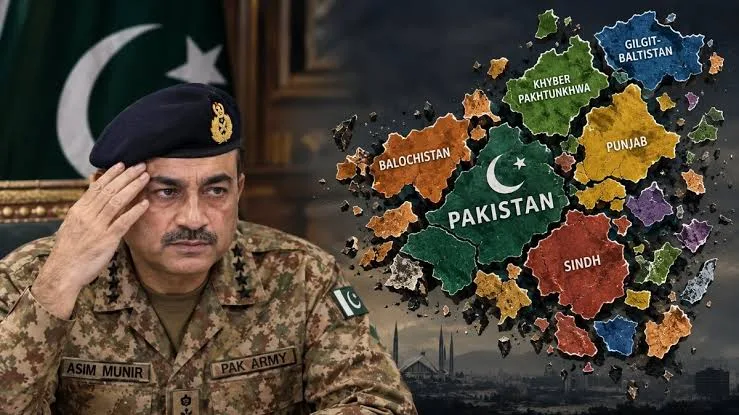
The beauty of the doctrine is economy. A request for cheaper electricity, a missing brother or a road for an evacuee all collapse into one legal category. The fault lines of the republic run through the very people it says it is defending and the army treats the crack as a threat to the wall.
Thank you for calling the Republic. For Balochistan, press 1; the person you are calling has been unavailable since March 2025. For Khyber Pakhtunkhwa, press 2; the area you are calling from has been evacuated. For Azad Kashmir, the network you are trying to reach has been suspended. To speak to an official, please remain on the line.