The alleged surveillance of Taiwanese President Lai Ching-te’s son on American soil raises a question that extends well beyond the security of one political family. It concerns the limits of state power in an increasingly interconnected world, where governments can attempt to monitor, intimidate and gather information on individuals living thousands of kilometres beyond their jurisdiction.
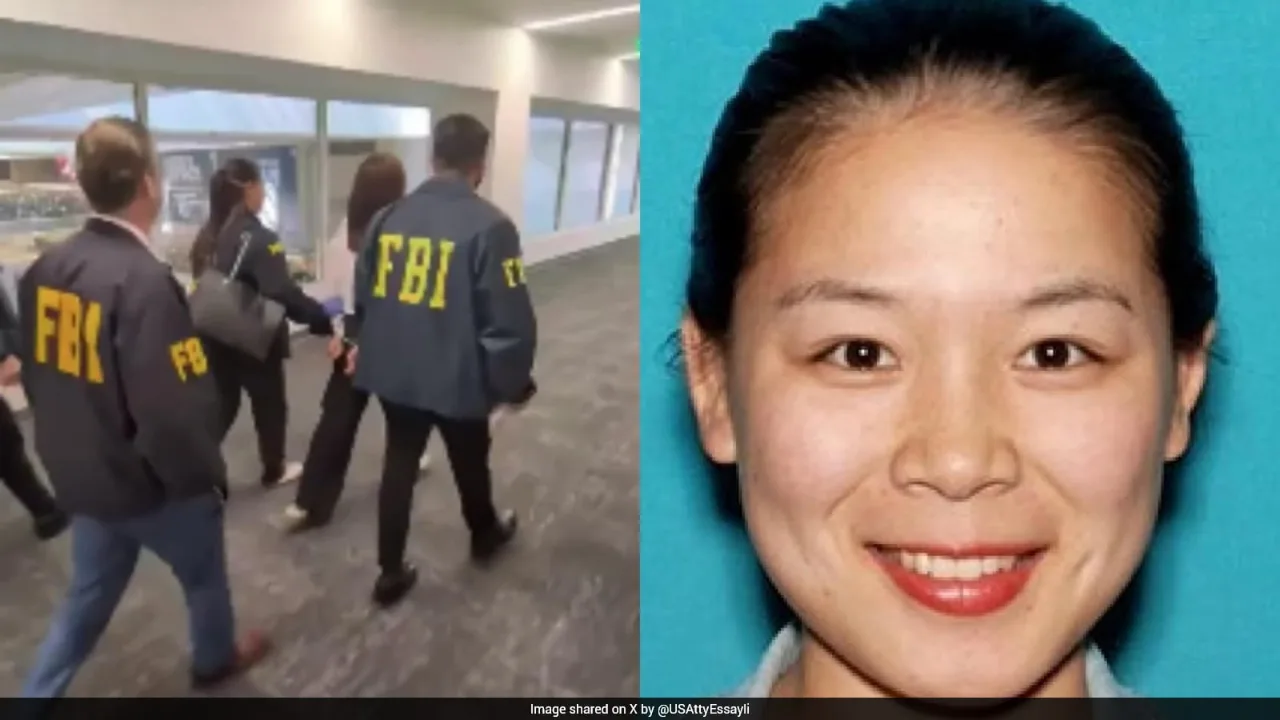
The arrest of Wanying “Heather” Zhang, a California-based real estate agent accused by US authorities of acting as an unregistered agent of the Chinese government, has brought this issue into sharp focus. According to the US criminal complaint, Zhang and an associate travelled to the Seattle area in September 2025, monitored the residence of a relative of a senior Taiwanese official and collected photographs, videos and vehicle registration information. US media identified the individual as Lai Ting-yu, the Taiwanese president’s son.
Prosecutors allege that the information was transmitted to Chinese officials. Zhang has not been convicted, and the allegations must be tested through the judicial process. Beijing has rejected the espionage characterisation and said it was unfamiliar with the case.
Yet the wider significance lies in the nature of the alleged operation. If established in court, the surveillance would demonstrate how intelligence gathering can extend beyond government offices, military installations and diplomatic facilities to the private lives of individuals connected to political leadership.
The choice of target is particularly significant. Lai Ting-yu is not a senior government official or a public political figure. He is a family member living in the United States. Monitoring his movements, home and personal routines would therefore raise questions about whether the objective extended beyond conventional intelligence collection. Such information could potentially be used to intimidate relatives or create pressure on political leaders.
For Taiwan, the incident carries an additional dimension. Beijing considers the island part of China and rejects its separate political identity. Taiwan, however, has its own democratically elected government, institutions and security forces. The dispute has produced sustained military and diplomatic pressure, but alleged surveillance of a Taiwanese leader’s family in a third country takes the confrontation into a different domain.
It also places Washington in a difficult position. The United States does not maintain formal diplomatic relations with Taiwan, but it remains the island’s principal international security partner and arms supplier. Alleged intelligence activity directed at the family of Taiwan’s president on American territory is therefore not simply a Taiwan-China matter. It concerns the ability of a foreign government to operate covertly within the United States.
A pattern extending beyond one investigation
The California case is not the only incident that has raised concerns about Chinese government-linked activities overseas.
In New York, federal investigations exposed an undeclared Chinese police station in Manhattan. Chen Jinping pleaded guilty in December 2024 to conspiring to operate the facility, while his associate Lu Jianwang was convicted in May 2026 of acting as an illegal Chinese government agent and obstructing justice. Investigators said the operation had gathered information about Chinese dissidents living in the United States.
The United Kingdom has also pursued cases involving alleged intelligence gathering and surveillance targeting Hong Kong pro-democracy activists. In June 2026, British courts sentenced Chung Biu Yuen and Chi Leung Wai for offences involving unlawful intelligence activities benefiting Hong Kong and Chinese authorities.
In Germany, authorities arrested two individuals in May 2026 over allegations that they had collected information on researchers and technology with potential military applications. Canada has separately raised concerns about foreign interference and pressure directed at members of Uyghur, Tibetan and Hong Kong communities.
These cases differ in their evidence, legal status and operational methods. They should not be treated as proof of a single centrally coordinated network. Nevertheless, together they illustrate the range of challenges democratic governments face when foreign state-linked activities extend into their domestic jurisdictions.
The distinction between legitimate diplomatic engagement and covert interference is essential. Governments routinely maintain intelligence capabilities abroad. Espionage itself is not new, and major powers have long attempted to gather information about political, military and economic developments. The concern arises when alleged operations involve intimidation, unlawful surveillance, harassment of dissidents or pressure on people who are legally entitled to protection in their country of residence.
The vulnerability of diaspora communities
One of the most difficult aspects of transnational repression is its potential impact on diaspora communities. People who have left authoritarian political environments may continue to face pressure through relatives, business interests, online monitoring or threats directed at family members in their country of origin.
This creates a chilling effect that extends beyond the immediate target. Activists may avoid public criticism, journalists may hesitate to investigate sensitive issues and community organisations may become reluctant to engage in political debate. The pressure does not need to take the form of a public arrest or physical confrontation to influence behaviour.
Democratic governments must therefore look beyond conventional counterintelligence operations. Protecting individuals from foreign interference also requires accessible reporting mechanisms, cooperation with community organisations and safeguards against harassment. At the same time, authorities must avoid treating Chinese nationals or people of Chinese origin as inherently suspicious. The responsibility for alleged state-directed operations belongs to the individuals and institutions involved, not to an entire ethnic or national community.
Sovereignty cannot stop at the border
The wider challenge is one of sovereignty. A country’s responsibility to protect people within its territory cannot be limited to defending government buildings, military installations or critical infrastructure. It must also extend to preventing foreign authorities from using covert networks to monitor and intimidate individuals.
For Washington, this means investigating credible allegations, strengthening counterintelligence cooperation and ensuring that legal protections apply regardless of the political identity of those targeted. For Britain, Canada, Germany and other democratic states, the same principle applies.
The response must also be proportionate. Countering foreign interference should not become an excuse for indiscriminate surveillance, restrictions on legitimate political activity or suspicion directed at entire communities. Democratic governments must defend civil liberties while protecting their institutions from covert foreign operations.
The alleged surveillance of Lai Ching-te’s son is a reminder that geopolitical competition increasingly reaches into the private lives of individuals. Strategic pressure is not always exerted through military exercises, diplomatic threats or economic restrictions. It can also operate through information gathering, personal intimidation and attempts to create leverage over political decision-makers.
Beijing’s rejection of the allegations and the presumption of innocence afforded to Zhang remain important elements of the case. But the broader pattern of prosecutions and investigations in several democracies makes the underlying security challenge difficult to dismiss.
National borders must mean more than territorial boundaries. They must also mark the limits of what foreign governments can lawfully do to people living within another country's jurisdiction. Protecting that principle is not merely a matter of counterintelligence. It is a test of whether democratic states can defend the freedoms and personal security that give sovereignty its meaning.