EDITOR’S NOTE
The following dispatch comes from an Islamabad journalist and patriotic observer of our high-altitude gymnastics. With international wire services claiming our fighter jets are bombing Yemen, ISPR confirming we are in Saudi Arabia while simultaneously denying we did anything offensive and Houthi missiles raining down on Riyadh’s airport, our correspondent looks to the skies above Islamabad nervously wondering when Tehran might decide to return the favour.
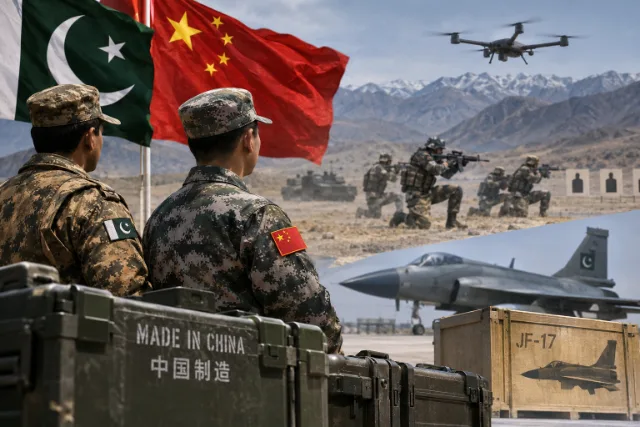
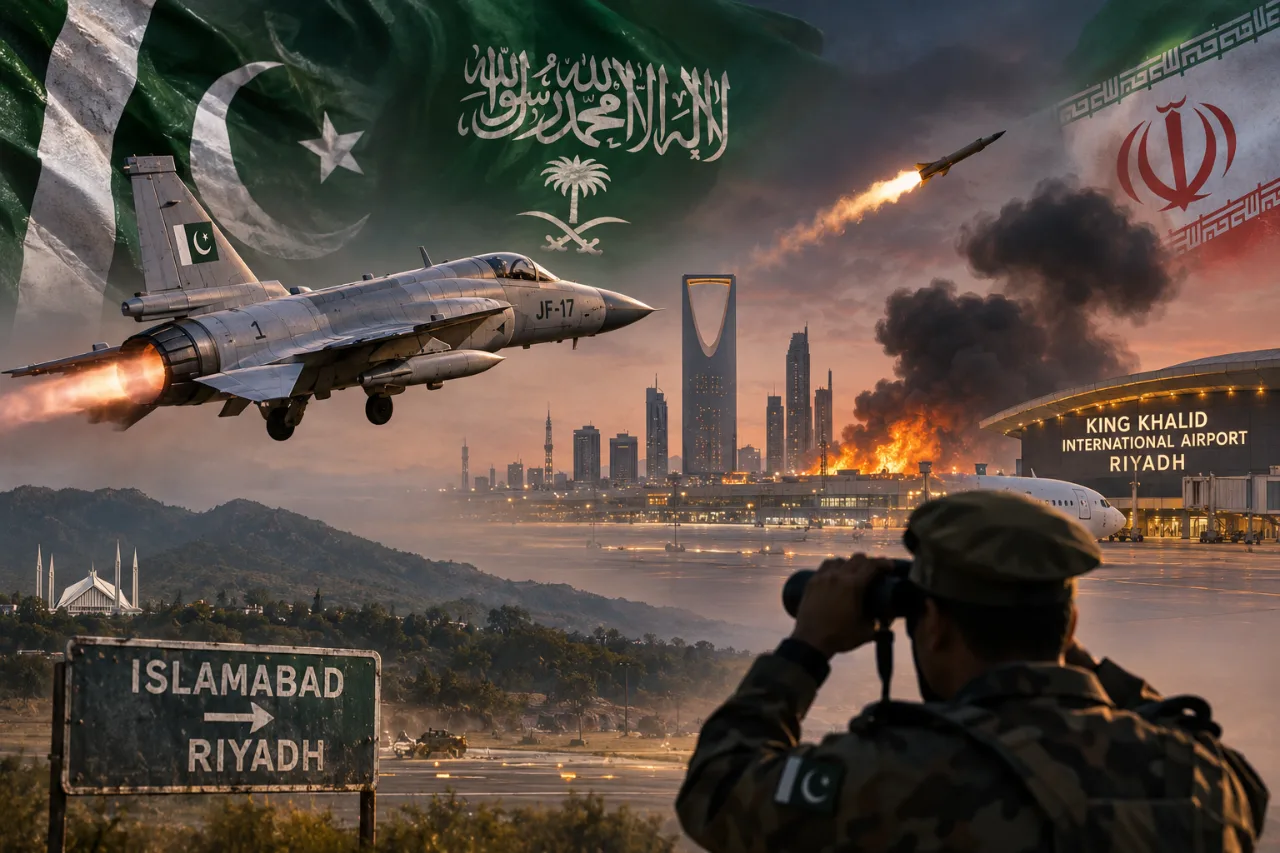
ISLAMABAD. As a proud Pakistani patriot, I always suspected our Chinese-manufactured JF-17 Thunders were destined for greatness. I just didn't realize their primary tactical role would be acting as mechanical decoys, leading Yemeni ballistic missiles straight to Riyadh’s Terminal 2.
The international press was beside itself with excitement. The New York Times ran breathless scoops claiming Pakistani fighter jets had roared over the Red Sea to pulverize Houthi launch sites. Meanwhile, DG ISPR Lt Gen Ahmed Sharif Chaudhry took to CNN with that trademark, reassuring smile, explaining that our forces are indeed in Saudi Arabia across “multiple domains and capabilities”, but only for “purely defensive” reasons.
Naturally, the Foreign Office followed up twenty minutes later by calling the reports of combat strikes completely “fake and fabricated”.
It is the peak of Pakistani strategic ambiguity: We are not there, but if we are there, we didn't bomb anyone, but our commitment is absolute and please ensure the Saudi central bank deposit clears by Friday morning.
The Houthis, however, do not subscribe to ISPR press releases.
When debris and drone fragments rained down on King Khalid International Airport in Riyadh yesterday, the strategic brilliance of our deployment became clear. People ask: how did Pakistan ensure the Houthis would retaliate against King Khalid airport? Simple arithmetic. We sent our jets to Saudi airfields, flew a few thunderous sorties to satisfy the Mecca Pact and evidently invited the inbound missiles to follow our heat signatures right back home to Riyadh’s duty-free lounge.
It is a stroke of geographic good fortune for us here in Islamabad.
The Houthis, bless their mountain-dwelling hearts, are equipped with drones that can barely reach Abu Dhabi and ballistic tubes calibrated for the Gulf. Their GPS coordinates stop well short of the Margalla Hills. As long as the war stays inside the Riyadh perimeter fence, our generals can sit comfortably in the Islamabad Club, sipping Kashmiri chai while discussing our “steadfast deterrence”.
There is only one minor, glaring logistical inconvenience: Iran.
The Houthis might not have missiles that can hit Rawalpindi, but the gentlemen in Tehran who supplied them certainly do. In fact, they share a very long, very dry, 900 kilometre border with us in Balochistan. And unlike the Houthis, the Islamic Revolutionary Guard Corps does not need to consult Google Maps to find out where our airbases are located.
Every time a Pakistani jet warms up its engines on a Saudi runway, every citizen in Islamabad looks nervously at the ceiling. We all know how this story goes: Riyadh gets the air cover; the Houthis get angry but Tehran keeps the ledger.
Right now, ordinary Pakistanis are looking up at the smoggy capital skies, wondering whether the next whistling sound above our heads is an inbound PIA flight or an Iranian Khaibar-Shekan ballistic missile dispatched to remind Islamabad who really runs the neighbourhood.
Still, as a true patriot, I remain calm. If an Iranian drone does wander into Pakistani airspace, our defence establishment already has the ultimate countermeasure prepared: ISPR will release an emergency, multi-track acoustic single on YouTube within forty-eight hours. Let’s see Tehran’s air defence handle that bass drop.