When foreign capitals assess Pakistan, the default instinct has long been to prioritize stability over democracy. For decades, policymakers in Washington, Beijing, Riyadh and Brussels viewed the Pakistan Army’s General Headquarters (GHQ) in Rawalpindi as the country’s sole functional institution a predictable, nuclear armed bulwark capable of managing border volatility, negotiating regional counterterrorism arrangements and keeping a fracturing state intact.
That foundational assumption has become increasingly precarious.
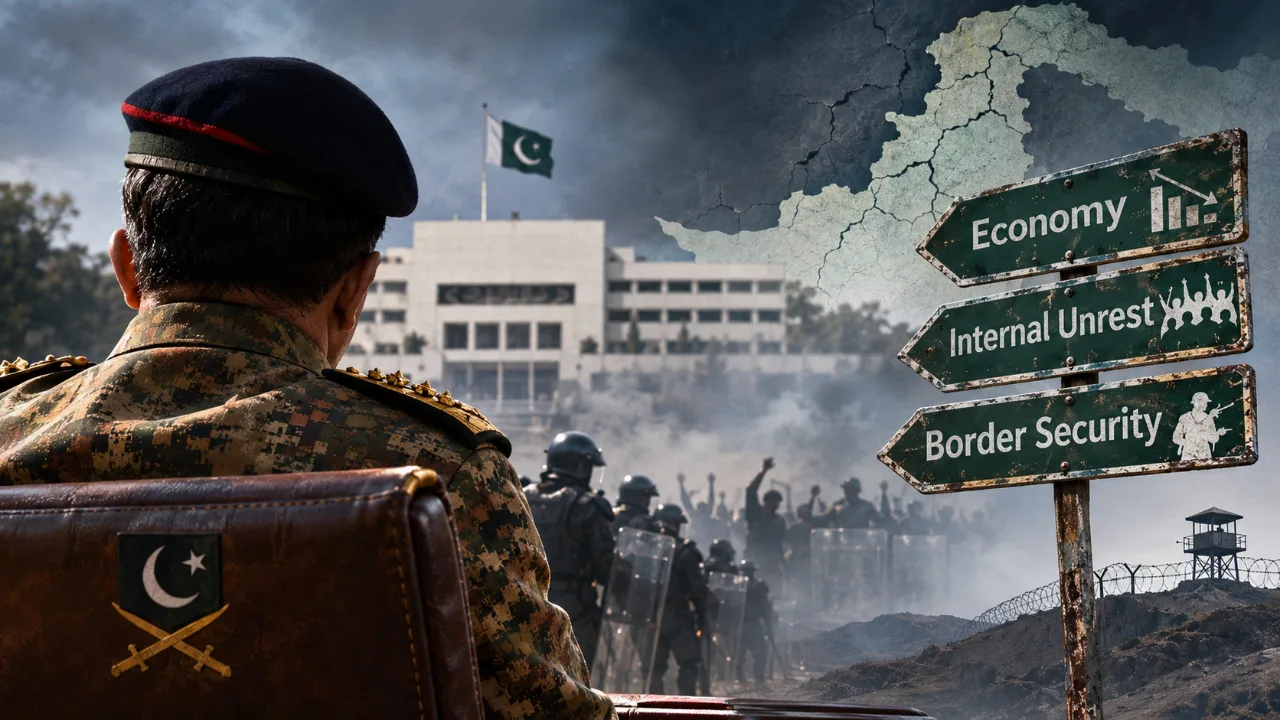
The deepening authoritarian consolidation overseen by Field Marshal level security dominance culminating under the tenure of Chief of Army Staff General Asim Munir marks a structural break from Pakistan’s historical praetorian norms. Rather than acting as a stabilizing anchor, the military’s escalating internal repression is actively hollowing out the state’s domestic cohesion, escalating financial contagion risks and complicating geopolitical alignment from the Persian Gulf to the Indo-Pacific.
The Colonial Logic of Modern Coercion
To international observers puzzled by the military’s refusal to yield political ground amid soaring inflation and economic insolvency, the answer lies in institutional lineage.
Pakistan’s civil military imbalance is not merely the product of opportunistic generals; it is the structural inheritance of the British colonial security architecture. The British Indian Army was built primarily for internal policing, mass pacification and imperial resource extraction, anchored by a legal framework adapted directly from instruments like the Government of India Act of 1935. Post independence Pakistan retained this institutional DNA. Cadets conditioned at the Pakistan Military Academy (PMA) in Kakul are socialized into an insulated ethos that views civilian politics as an existential national security threat, while casting the military corporate enterprise as the sole legitimate arbiter of the state.
For decades, GHQ sustained this hegemony through a blend of nationalistic consensus, anti-India rhetoric and political patronage. Today, that domestic social contract has disintegrated.
Having systematically subdued Pakistan’s traditional ethnic peripheries over decades from the scorched earth operations of 1971 in East Pakistan to ongoing kinetic actions and disappearances in Balochistan and Khyber Pakhtunkhwa, the garrison state has now turned its coercive apparatus against its own political and demographic heartland: Punjab. By resorting to widespread digital censorship, arbitrary detentions and the aggressive suppression of urban dissent, the institution is no longer ruling through consensus. It is ruling through bare-knuckle coercion.
The Geopolitical Repercussions of an Inward Looking Military
For international partners, the cost of backing an entrenched, isolated military leadership is compounding along three critical vectors:
- Sovereign Solvency and the SIFC Experiment: GHQ’s institutional response to economic distress formalized through the military led Special Investment Facilitation Council (SIFC) seeks to bypass civilian bureaucracy and funnel foreign direct investment into state-controlled mining, agriculture and defence assets. However, authoritarian decree cannot substitute for structural reform. With sovereign debt exceeding sustainability thresholds and domestic capital fleeing, bilateral Gulf partners and the International Monetary Fund find themselves underwriting an unsustainable corporate enclave rather than a self-correcting market economy.
- Deteriorating Western and Regional Borders: As GHQ concentrates its intelligence and paramilitary assets on domestic political containment and tracking internal dissent, its operational posture on the periphery has suffered. Cross border skirmishes with the Afghan Taliban regime have surged, while the Tehrik-i-Taliban Pakistan (TTP) and Baloch insurgent groups continue to inflict heavy casualties. A military establishment preoccupied with urban policing in Lahore and Islamabad cannot effectively maintain the perimeter.
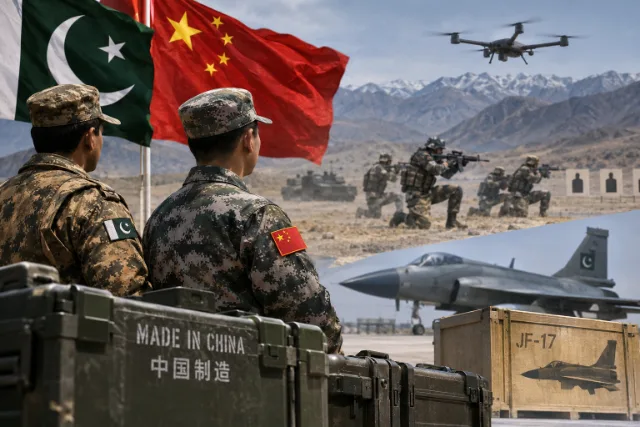
- China’s Security Dilemma: Beijing’s flagship multibillion dollar corridor, CPEC, is directly imperilled. Repeated attacks targeting Chinese engineers and commercial assets in Balochistan and northern corridors reflect local grievances that cannot be quelled by kinetic force alone. Beijing's appetite for injecting fresh capital is increasingly constrained by the host nation's deep social and institutional volatility.
The Limits of External Containment
Historically, international policy toward Islamabad has operated on a transactional playbook: engage the civilian facade for diplomatic decorum, but cut checks and conduct security policy with the Chief of Army Staff.
This model relies on the assumption that the army high command retains monolithic, unquestioned control across its officer corps and ranks. Yet history indicates that pressure within Rawalpindi shifts when the costs of an army chief’s policies threaten the corporate survival of the military itself. The strategic triumvirate the Chief of General Staff, the Director-General of Inter-Services Intelligence (DG ISI), and the Commander of the Rawalpindi-based X Corps operates under an increasingly fragile institutional balance. Junior and mid-ranking officers, whose extended families live directly alongside ordinary citizens bearing the brunt of soaring utility bills, food inflation and social repression, face growing friction as enforcers of unpopular internal crackdowns.
For international stakeholders, continuing to treat military primacy as a low-cost shortcut to stability is a strategic miscalculation. An internal apparatus driven by colonial administrative habits and engaged in the systematic suppression of its own demographic core will ultimately produce a hollowed-out nuclear power incapable of meeting external commitments or securing its own borders.