The United States is offering $10 million for a man who, by Washington's own account, was never hiding. Zhang Yu was a director at a registered company in Shanghai. The firm filed patents. It ran a subsidiary in Chongqing. On paper it looked like any other technology business. US prosecutors say it was something else a contractor for China's intelligence service and Zhang Yu was one of the men doing the work. He has not been convicted. He remains at large and Beijing, asked again and again about cases like his, has offered the world the same reply every time: denial, with no explanation attached.
What the charges say
A federal grand jury in Texas returned a nine-count indictment against Zhang Yu and a second man, Xu Zewei. It covers February 2020 to June 2021. The first part is about the pandemic. Prosecutors say the two broke into the networks of American universities and researchers working on COVID-19 vaccines, treatment and testing. The targets were immunologists and virologists. The world was locked down and the research was walking out of the door.
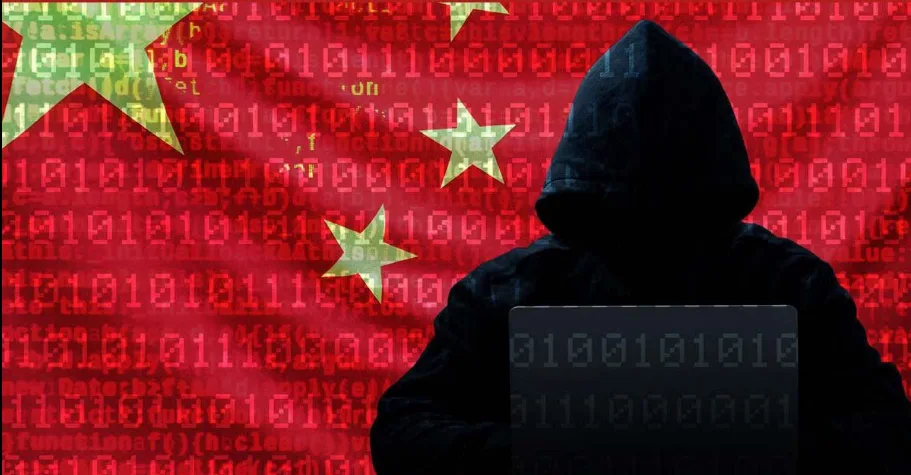
The second part is larger. Both men are accused of joining HAFNIUM, the campaign that exploited flaws in Microsoft Exchange Server. The FBI says it compromised more than 12,700 US organisations law firms, defence contractors, think tanks, universities. Officers of the Shanghai State Security Bureau, prosecutors say, supervised and directed both operations.
A paper trail in China's own files
The most awkward material in this case did not come from an American wiretap. It came from China's own patent records. Researchers at SentinelLabs went through the filings of Shanghai Firetech and found more than ten patents for offensive tools. One covers software that collects evidence from a device remotely. Another targets Apple computers and other targets routers. These are not ordinary products. A company does not build and register extraction tools for routers and Apple machines unless somebody is paying for them. SentinelLabs analyst Dakota Cary said the range of tools the firm controlled went beyond what had been publicly linked to HAFNIUM. The filings sit in a Chinese state registry. If this work was lawful and commercial, the paperwork to prove it is already in Beijing's hands.
A system built to be denied
Zhang Yu is not an isolated figure. He is part of a Chinese model. The FBI's Brett Leatherman described his co-defendant as one of many contractors the Chinese government uses to obscure its hand in cyber operations. The two men worked at different companies Xu at Shanghai Powerock, Zhang at Shanghai Firetech and answered to the same security bureau.
The pattern repeats across the American case files. In March 2025, prosecutors charged twelve people tied to i-Soon, a Chinese firm accused of selling stolen email accounts to state buyers. A separate case named Sichuan Silence over an attack on roughly 81,000 firewalls. Different cities, different companies, one arrangement, the state asks, a private firm delivers and the state can say it was never there.
The questions Beijing has not answered
China's Foreign Ministry opposed Xu Zewei's extradition and accused Washington of acting improperly, the Financial Times reported. That is the familiar move, reject the claim, attack the accuser, move on. A denial is not an explanation. Four questions stay open. Has China investigated Shanghai Firetech? Beijing has strict cybersecurity and criminal laws of its own. If a Shanghai company broke into foreign universities without authority, that is an offence under Chinese law too. No such case has been announced. If the patents cover lawful forensic work, who buys those tools and under what legal authority? Why did the United States and its partners jointly attribute the HAFNIUM campaign to the Ministry of State Security in July 2021? That was not one country's accusation and why has Beijing never put forward its own account of who ran HAFNIUM? China is free to answer all four. It has chosen not to.
What happens next
Xu Zewei was arrested in Milan in July 2025 and extradited to the United States in April 2026. He denies the charges and is entitled to the presumption of innocence, as is Zhang Yu. But the trial will do something no press release can. It will put the evidence on a public record and test it in open court. Prosecutors say they hold emails Xu sent to the Shanghai bureau, reporting what he had taken from COVID-19 researchers' mailboxes. Beijing can dismiss an indictment. It will find a court transcript harder. Zhang Yu is still at large and the $10 million offer stands. That money is not really aimed at him. It is aimed at the people around him the colleagues, the handlers, the ones who kept the files.