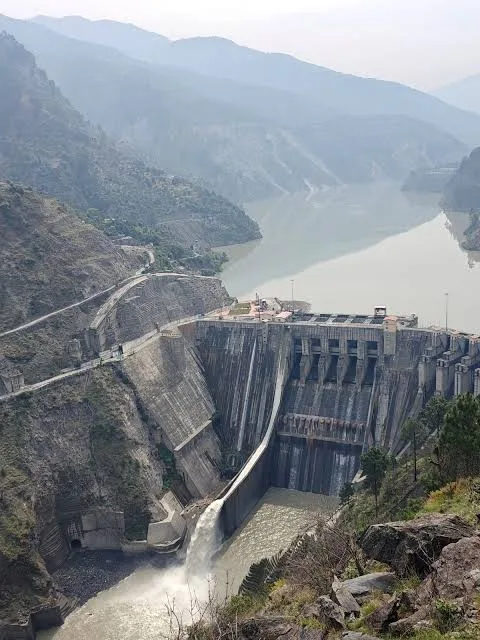
India is close to commissioning two hydropower projects on the Chenab in Kishtwar, Jammu and Kashmir, with the government aiming to start the process by the end of December. The 1,000 MW Pakal Dul and the 624 MW Kiru would be the first hydro projects completed on the western rivers since India put the 1960 Indus Waters Treaty on hold in April, after the Pahalgam attack. An official expects them to be operating in the next couple of months, though testing and filling and emptying the dam take time once commissioning begins.
Under the treaty India has unrestricted use of the eastern rivers, the Ravi, Beas and Sutlej, which carry about 20 percent of the Indus system's water. Pakistan has unrestricted use of the western rivers, the Indus, Jhelum and Chenab, about 80 percent. With the treaty suspended, the official says the design and operating limits it set no longer apply, which should speed up projects. It is unclear whether or when the treaty will be renegotiated.
Kiru costs ₹4,287 crore and has a 135-metre dam and four 156 MW units. Prime Minister Narendra Modi laid its foundation stone in February 2019. Pakal Dul costs ₹8,112 crore, sits on the Marusudar, a Chenab tributary, and has a 167-metre dam and four 250 MW units. Both are run-of-the-river projects built by Chenab Valley Power Projects, a joint venture of NHPC and the J&K State Power Development Corporation.
More are planned. Kwar, at 540 MW, is expected by 2028, and Ratle, at 850 MW, is delayed. Four more are proposed: Sawalkot, Kirthai-II, Dulhasti Stage-II and Uri-I Stage-II. The western rivers could support about 18,569 MW of hydropower, but India has developed only about 3,500 MW. India is also considering a 10 to 12 kilometre tunnel from the Chenab to the Ravi, and the 206 MW Shahpurkandi project on the Ravi is expected to be operating by mid-2027.
The article does not set out Pakistan's objections.