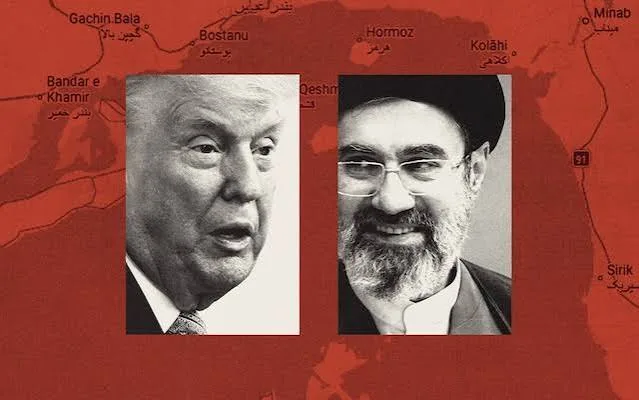
Iran said on Monday that it could reopen the Strait of Hormuz within two days if the United States meets a set of conditions, and that talks mediated by Qatar are under way. Foreign Minister Abbas Araghchi said Tehran is not holding direct talks with Washington and that the outcome depends on American answers to Iran's questions. Foreign ministry spokesman Esmaeil Baghaei called the two-day timeline another sign of Iran's good faith, said everything depends on Washington, and warned that any military attack on Iran will be met with a powerful, immediate and comprehensive response.
Iran's conditions include ending the war on all fronts, unfreezing Iranian assets abroad, lifting oil sanctions and ending the American naval blockade of its ports. Araghchi added a transit route for the strait agreed between Iran and Oman, a smaller American troop presence in the region and the removal of sanctions imposed since August. Deputy foreign minister Kazem Gharibabadi travelled to Doha to help draft a preliminary agreement. China's special envoy, Zhai Jun, is visiting Iran, Oman and Saudi Arabia to push for a halt to the fighting, and Oman and China have jointly urged both sides to return to the Islamabad memorandum of understanding. Analysts saw few signs of a breakthrough.
Trump's position
President Donald Trump said at a weekend event that the talks were going well but that the Iranians are not very reliable, and that the United States is not in much of a hurry because it has largely destroyed Iran's navy and air force. He said one or two sites could still be hit quickly. Asked whether he would resume the war this week, he replied that if he did, he would not say so. Secretary of State Marco Rubio said no decision has been made. Trump has also said the war will end very soon, one way or another. He denied a report that Vice President JD Vance wrote to Iran's Mohsen Rezaei at his direction to revive talks, saying the outreach concerned medical supplies.
A report on Saturday said Prime Minister Benjamin Netanyahu urged Trump by phone to resume strikes immediately after the American midterms. Trump wants to give diplomacy more time but called the call very good.
Shipping and oil
Iran's Revolutionary Guards said two crude tankers hit mines and caught fire in the strait. A British maritime monitoring body said a projectile hit a vessel there on Sunday. Brent crude fell about 2.8 percent to roughly $108.50 a barrel, and US crude dropped below $100. A major bank said a geopolitical risk premium of about $27 a barrel explains most of October's rally, which briefly pushed Brent to $118, and raised its year-end forecast to $105. Gulf states are reported to fear a wider war if the United States and Israel strike again.