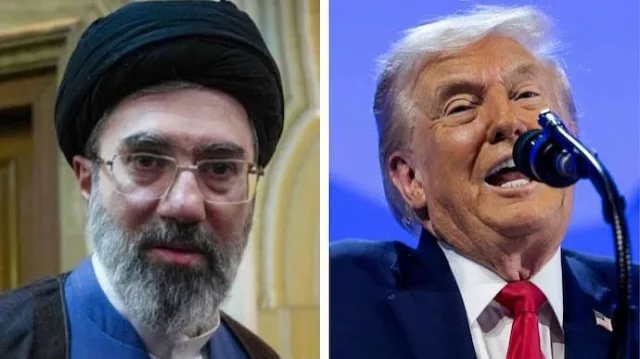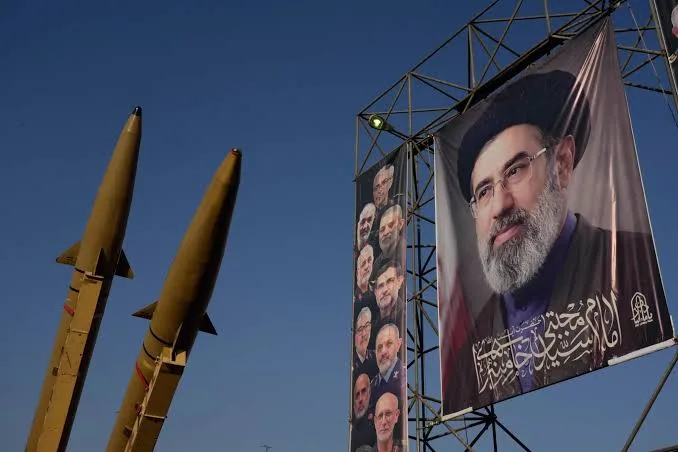
Iran's supreme leader, Mojtaba Khamenei, told military commanders on Saturday that any new American or Israeli attack will be met with an immediate and effective response with no geographic limits. State media said he met the senior leadership of the armed forces and ordered them to draw up an expanded list of targets covering all physical and non-physical assets of the American and Israeli side. He said it would be Iran's armed forces and people who decide when any fighting stops. Commanders at the meeting claimed that weapons production has risen seven-fold. Khamenei has not been seen in public since the war began in late February.
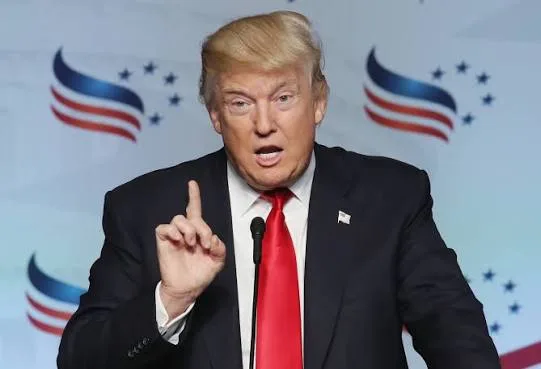
President Donald Trump, speaking at a Halloween event, said the talks are going fine but are not very reliable, that the United States still has Iranian sites to take care of, and that it could reach its aims very quickly. He singled out the suspected underground nuclear complex known as Pickaxe Mountain, and said he was not in a hurry. Secretary of State Marco Rubio said talks have never stopped, that Washington is open to a diplomatic solution and knows of no timeframe, and that Trump has not decided on new strikes.
What Tehran is offering
Foreign Minister Abbas Araghchi said Iran has been discussing with Qatari mediators a plan to reopen the Strait of Hormuz within two days, shortened from an earlier seven-day offer. The plan would also restart peace talks with the United States if Washington meets Iran's demands. These include lifting recently imposed sanctions, restoring the oil waivers in force in June, reducing the American military presence in the region, recognising shipping routes designated by Iran and Oman, and ending the conflict on all fronts, Israel's attacks on Lebanon among them. An Iranian delegation that included an aide to Araghchi was in Doha on Saturday, and Qatari and Pakistani mediators are continuing consultations on the conditions.
Mohsen Rezaei, who heads Iran's national security council, said the tone of Vice President JD Vance's letter had completely changed from earlier American messages, and that the United States had signalled readiness to accept Iran's conditions. Washington has not confirmed that. Rezaei said ships in a reopened strait would follow a route agreed with Oman under Iranian management. Accounts differ on whether Iran is weighing a change to its ban on nuclear weapons, and Rezaei said no decision has been taken.
Israel and the clock
A senior Israeli official has said Israel is preparing for another round soon after the American midterm elections on 3 November. Prime Minister Benjamin Netanyahu, who remains in a caretaker role after his coalition lost its majority, has called it a historic, one-time opportunity to remove the Iranian threat. The United States has reportedly warned Gulf allies to prepare for a short, intense round of conflict after the vote.
Whether Iran answers the Qatari proposal before then, and whether Washington treats its conditions as a basis for talks, will decide if the next few days bring a deal or renewed fighting.