A campaign of collective punishment has been launched by Israel in Hebron, following a deadly gunfight that resulted in the deaths of two Israeli soldiers and injured three others near a checkpoint outside the city.
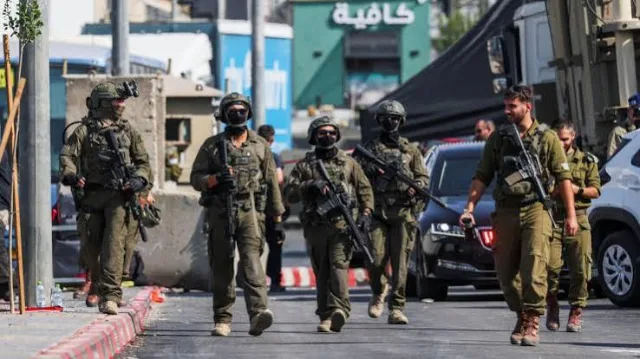
The incident occurred when two men, armed with an assault rifle and a handgun, opened fire on Israeli forces after being stopped at a temporary checkpoint. The men, who were driving a car with Israeli number plates, were killed after a 20-minute gunfight.
In response to the attack, Israeli Prime Minister Benjamin Netanyahu announced a siege on Hebron and neighbouring Halhul, promising mass demolitions of homes and the forced displacement of residents from the gunmen's home neighbourhoods.
The first demolitions began within hours of the attack, with the far-right Finance Minister Bezalel Smotrich posting a video of himself in front of a bulldozer as it tore down a Palestinian home near the site of the firefight. Smotrich claimed the destruction was intended to 'create deterrence and exact a price', despite no connection being claimed between the building's owners and the attackers.
However, Israel's high court soon issued a temporary order to stop the demolitions, following an urgent petition filed by human rights lawyer Mohammed Dahleh on behalf of two factory owners nearby. Dahleh argued that the demolition violated international law on collective punishment and Israeli administrative law.
Leading Israeli lawyer Michael Sfard described Smotrich's video as a 'direct admission' that the demolitions were a form of collective punishment, noting that deterrence had been used as an excuse for such punishment since antiquity.
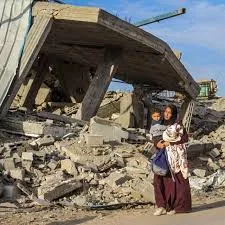
Defence Minister Israel Katz promised further mass demolitions and forced displacement, drawing an explicit comparison with Gaza and stating that Hebron would be targeted in the same way as Jenin refugee camp, where nearly 20,000 people have been forced from their homes.
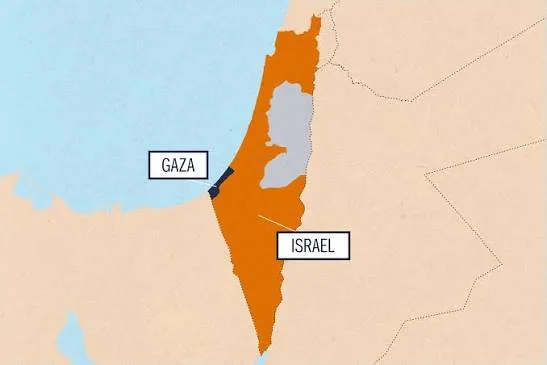
Netanyahu announced plans for the largest military operation in the West Bank since 1967, when Israeli forces occupied the Palestinian territory and forcibly displaced around 300,000 Palestinians. The operation would include mass forced displacement and demolitions in Hebron, as well as the expansion of Israeli settlements in the West Bank.
The attack has sparked a wave of conspiracy theories, with prominent Israelis sharing baseless accusations against an AFP photographer who witnessed and documented the gun battle. The Foreign Press Association (FPA) condemned these claims as 'dangerous and defamatory', stating that the photographer was a longtime professional who had courageously documented the incident in keeping with his duties.
The incident comes amidst a surge in Israeli settlement expansion, ethnic cleansing, and violence against Palestinians in the occupied West Bank, which has resulted in the deaths of over 1,100 Palestinians since the 7 October 2023 Hamas-led attacks. Attacks have intensified further since the start of the annual olive harvest in late September, with Israeli settler militants using violence to stop Palestinians from bringing in a crop that is economically and culturally vital to their communities.
Israel is set to hold elections on Tuesday, with the current far-right coalition seeking to shore up voter support in the face of polls that suggest it may lose its majority. The campaign of collective punishment in Hebron is likely to be seen as an attempt to bolster support among right-wing voters, with National Security Minister Itamar Ben-Gvir demanding the dismantling of the Palestinian Authority and restrictions on Palestinians' freedom of movement.
Background
The Israeli-Palestinian conflict has been ongoing for decades, with the occupied West Bank being a major point of contention. The international community has widely condemned Israel's settlement expansion and collective punishment policies, citing violations of international law and human rights.
International Reaction
The international community has yet to respond to the latest developments in Hebron, but it is likely that the campaign of collective punishment will be widely condemned. The United Nations has previously stated that collective punishment is a violation of international law, and that Israel's settlement expansion policies are illegal under international law.
What's Next
The situation in Hebron is likely to escalate further, with Israel's high court set to review the temporary order to stop the demolitions. The international community will be watching closely, with many calling for an end to Israel's collective punishment policies and a return to peace negotiations.
The Israeli elections on Tuesday will also be closely watched, with the outcome likely to have a significant impact on the future of the Israeli-Palestinian conflict.
As the situation continues to unfold, it is clear that the campaign of collective punishment in Hebron will have far-reaching consequences for the region, and that a peaceful resolution to the conflict is urgently needed.