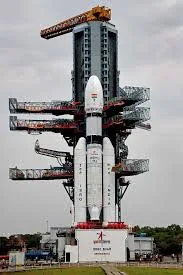
India launched its third next-generation navigation satellite, NVS-03, late on Friday. The GSLV-F18 rocket lifted off at 11.51 pm from the second launch pad at the Satish Dhawan Space Centre in Sriharikota, Andhra Pradesh, and was aimed at a geosynchronous transfer orbit.
The launch was needed because the regional navigation system, NavIC, had been left without enough working satellites. Last year's NVS-02, launched on a GSLV-F15, was stuck in its initial transfer orbit after valves that regulate the flow of oxidiser failed to open. Without oxidiser the onboard thrusters could not fire, and the manoeuvres meant to raise its orbit were abandoned.
ISRO chairperson V Narayanan said the launch has restored NavIC's positioning, navigation and timing services. He said India already had three working satellites and that NVS-03 provides the minimum number needed to bring those services back. He called the performance of the launch vehicle among the best achieved by any rocket in the world.
What the satellite adds
NVS-03 belongs to a series meant to carry on the services of the earlier IRNSS satellites. It carries an indigenous atomic clock along with imported ones. It adds an L1 signal to the L5 and S signals already in use, which makes NavIC more compatible with commercial devices including smartphones, because receivers that combine L1 and L5 can correct for atmospheric errors and improve accuracy. The system is designed to cover India and a region about 1,500 kilometres beyond its borders.
The stated purpose is to reduce India's reliance on foreign navigation systems for critical uses such as military operations, disaster management, marine navigation and transport. The mass, design life and further technical specifications of the satellite were not given.
Whether the satellite reaches its final slot as planned, and how quickly phone makers add support for the new signal, will decide how much of that independence becomes real.