ISLAMABAD. Few nations are lucky enough to be handed three jobs in a single week and fewer still accept all three without asking who is paying for the tea. I write on the morning of 10 November with the pride of a citizen whose republic has at last been given something to do.
Job One: The Mediator
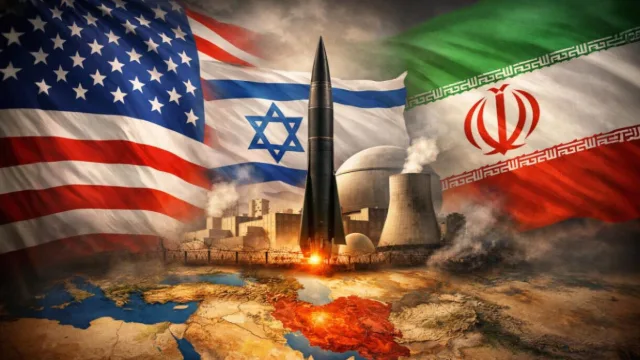
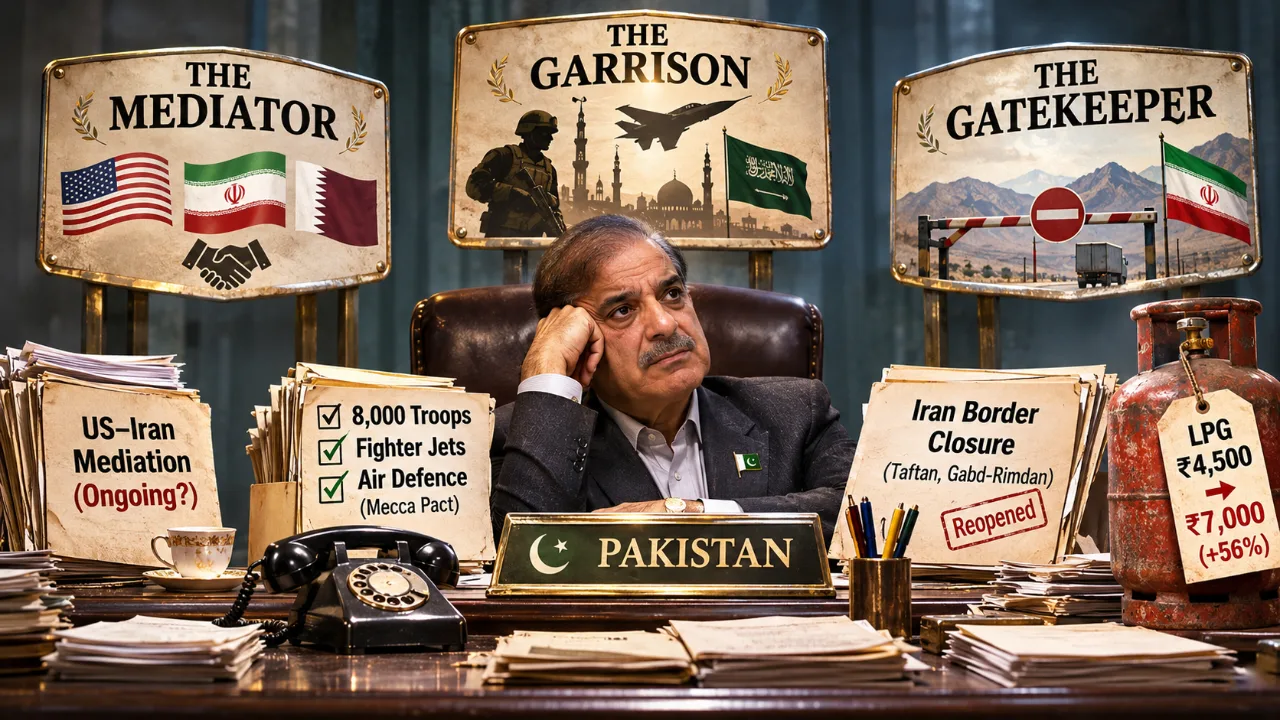
Pakistan, we are reminded, brokered the April ceasefire between Washington and Tehran and helped broker the June memorandum, as Qatar Tribune records. On 7 November Qatar’s prime minister said, per Reuters, that mediation between the US and Iran was continuing to stop the region spiralling. The very next day, AFP reported on Arab News, Iran’s foreign minister said there had been no negotiations since the shock of the US midterms.
Mediation is therefore proceeding briskly, on the single condition that there is nothing to mediate. The sceptic should note that a mediator with no talks to host is at least spared the catering.
Job Two: The Garrison
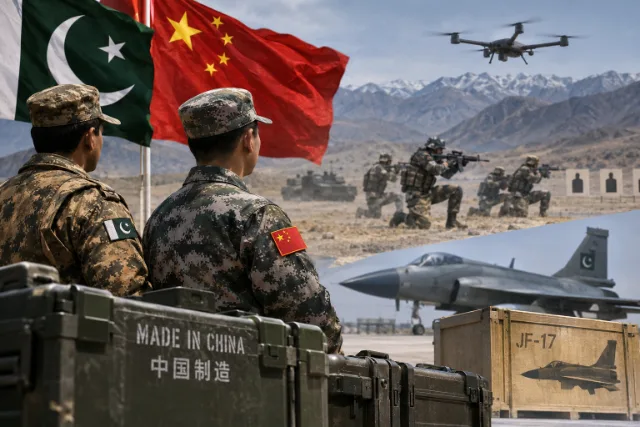
Reuters reported in May, via Arab News, that Pakistan had sent 8,000 troops, a squadron of fighter jets and an air-defence system to Saudi Arabia. On 5 October Al Jazeera reported that Pakistan, Türkiye and Saudi Arabia had activated deterrence measures under the Mecca pact for the first time since signing it on 7 August. Two days later CNN carried Lt Gen Ahmed Sharif Chaudhry confirming the forces were there: “The objective is the defense of the Kingdom of Saudi Arabia.” Pakistani officials describe the pact’s operations as purely defensive and I record this in full.
On 8 November a Houthi attack damaged a Riyadh financial district tower housing Aramco offices; Saudi authorities called it an attempted attack with no casualties, Dawn reported. The Foreign Office statement followed on 9 November, in Dawn’s account stressing that Saudi security is of paramount importance. Eight thousand troops, one pact, one statement; the statement arrived a day after the drone, which in the order of battle is known as defence in depth. Dawn’s pages this week also carried the Senate’s opposition leader urging the government to stay out of Yemen, a request I receive with the respect due to every request that arrives after the troops.
Job Three: The Gatekeeper
On 9 October US Treasury Secretary Scott Bessent told Newsmax, as relayed by ProPakistani, that Washington was working with Pakistan and Türkiye to cut off Iran’s land routes. Eight days later, on 17 October, Pakistan shut the Taftan and Gabd-Rimdan crossings. Pakistani officials cited security and smuggling; Tehran, Reuters noted, cited technical reasons. Islamabad has also rejected a claim that the US Navy operates against Iran from Pakistani soil, per Radio Pakistan on 18 October. The denial is noted and it is the only item in this dispatch that arrived with its own umbrella.
The mediator closed the border; the household paid at the stove. Traders told Reuters that a 12-kg LPG cylinder rose from Rs 4,500 to Rs 7,000 within days, an increase of 56 per cent. The official October price for an 11.8 kg domestic cylinder was Rs 3,296, Arab News Pakistan reported on 28 October, so the shop price ran a little over twice the official one. Petroleum Minister Ali Pervaiz Malik told parliament that the closure was a main reason. The crossings reopened around 25 October.
Then, on 7 November, CENTCOM commander Adm Brad Cooper created Task Force Iron Gate. The National reported that it has about 20 staff in Tampa, that its graphic points to Iran’s borders with Afghanistan, Pakistan, Turkmenistan and Turkey and that CENTCOM has not said how it will enforce anything. Iran’s Revolutionary Guards called it wordplay. On 9 November Dawn reported that the PTI will petition the Islamabad High Court over soaring LPG prices. The gatekeeper’s post, it appears, is unsalaried; the toll is collected in cylinders.
Three Desks, One Chair
Let the figures speak: three roles, 8,000 troops, one border, one task force whose map includes us, one price just over double the official rate and no talks reported by the party being mediated with. The projected image is of a neutral broker, a defender of the holy places and a sovereign gatekeeper acting on its own security judgement. The reported picture is of a country asked by one great power to shut a door, a second ally to hold a line and a third party to host a table, with the winter gas bill arriving at the same address as all three.
Nothing here is said against the soldier on the Saudi sands or the diplomat in the Doha corridor. The complaint is with the arrangement, which has one signature and three counterparties. In my experience a man who sits at three desks is trusted at the one he happens to be sitting at.
Passengers are advised that the train to Riyadh departs from Platform One, the train to Tehran from Platform Two and the goods train to Taftan from Platform Three, subject to technical reasons. Passengers are reminded that all three platforms are served by the same engine.