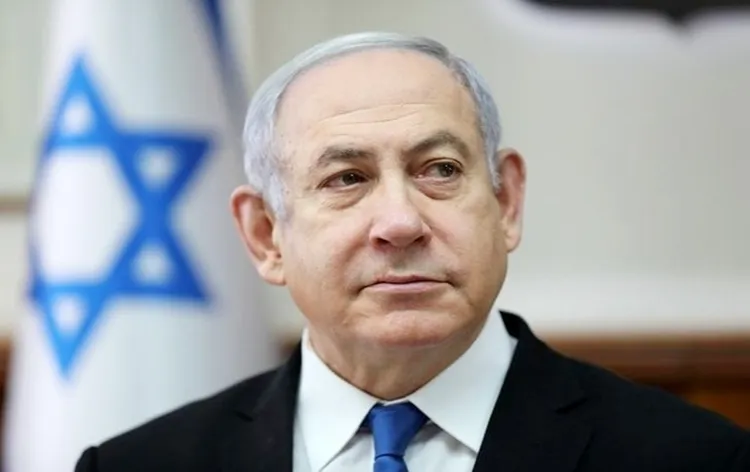
JERUSALEM — Israeli Prime Minister Benjamin Netanyahu said a Flydubai pilot stabbed his colleague and tried to crash a Dubai-to-Tel Aviv flight on Wednesday, forcing the aircraft to divert to Saudi Arabia after passengers and crew intervened.
Flight FZ1073, carrying about 180 people, landed safely at Tabuk in northwestern Saudi Arabia after the cockpit confrontation triggered emergency alerts and raised fears of a hijacking.
Netanyahu said the attacking pilot attempted to take control of the aircraft after stabbing the other pilot. Passengers and crew members then moved towards the cockpit and helped restrain him, he said, allowing the aircraft to be brought under control.
The Boeing 737 Max had departed Dubai International Airport bound for Tel Aviv when the incident occurred. Flight-tracking data showed the aircraft making a rapid descent from cruising altitude before changing course towards Saudi Arabia.
Emergency signals transmitted by the aircraft included an alert associated with unlawful interference, a code used when an aircraft is facing a serious security threat such as a hijacking. Israeli authorities responded by scrambling fighter jets while they assessed whether the plane had been taken over.
The aircraft eventually landed safely at Tabuk. Both pilots were taken for medical treatment after the landing, according to reports from the region.
Flydubai confirmed that an incident had occurred on board but did not publicly endorse all the details provided by Netanyahu. The airline said it was cooperating with authorities and that the circumstances were being investigated.
The incident created confusion among passengers as the aircraft descended and changed direction. Accounts from the cabin described shouting and a disturbance near the cockpit before passengers became involved.
Israeli officials said the episode was not a conventional hijacking and that the emergency was linked to the confrontation between the pilots. An Israeli official identified the suspected attacker as an Omani national.
No motive had been established. Authorities were also examining whether the incident should be treated as a criminal act, a security incident or terrorism.
Netanyahu’s account placed the actions of the passengers at the centre of the response. He said their intervention prevented the situation from escalating and allowed the aircraft to reach a safe landing.
The emergency diversion brought the aircraft into Saudi airspace and ultimately to Tabuk, despite the absence of formal diplomatic relations between Saudi Arabia and Israel. Saudi authorities allowed the aircraft to land and dealt with the emergency after its arrival.
Israeli officials subsequently began arrangements to return the passengers to Israel. A replacement aircraft was expected to be used to complete the journey.
The flight operates on a regular route between Dubai and Tel Aviv, established after the United Arab Emirates and Israel normalised relations in 2020. The route crosses a region where airspace and security considerations can complicate emergency diversions.
The incident prompted heightened scrutiny because of the aircraft’s rapid descent and the emergency signals transmitted during the confrontation. Investigators were examining the sequence of events inside the cockpit, the actions of both pilots and the role played by passengers and crew.
Flydubai said further information would be released as the investigation progressed. Several details surrounding the confrontation, including what triggered the violence and how the aircraft was brought under control, remained unresolved.
For now, Netanyahu’s account provides the clearest public description of the incident, while aviation and security authorities continue to establish the full sequence of events.