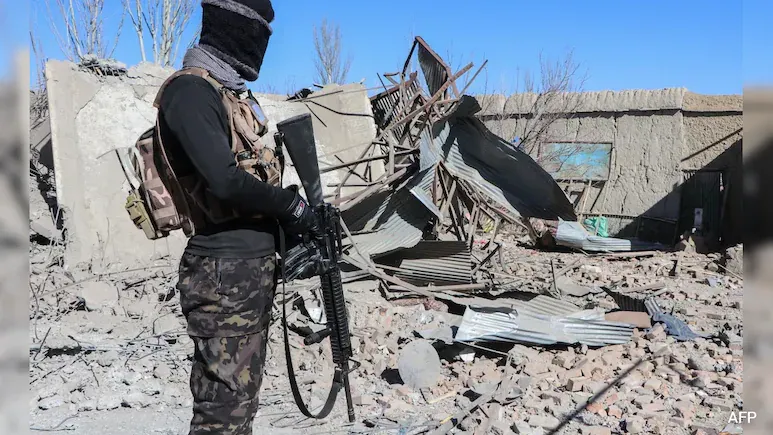
ISLAMABAD, September 24, 2026 — Pakistan carried out air and drone strikes on 10 locations in Afghanistan on Thursday, saying the sites had been used to store and launch drones involved in attacks against Pakistani territory.
The operation followed Islamabad’s claim that eight drones launched from Afghanistan had been intercepted near the northwestern city of Kohat and the Torkham border crossing a day earlier. Pakistani authorities said all the drones were destroyed before reaching their intended targets and caused no damage.
Information Minister Attaullah Tarar said the strikes were conducted in Pakistan’s right to self-defence. He described them as precise and limited to military objectives linked to the alleged drone attacks, and warned that Islamabad would respond to further violations of its territory.
Taliban government spokesman Zabihullah Mujahid denied that Afghan forces had launched drones against Pakistan. Afghan officials said the Pakistani strikes hit locations in Kandahar, Paktia and Khost provinces. At least four people were killed, according to the Taliban administration.
Residents in Kandahar city said they heard a jet before a large explosion was followed by a fire in the city. There was no immediate public response from Kabul to the latest Pakistani operation.
The strikes came after several days of renewed violence along the Pakistan-Afghanistan frontier. Pakistani officials said Taliban forces had fired mortars and other heavy weapons at Pakistani border posts after troops disrupted an attempted militant infiltration. The suspected infiltration, according to local Pakistani officials, took place near Afghan border positions in Paktia and Nangarhar.
Pakistan described the alleged infiltrators as members of Fitna-ul-Khawarij, the term Islamabad uses for the Pakistani Taliban, formally known as Tehrik-e-Taliban Pakistan. The group is separate from the Afghan Taliban but has longstanding ideological and operational links with it.
Pakistani officials said their forces responded with artillery fire against Taliban border posts, mortar sites and defensive positions. They claimed that Afghan forces later abandoned several positions and suffered casualties. The accounts could not be independently verified.
The latest operation also followed Pakistani airstrikes on Monday against three locations in eastern Afghanistan. Islamabad said the targets were militant hideouts and reported that 28 militants had been killed. Afghan authorities said at least three civilians died and four others were wounded. The United Nations mission in Afghanistan confirmed the civilian casualties, and Kabul formally protested the attack.
Tensions have risen sharply since a series of attacks in Pakistan’s northwestern Khyber Pakhtunkhwa province. Six Pakistani security personnel were killed during a gun battle in Hangu, near the Afghan border. Days earlier, a suicide bomber attacked a mosque inside a police compound in Kohat. Eight gunmen then entered the compound, leading to a 20-hour firefight that killed at least 21 people, most of them police officers.
No group immediately claimed responsibility for the Kohat attack, but Pakistani authorities blamed the Pakistani Taliban and allied militant factions. Islamabad has repeatedly accused the Taliban government of allowing militant groups to operate from Afghan territory. Kabul denies the allegation and says violence inside Pakistan is an internal matter.
Pakistan’s foreign minister, Ishaq Dar, said this week that Islamabad was concerned about the presence of more than two dozen militant groups in Afghanistan. He called for concrete and verifiable action against organisations that threaten Pakistan and other countries in the region.
A United Nations Security Council monitoring report covering December 2025 to June 2026 said continued Taliban support for the Pakistani Taliban had contributed to an increase in the frequency and lethality of attacks in Pakistan. The report also noted that Kabul had taken some initial steps to restrain the group and identified growing operational links among the Pakistani Taliban, al-Qaeda, Islamic State Khorasan and the Baloch Liberation Army.
The escalation threatens mediation efforts by China, Türkiye, Qatar and Saudi Arabia, which have sought to reduce tensions between Islamabad and Kabul. The two countries experienced their worst fighting in years in February, followed by intermittent clashes and several weeks of relative calm.
Pakistan says it remains open to dialogue but will not tolerate attacks launched from Afghan territory. The Taliban administration has rejected responsibility for the alleged drone operations, leaving the immediate circumstances of the latest confrontation disputed as cross-border hostilities intensify.