MOSCOW — Russia is offering substantial financial incentives to attract US citizens into its military, with recruits reportedly promised a signing bonus of about $26,000 and monthly payments of roughly $2,000, according to a report cited by NDTV.
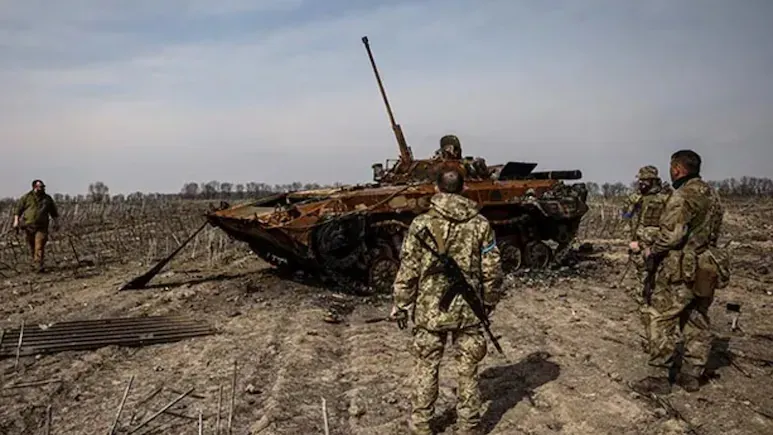
At least 18 US citizens have been recruited into Russia’s war against Ukraine, the report said, with most subsequently sent to the front lines. The cases form part of a broader effort by Moscow to enlist foreign nationals as the war continues into its fifth year.
The recruitment campaign relies heavily on social media, including Facebook, TikTok and Telegram. The New York Post, cited by NDTV, reported that advertisements and online messaging have been used to target people described as financially vulnerable or receptive to pro-Russian narratives.
One of the Americans identified in the reporting was Seth William Baker, a former US Marine from Arizona. Baker joined the Russian military after encountering pro-Russian material online and was killed on the Ukrainian battlefield three months later, according to the report. He had previously left the US Marine Corps after refusing a Covid-19 vaccination requirement.
Another case involved Michael Gloss, a 21-year-old American and the son of a CIA officer, who was killed fighting for Russia in Donetsk in 2024. According to the report, Gloss died while attempting to assist a wounded Russian soldier during an artillery attack.
Gloss’s death later received attention in Russia. President Vladimir Putin recognised him with a medal for what Moscow described as outstanding civilian service, which was subsequently presented to his parents through US special envoy Steve Witkoff.
The reported recruitment of Americans is part of a much wider effort to bring foreign personnel into Russia’s armed forces. Ukrainian officials have said that almost 29,000 foreign nationals from 135 countries are fighting for Russia, although Kyiv has acknowledged that the actual number could be higher.
Amnesty International, in a report published this month, separately documented what it described as widespread deceptive and coercive recruitment of foreign nationals by Russia. Its research said recruits from low-income countries, as well as migrants and refugees already living in Russia, had been drawn into military service through promises of civilian employment, high wages, legal residency or Russian citizenship. Some were subsequently sent to fight in Ukraine.
The organisation said the recruitment practices could amount to trafficking in some cases. Its findings point to a broader system extending beyond online advertisements aimed specifically at Americans.
The foreign recruits have not all joined under the same circumstances. Some appear to have enlisted knowingly for financial or ideological reasons, while others have alleged that they were misled about the nature of the work they were accepting. Reports cited by NDTV also describe foreign fighters facing abuse and pressure after joining Russian units.
Russia’s reliance on additional manpower comes as Moscow continues to expand the size of its armed forces. President Vladimir Putin signed a decree on Monday increasing the number of active servicemen to 1.55 million, according to The Guardian. The overall authorised strength of the Russian armed forces is set to rise to 2,441,630 personnel.
The Kremlin has continued to avoid another nationwide mobilisation on the scale of the 2022 call-up, while relying on contractual recruitment, financial incentives and foreign personnel to supplement its forces. The Financial Times reported last month that Russian recruiters were increasingly turning to pressure and deceptive methods as the military faced difficulties sustaining its recruitment targets.
Foreign recruitment has also extended well beyond Western countries. Ukrainian officials have reported the involvement of personnel from dozens of nations, while North Korea has supplied thousands of troops to support Russia. Ukrainian President Volodymyr Zelensky said on Monday that more than 8,000 North Korean troops were already in Russia and that another 10,000 were being prepared for deployment.
The reported cases involving Americans illustrate one element of a broader Russian manpower strategy: using financial inducements, online recruitment and foreign military personnel to sustain its forces in a war where Russia continues to require large numbers of troops.
The precise number of Americans serving with Russian forces remains unclear, and the available figures largely come from Ukrainian officials and media investigations. What is clearer is that Russia’s recruitment campaign has increasingly extended beyond its own population, drawing foreign nationals into a conflict that continues to place heavy demands on Moscow’s military manpower.