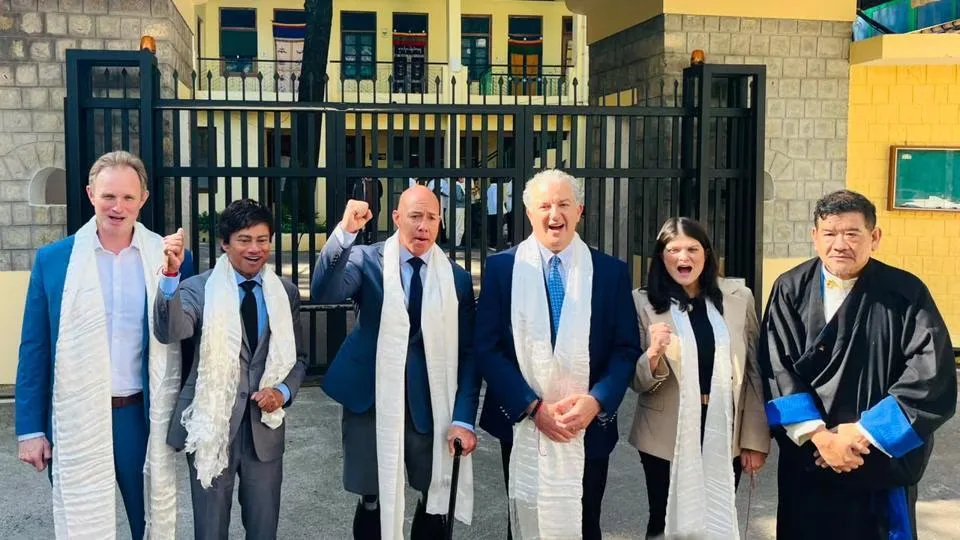
The meeting between a bipartisan US congressional delegation and the 14th Dalai Lama in Dharamshala on September 30, 2026, was more than a symbolic diplomatic engagement. It brought renewed international attention to a dispute that Beijing would prefer to treat as an internal matter: the future of Tibet, the preservation of its religious identity and the authority to determine the succession of its spiritual leader.
Led by Brian Mast, chairman of the US House Foreign Affairs Committee, the five-member delegation included Representatives James Gallagher, Jimmy Patronis, Shri Thanedar and Haley Stevens. Following the meeting, Mast reiterated Washington's support for the Tibetan people and expressed concern over China's policies towards Tibet and the possibility of Beijing attempting to influence the selection of the next Dalai Lama.
His remarks were particularly significant because the succession question is no longer a distant institutional concern. The Dalai Lama has confirmed that his institution will continue after his death and that the Gaden Phodrang Trust will oversee the recognition of his successor according to Tibetan Buddhist traditions. Beijing, however, insists that the selection must comply with Chinese regulations and receive government approval.
The disagreement goes to the heart of the relationship between religious authority and state power. For Tibetan Buddhists, the identification of a reincarnated Dalai Lama is a spiritual process governed by religious traditions and the guidance of senior religious authorities. For Beijing, the issue falls within the framework of state regulation over religious institutions. These positions are fundamentally different, and political declarations alone cannot reconcile them.
China's position also raises a question about the limits of government authority. A state may regulate religious institutions operating within its territory, but that does not automatically establish spiritual legitimacy among followers of a particular faith. Recognition by political authorities and acceptance by a religious community are not necessarily the same thing.
The controversy surrounding the Panchen Lama illustrates the potential consequences. In 1995, the Dalai Lama recognised Gedhun Choekyi Nyima as the 11th Panchen Lama. Chinese authorities rejected the recognition and subsequently endorsed another candidate, Gyaincain Norbu. The whereabouts and circumstances of Gedhun Choekyi Nyima have remained a longstanding international concern. The episode demonstrated how competing political and religious claims can create divisions within Tibetan Buddhism and undermine confidence in the succession process.
The next Dalai Lama's recognition could produce an even more consequential dispute. Competing claimants, if they emerge, may receive support from different institutions and governments. Tibetan Buddhist communities across the world could then face difficult questions about religious legitimacy and continuity. The credibility of the next spiritual leader will depend not simply on official recognition but on acceptance within the religious community.
Mast's warning that China could seek to nominate its own Dalai Lama reflects this concern. He also alleged that Beijing's efforts to suppress Tibetan identity extend beyond its borders, including through surveillance and intimidation. These are serious allegations and should be assessed on the basis of verifiable evidence. Nevertheless, the broader issue of protecting Tibetan institutions and communities abroad deserves sustained international attention.
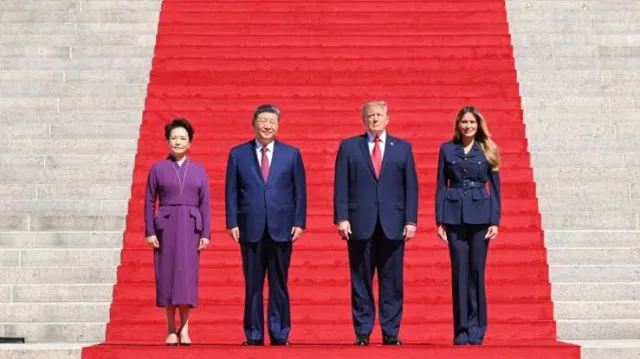
The presence of US lawmakers in Dharamshala also carries diplomatic significance. It demonstrates that the Tibetan question continues to feature in Washington's engagement with Beijing, even as the two powers maintain dialogue on trade, security and other international issues. The delegation's visit followed the recent meeting between US President Donald Trump and Chinese President Xi Jinping, illustrating that high-level diplomatic engagement does not necessarily require the abandonment of disagreements over human rights and religious freedom.
This distinction is important. Dialogue between major powers is necessary, but it should not require smaller communities or religious groups to surrender their concerns. Engagement with Beijing and criticism of its policies are not mutually exclusive. The ability to maintain diplomatic relations while raising difficult questions is an essential feature of international engagement.
For India, the visit has particular relevance. Dharamshala has become the principal centre of Tibetan religious and institutional life in exile since the Dalai Lama arrived in India in 1959. The town is home to the Central Tibetan Administration, monasteries and institutions that have helped preserve Tibetan religious teachings, language and cultural identity for more than six decades.
India's role has therefore extended beyond providing refuge. Its territory has allowed Tibetan institutions to maintain continuity and enabled the Dalai Lama to engage with religious followers and international visitors. Dharamshala has acquired an importance that reaches far beyond its location in Himachal Pradesh.
The visit also followed meetings between the US delegation and Indian officials in New Delhi. Discussions covered the broader India-US relationship, including defence cooperation, energy security, counterterrorism and regional developments. The subsequent visit to Dharamshala placed the Tibetan issue within a wider programme of bilateral engagement, although the two sets of discussions should not automatically be interpreted as a coordinated political strategy.
For New Delhi, the Tibet question remains closely connected to its relationship with China. The unresolved border dispute, military tensions in the Himalayas and competing strategic interests make developments surrounding the Dalai Lama particularly sensitive. At the same time, India's long association with the Tibetan spiritual leader and the exile community gives it an important role in preserving the space in which Tibetan religious institutions operate.
The international dimension is equally important. Countries hosting Tibetan communities must ensure that religious representatives, cultural organisations and activists can function without intimidation or unlawful interference. Allegations of transnational repression require credible investigation, while governments must protect legitimate religious and political activity regardless of diplomatic pressure.
The United States has also introduced legislation aimed at strengthening its support for Tibetans. The Resolve Tibet Act, signed into law in July 2024, called for renewed dialogue between Beijing and Tibetan representatives and challenged Chinese claims concerning Tibet's history. More recent legislative efforts, including the proposed Assuring the Future of Tibet Act, indicate that the issue continues to receive attention in Congress. However, legislation and diplomatic visits cannot substitute for meaningful progress on the underlying dispute.
There is a risk that Tibet could increasingly become another arena for strategic competition between Washington and Beijing. That would be a disservice to the Tibetan people if their religious and cultural concerns were reduced to instruments of geopolitical pressure. International support should focus on the principles at stake: religious freedom, cultural preservation, institutional independence and the right of communities to maintain their traditions.
The latest Dharamshala visit has once again demonstrated that the Tibetan question has not disappeared from international affairs. Beijing may regard foreign engagement with the Dalai Lama as interference, but the concerns surrounding Tibetan religious freedom and succession have implications beyond China's diplomatic preferences.
Ultimately, the future of the Dalai Lama institution cannot be secured through political recognition alone. It requires the confidence of Tibetan Buddhists, the continuity of religious institutions and respect for the traditions through which spiritual leadership is determined. The international community should ensure that these principles are protected without turning Tibet's future into another bargaining instrument in great-power relations.
The central question is not whether Washington or Beijing can claim diplomatic influence over Tibet. It is whether Tibetan Buddhism will retain the freedom to determine its own spiritual future. That question deserves an answer grounded in religious tradition, institutional independence and the rights of the Tibetan people.