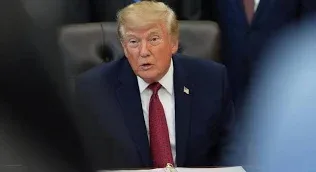
President Donald Trump has questioned the integrity of last week's midterm elections, reversing himself less than a week after he congratulated Democrats and said he would accept the results. In a post on his social media platform on Monday he asked whether anyone believed the election was honest and how the polls could have been so wrong. He claimed that some early-voting counts were so large that Republicans could not have won. Over the previous days he had shared posts with graphs questioning turnout data. He has offered no evidence of fraud or wrongdoing.
His earlier statements pointed the other way. Last week he told a newspaper that he absolutely accepted the results. Soon after the Democratic victory was announced he congratulated the party in a call with a television network and told another broadcaster it had done a good job. In an interview the day before his latest post he appeared to accept the outcome, repeated his congratulations and said he was open to working with the incoming Democratic majority.
Republicans had wondered whether the polls were again underestimating their support, as they did in the presidential elections of 2016, 2020 and 2024. The results went the other way. An analysis found that polls understated the Democratic margin by at least two points in 23 of 27 governor and Senate races. Democrats won both chambers of Congress by wide margins and took seats in traditionally Republican strongholds.
Senate Democratic leader Chuck Schumer said Trump's return to election denialism was inevitable, and wrote on X that Trump would face the largest Democratic congressional majorities in decades for his last two years. Conservative commentator Megyn Kelly, who backed Trump in 2024, replied on X by telling him to stop. Republicans have been increasingly distancing themselves from Trump since the losses.
A survey taken on the eve of the vote suggests the war with Iran weighed on voters. It found 44 percent less likely to back candidates who supported the war, against 13 percent more likely, and 56 percent saying the United States should put avoiding higher prices ahead of its military goals. Republicans were the only group more likely to back a pro-war candidate.