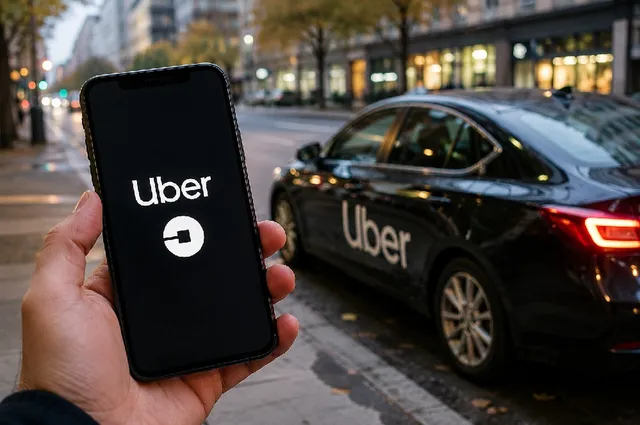
London: Uber and British autonomous-driving startup Wayve have begun commercial robotaxi operations in London, bringing self-driving vehicles onto the city’s streets in what the companies describe as a first for the UK capital.
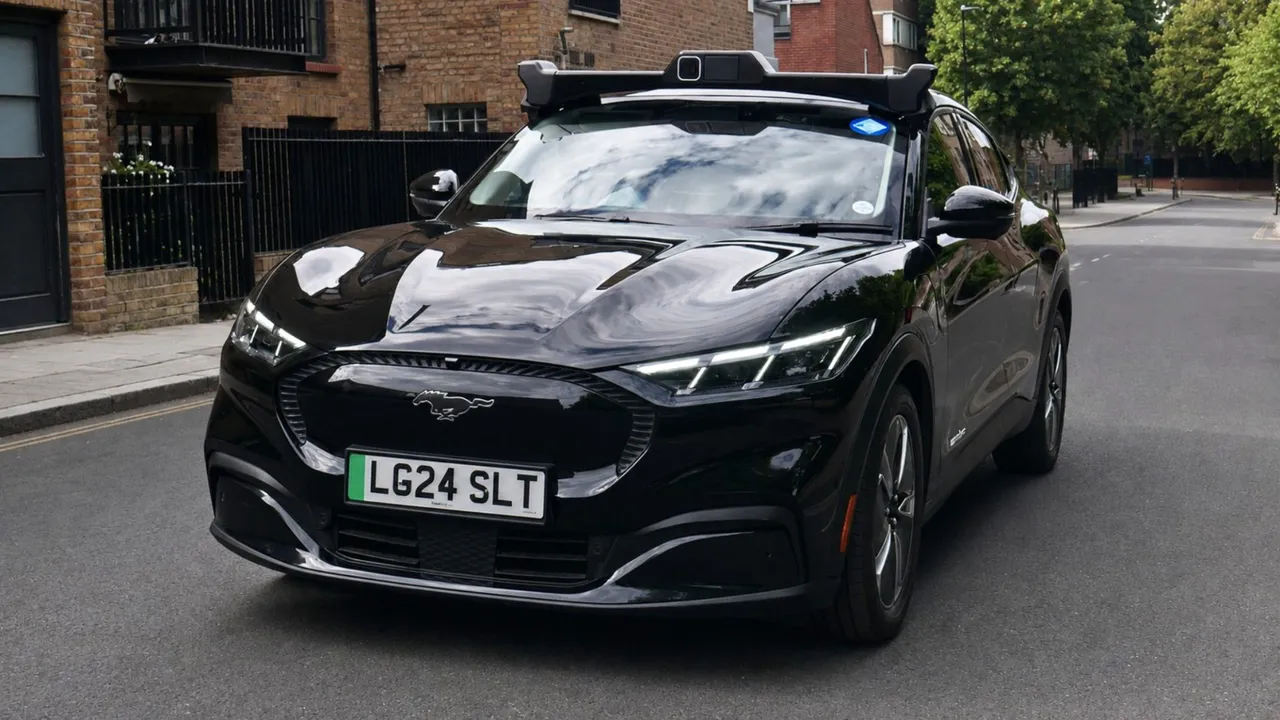
The service, launched on September 3, initially uses a small fleet of electric Ford Mustang Mach-E vehicles fitted with Wayve’s autonomous-driving technology. Passengers can access the vehicles through Uber’s platform, although they cannot specifically request an autonomous car for every journey.
For now, the vehicles remain under human supervision. A trained safety driver sits behind the wheel throughout each trip, ready to take control if required. The arrangement reflects the transitional stage of Britain’s autonomous-vehicle market, where commercial self-driving services are being introduced under regulatory supervision rather than through fully driverless operations.
Wayve’s technology is designed to navigate using artificial intelligence rather than depending entirely on highly detailed maps of every road. That approach is being put to a demanding test in London, where dense traffic, cyclists, pedestrians, narrow streets and constantly changing road conditions make the city one of the more challenging environments for autonomous driving.
The initial deployment is deliberately limited, with roughly 15 vehicles expected to operate as the companies gather real-world experience. Uber and Wayve intend to expand the service as the technology is further validated and the regulatory framework develops.
The launch does not yet represent the arrival of fully driverless taxis in London. Removing the safety driver will require additional regulatory approval, making the UK rollout more cautious than autonomous ride-hailing services already operating without onboard human supervisors in some parts of the United States and China.
For Uber, the London deployment is another step in its effort to build a global network of autonomous vehicles rather than develop the technology itself. The company has formed partnerships with several autonomous-driving firms as it prepares for a future in which self-driving vehicles become an increasingly important part of its ride-hailing business.
Wayve, founded in London in 2017, has positioned its AI-first approach as a way to develop autonomous driving systems capable of adapting to different cities without relying on extensive pre-mapped infrastructure. The company and Uber announced their partnership in 2024, with the two firms subsequently working towards deploying Wayve-powered vehicles on Uber’s network.
The London rollout also comes as governments and technology companies grapple with a central question surrounding autonomous mobility: how quickly can driverless technology move from controlled trials to widespread public use without compromising safety?
For passengers, the answer will initially involve a human presence in the vehicle. For Uber and Wayve, however, the first supervised rides mark a more consequential milestone—the beginning of what could eventually become a fully driverless ride-hailing service in one of Europe’s busiest cities.