WASHINGTON — The United States is deploying a third aircraft carrier strike group and up to 10,000 additional troops to the Middle East as President Donald Trump warns that Iran could face renewed US military action if Tehran is linked to the attempted attack on an Israel-bound Flydubai flight.
The deployment, which includes the USS Theodore Roosevelt and its accompanying strike group, is expected to bring thousands of additional sailors and Marines into the region by the end of November. The move comes as Washington weighs its next steps in the escalating confrontation with Iran.
Two other US aircraft carriers are already in the region — the USS George H.W. Bush and the USS George Washington. The arrival of the Roosevelt would significantly increase the concentration of American naval forces in the Middle East.
The additional deployment includes roughly 9,000 troops, according to US officials, along with the carrier strike group and an amphibious force carrying Marines. The forces are expected to arrive in the region over the coming weeks.
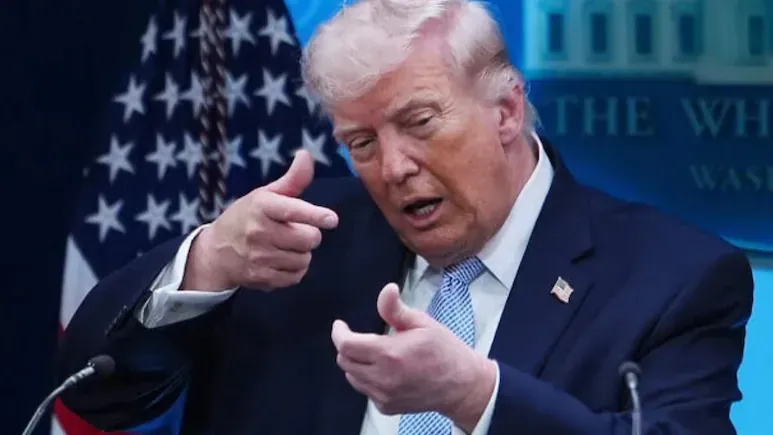
Trump has warned that the United States could resume strikes against Iran after the November 3 midterm elections. His latest comments came as Washington considers an Iranian proposal aimed at reducing tensions and reopening the Strait of Hormuz.
The US president has also linked the military buildup to growing questions over Iran’s possible involvement in recent incidents outside the region.
Speaking to reporters, Trump said initial information suggested there could be a connection between Iran and the Flydubai co-pilot accused of stabbing Indian pilot Smit Machchhar and attempting to take control of the aircraft.
Asked whether the suspected attacker might have been placed on the aircraft by Iran’s Islamic Revolutionary Guard Corps or radicalised by Iranian actors, Trump said that was possible. He warned that Iran would face severe consequences if investigators established responsibility.
No public evidence has yet been released establishing an Iranian role in the Flydubai incident.
The flight, travelling from Dubai to Tel Aviv on Wednesday, was forced to divert to Saudi Arabia after the cockpit confrontation caused the aircraft to plunge sharply in altitude. Machchhar was injured in the attack but managed to open the cockpit door, allowing passengers and crew members to enter and overpower the co-pilot.
A second flight crew aboard the aircraft subsequently landed the Boeing 737 safely at Tabuk in Saudi Arabia.
The co-pilot, identified by authorities as an Omani national, has been handed over to the United Arab Emirates as investigators examine the motive and circumstances surrounding the attack. Israeli officials have described the incident as a suspected terrorist attack, while the UAE has ordered its own investigation into whether terrorism was involved.
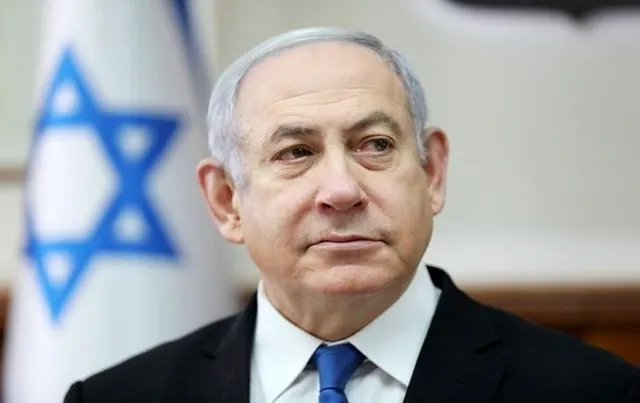
Israeli Prime Minister Benjamin Netanyahu has said it is too early to determine whether the suspect had links to Iran or another organisation. Netanyahu has, however, said the co-pilot had undergone what he described as Islamist radical indoctrination.
The competing assessments have left the question of Iranian involvement unresolved.
The US military buildup comes against a broader backdrop of deteriorating relations between Washington and Tehran. Trump recently rejected an Iranian proposal for a seven-day confidence-building arrangement that Tehran said could help reopen the Strait of Hormuz and create conditions for renewed negotiations.
Trump has repeatedly warned Iran that failure to reach an agreement could lead to further military action. Tehran has rejected US pressure and has continued to demand conditions for reopening the strategic waterway.
The Strait of Hormuz remains central to the confrontation because it carries a substantial share of global oil shipments. Any prolonged disruption would have consequences well beyond the region.
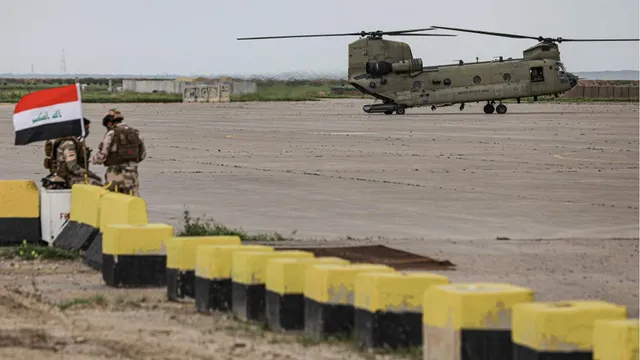
The deployment of another carrier strike group also reflects the wider demands being placed on the US military. The Pentagon is maintaining substantial forces across the Middle East while preparing for the possibility of further confrontation with Iran.
The arrival of the Theodore Roosevelt would give Washington an unusually large concentration of naval and air power in the region. The carrier groups provide fighter aircraft, strike capabilities, air defence and command-and-control assets that can be used for a range of military missions.
For now, Washington has not announced that a new attack on Iran is imminent. The additional forces are being positioned as Trump weighs his options and as investigators continue to examine the Flydubai incident.
The central question surrounding the aircraft attack remains unresolved: whether the co-pilot acted alone or whether there was an external organisation or state behind the assault. Trump has publicly raised the possibility of an Iranian connection, but investigators have yet to establish one.
The military deployment therefore comes at a moment when the United States is simultaneously investigating a possible new security threat and preparing for the possibility of renewed conflict with Iran.