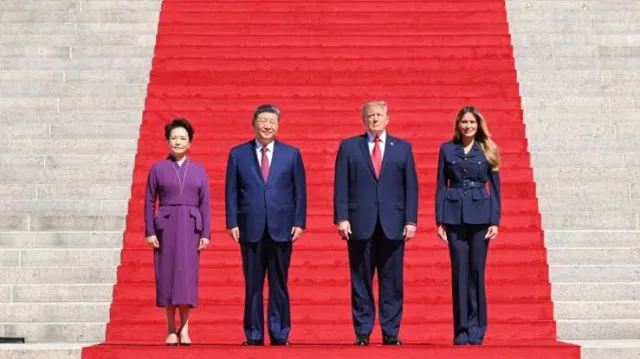
The Democratic takeover of the US Congress in the 2026 midterm elections has created a new political challenge for President Donald Trump. But the consequences extend well beyond Washington. For Beijing, the result complicates a diplomatic environment that had increasingly allowed China to deal with an American president whose foreign policy was often driven by transactional calculations rather than consistent institutional commitments.
China may see short-term opportunities in a politically weakened Trump administration. A president facing congressional opposition and preparing for the final two years of his term could become more interested in securing visible diplomatic and economic victories. Beijing may seek to use that pressure to negotiate concessions on trade, tariffs and technology. Yet any immediate advantage could be outweighed by a more difficult strategic environment as a Democratic-controlled Congress reasserts its influence over US policy towards China.
The election has altered the political balance in Washington, but it has not automatically changed the foundations of American foreign policy. Trump remains President and retains substantial authority over diplomacy, particularly in negotiations with foreign governments. Congress cannot simply take control of his engagement with Xi Jinping or reverse every decision made by the administration. It can, however, use legislation, budgetary powers, hearings and oversight to constrain the President's choices and make certain policy decisions more difficult to sustain.
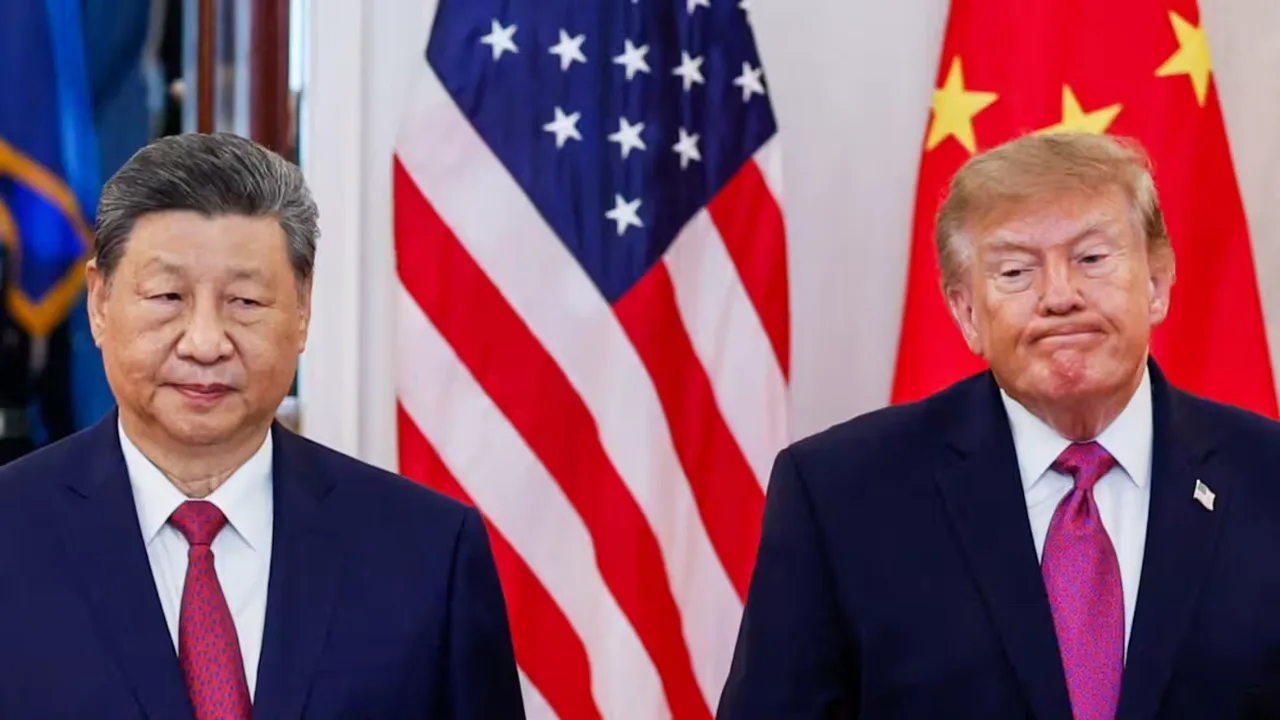
That distinction matters to Beijing. China's recent approach to Washington has increasingly relied on Trump's preference for direct negotiations and personal diplomacy. The Chinese leadership has sought to present the relationship in terms of strategic stability and mutual economic interests, while avoiding the broader ideological confrontation that has traditionally shaped American policy towards the Chinese Communist Party.
For Beijing, this approach offers room for negotiation. Trade disputes can be treated as bargaining problems, market access can be exchanged for concessions, and sensitive geopolitical questions can be handled through direct engagement between the two leaders. Such an arrangement is considerably more difficult when Congress becomes an active participant in shaping the relationship.
The issue is particularly significant for Taiwan. Beijing has long sought to limit American support for the island and prevent Washington from strengthening its security relationship with Taipei. A transactional approach to foreign policy creates uncertainty about how far the US administration might be willing to negotiate over issues that previous administrations treated as strategic commitments.
A Democratic-controlled Congress could make such calculations more complicated. Lawmakers may press for continued arms supplies to Taiwan, greater scrutiny of Chinese military activity and stronger legislative safeguards against concessions that could weaken the island's security. Although Congress cannot determine every aspect of US policy, its influence can limit the scope for presidential accommodation.
The same pressure could extend to China's human rights record and its activities in the Indo-Pacific. Congressional hearings and legislative initiatives may bring renewed attention to issues that the administration's diplomatic engagement has placed on the sidelines. Beijing has generally preferred dealing with an American administration focused on commercial negotiations rather than one facing sustained bipartisan pressure over strategic and ideological differences.
Technology is another area where the election result could have consequences. Advanced semiconductors remain among the most important instruments in the US-China competition. Access to high-performance processors is central to China's ambitions in artificial intelligence, advanced manufacturing and military modernisation. Washington's export restrictions are designed to limit the transfer of sensitive capabilities, but enforcement has remained a difficult challenge.
Trump's willingness to permit selected sales of advanced Nvidia processors to Chinese customers has illustrated the tension between commercial interests and national security considerations. His administration has defended certain transactions as beneficial to American industry and government revenue. However, a Democratic Congress could demand tighter restrictions, stronger end-user verification and greater scrutiny of the companies and intermediaries involved in semiconductor distribution.
This would reduce Beijing's room to benefit from a more flexible interpretation of American export policy. It could also reinforce the bipartisan view in Washington that technological competition with China requires sustained restrictions on access to strategically sensitive capabilities.
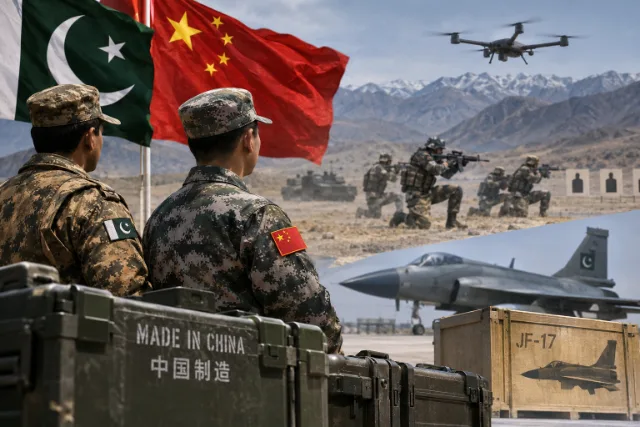
The future of US alliances presents another concern for Beijing. Trump's preference for bilateral negotiations and his repeated pressure on traditional partners have created uncertainty among European and Indo-Pacific allies. China has benefited diplomatically whenever disagreements between Washington and its partners have weakened coordination.
A more assertive Congress could encourage renewed cooperation with Japan, South Korea, Australia, European governments and other partners. Such coordination would not necessarily restore the pre-Trump international order, nor would it eliminate differences over trade and security responsibilities. But it could make it more difficult for Beijing to exploit divisions between the United States and its allies.
For China, the challenge is not simply the possibility of a more confrontational American policy. It is the prospect of a more institutionally coordinated one. A Washington that combines presidential diplomacy with congressional scrutiny and stronger allied cooperation could place greater pressure on Beijing across trade, technology, maritime security and regional diplomacy.
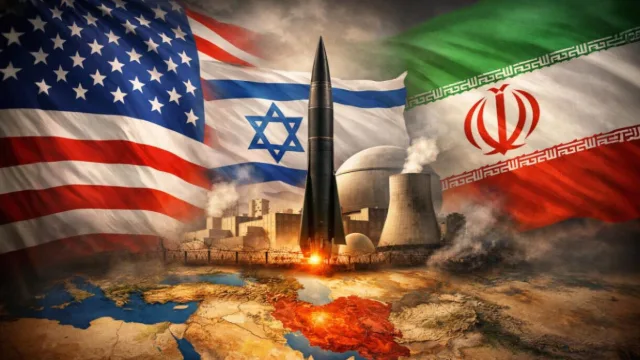
The Iran conflict adds another complication. The war has consumed American military resources, diplomatic attention and political capital. China has had reason to benefit from Washington's prolonged focus on the Middle East, particularly when it diverts attention from the Indo-Pacific. Stronger congressional scrutiny could increase pressure on the administration to define its objectives and limit the duration of its involvement.
However, the consequences for Beijing are not straightforward. An early American disengagement could free up diplomatic and military resources for the Indo-Pacific, potentially increasing Washington's capacity to concentrate on China. A prolonged conflict, on the other hand, could continue to impose costs on the United States while creating economic uncertainty through energy markets and regional instability. Beijing must therefore assess not only the immediate effects of the war but also how its eventual outcome may reshape American strategic priorities.
There is, nevertheless, a danger in assuming that a Democratic Congress will automatically produce a coherent or consistent China policy. American politics remains deeply divided. Democrats and Republicans may disagree over trade, industrial policy, military commitments and the use of economic restrictions. Their shared concerns about China's strategic ambitions do not guarantee agreement on every response.
Nor can Congress simply reverse the structural forces that have transformed US foreign policy. China's economic and military rise, America's domestic fiscal pressures and growing demands on its global commitments will continue to influence Washington regardless of which party controls the legislature. The United States is unlikely to return entirely to the foreign policy approach that prevailed before Trump's presidency.
The more immediate question is whether Congress can restore greater predictability to American decision-making. For Beijing, predictability under Trump has increasingly meant understanding the President's preference for personal negotiations and economic bargains. A Congress willing to challenge those arrangements could make the relationship less convenient and more difficult to manage.
There is also a broader political dimension that Beijing cannot ignore. The midterm result demonstrated that American voters can change the balance of power through elections and that the country's political institutions retain mechanisms for checking the executive. The result does not erase concerns about political polarisation, institutional tensions or the credibility of American foreign policy. But it challenges the argument that the US political system has lost its capacity for correction.
For the Chinese Communist Party, this has implications beyond bilateral diplomacy. Beijing has frequently contrasted its political model with the perceived instability and divisions of Western democracies. A functioning electoral system that produces a peaceful transfer of legislative power and creates new avenues for institutional oversight complicates that narrative.
The outcome is therefore more consequential than a setback for Trump's domestic agenda. It introduces additional constraints on a foreign policy approach that Beijing had increasingly learned to navigate. China may attempt to exploit the administration's weakened political position in the short term, but it must also prepare for a Congress more willing to scrutinise its strategic relationship with Washington.
The midterm elections have not settled the future of US-China relations. Trump remains in office, the administration retains considerable diplomatic authority, and the structural competition between the two powers will continue. But Beijing can no longer assume that its dealings with the White House will remain insulated from the political forces shaping Washington.
China's preferred American interlocutor may still occupy the Oval Office. The difference is that he now faces a Congress with greater capacity and political incentive to challenge his approach. For Beijing, that is not a reason to celebrate.