For years, China’s economic rise rested on a powerful combination of manufacturing strength, export expansion, infrastructure investment and state-directed industrial development. That model transformed the country into a global economic power. But as domestic demand weakens, industrial activity loses momentum and external trade pressures intensify, Beijing faces a more difficult challenge: sustaining growth without allowing economic uncertainty to undermine social stability.
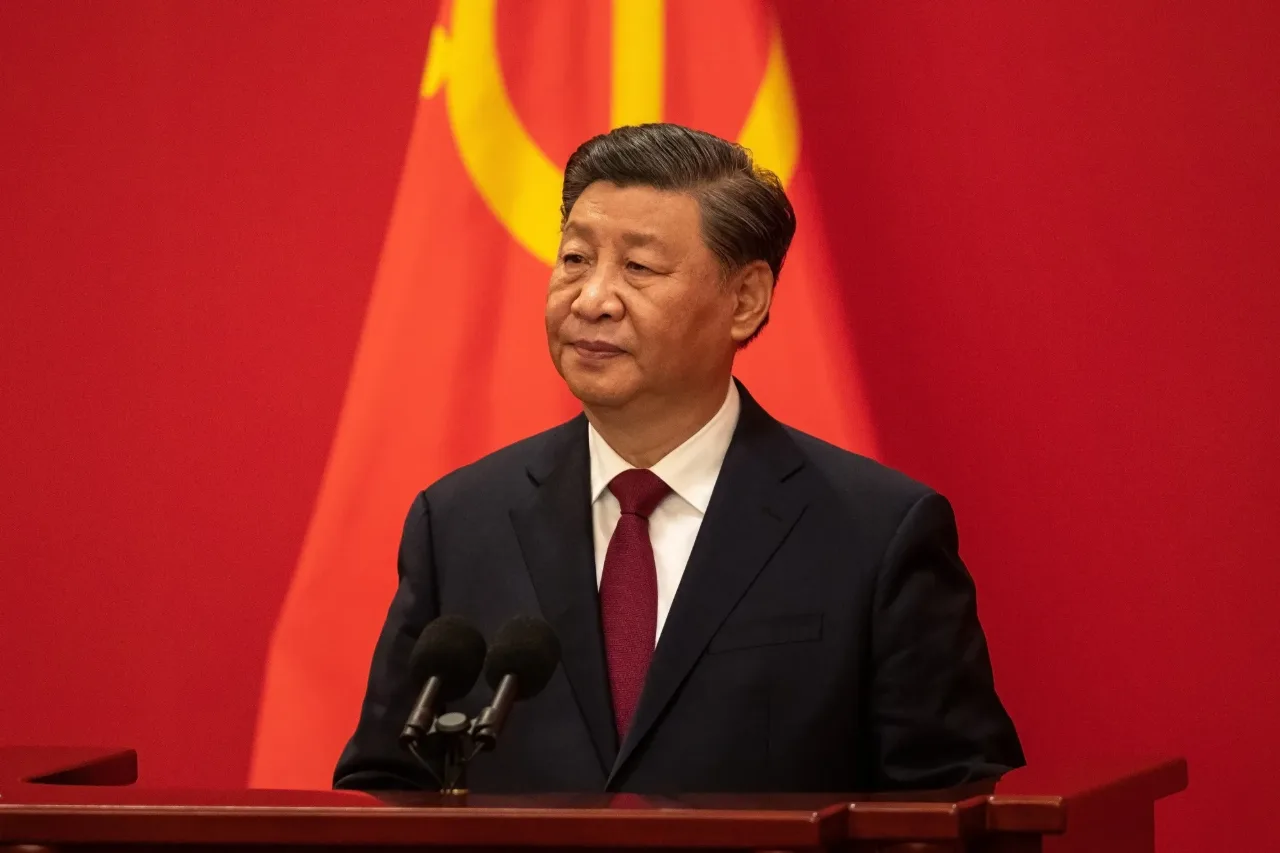
President Xi Jinping’s call for economic development alongside social stability reflects this changing environment. His emphasis on “effective qualitative improvement and reasonable quantitative growth” signals an effort to balance two objectives that are becoming increasingly difficult to pursue simultaneously. China wants continued economic expansion, but it also needs to address structural weaknesses that cannot be resolved simply by increasing production or directing more investment towards industry.
The latest economic indicators underline the challenge. China's economy grew by 4.6 per cent year on year during the first three quarters of 2026, but quarterly growth slowed from 5 per cent in the first quarter to 4.3 per cent in the second before recovering slightly to 4.5 per cent in the third. Manufacturing activity also weakened, with the official purchasing managers' index falling to 49.3 in October, below the 50-point threshold separating expansion from contraction.
These figures do not indicate an economy in collapse. China retains considerable industrial capacity, technological capabilities and influence over global supply chains. However, they reveal the difficulty of maintaining strong growth when several domestic and external pressures are operating simultaneously.
The most significant structural problem is the imbalance between production and consumption. China has built enormous manufacturing capacity, but domestic demand has not consistently expanded at a pace sufficient to absorb that output. Exports have helped sustain industrial activity, yet dependence on overseas markets exposes Chinese producers to trade restrictions, tariffs and growing competition.
This imbalance has become particularly important as major economies reassess their dependence on Chinese supply chains. Trade tensions with the United States and other partners have increased uncertainty for manufacturers and exporters. China's industrial strength remains an advantage, but it also places pressure on Beijing to find new markets and protect access to existing ones.
The domestic consumption problem is equally important. Households facing uncertainty over employment, income and property values may be reluctant to increase spending. The prolonged difficulties in the property sector have weakened confidence and affected industries connected to construction, household wealth and local government revenue. Policy support can provide temporary relief, but restoring confidence requires more than another round of targeted stimulus.
This is where Xi's emphasis on high-quality development faces its most consequential test. China's leadership has repeatedly called for a transition towards innovation, advanced manufacturing, technological self-reliance and higher-value industries. These priorities are central to Beijing's long-term economic ambitions. But technological advancement alone cannot replace the need for stronger household consumption, a healthier property sector and more balanced sources of growth.
The government's response has included calls for counter-cyclical adjustments, faster implementation of existing measures and greater use of government bond financing. Such interventions can support infrastructure, investment and selected industries. Their effectiveness, however, will depend on whether they address the underlying weaknesses rather than simply sustaining existing patterns of growth.
China's local governments also face financial constraints. Years of reliance on land sales and property-linked revenue have left many local authorities under pressure as the real estate market remains weak. This limits their ability to support public services, infrastructure and economic activity at the same scale as in earlier periods. The challenge is not simply to mobilise more public spending, but to ensure that it produces sustainable economic returns.
Xi's emphasis on stability must also be understood within the political structure of the Chinese system. The Communist Party regards economic performance and social order as closely connected to its governing authority. Economic uncertainty therefore carries implications beyond markets and industrial output. Maintaining employment, confidence and predictable living conditions remains an important political priority.
His remarks on military reform and the Communist Party's absolute leadership over the armed forces reinforce the wider importance Beijing attaches to institutional discipline and central control. Economic development, technological advancement and military modernisation remain interconnected elements of China's national strategy. Yet the pressure on economic resources makes the allocation of investment and public finances increasingly significant.
For international observers, the central question is whether Beijing will make the deeper adjustments needed to rebalance its economy. More support for households, stronger social protection and measures that encourage private-sector confidence could help strengthen domestic demand. But such changes require a shift in emphasis from production-led expansion towards a more consumption-driven model.
That transition is difficult because China's existing economic structure has been built around industrial investment, infrastructure and exports. Moving towards a different model involves redistributing economic resources and accepting that growth may depend less on state-directed capital expenditure and more on household spending and private enterprise.
The implications extend beyond China. Its manufacturing performance influences global commodity markets, industrial supply chains and trade balances. A prolonged slowdown could affect countries dependent on Chinese demand, while continued expansion of industrial capacity could intensify competition for manufacturers elsewhere. For Asian economies, including India, China's economic direction will remain an important factor in regional trade and investment calculations.
China still possesses substantial economic strengths. Its manufacturing base, infrastructure, research capabilities and position in global trade give it considerable room to respond to present difficulties. The question is not whether Beijing has the capacity to intervene, but whether its policy choices can resolve the structural problems behind the slowdown.
Xi's call for stability is therefore more than a routine statement of economic priorities. It reflects the pressure on China's leadership to preserve growth while managing a changing domestic and international environment. The country's next phase of development will depend on whether it can move beyond the traditional reliance on investment and exports towards a more balanced economic structure.
China's challenge is no longer simply to produce more, build more or export more. It is to ensure that its economic strength translates into sustained domestic prosperity. That will be the real measure of whether Beijing's promise of high-quality development can withstand the pressures now confronting the world's second-largest economy.