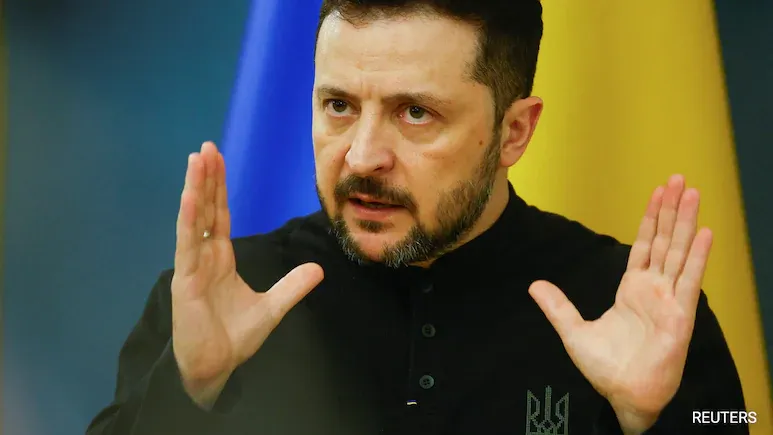
UNITED NATIONS, September 24, 2026 — Ukrainian President Volodymyr Zelenskyy urged world leaders on Wednesday to restrict trade with Russia and target the revenues that sustain its military campaign, arguing that continued commercial income is prolonging the war.
Addressing the United Nations General Assembly in English, Zelenskyy said Russia’s earnings should remain a central focus of international policy.
“When someone gives Russia more money through trade, they give this war more time,” he said. “That is exactly why we insist on limiting trade with the aggressor, and why we are burning Russia’s revenues ourselves.”
His appeal came as the war, now more than four years old, remains unresolved. Front-line positions in eastern and southern Ukraine have changed little over the past year, while both sides have expanded their use of long-range drones and missiles.
Zelenskyy said the conflict could not be brought to an end while Russia retained the financial means to continue military operations. He called on governments to impose sustained pressure on Moscow through trade restrictions and other measures aimed at reducing the income generated by its exports.
The Ukrainian president also directed a personal criticism at Russian President Vladimir Putin, portraying him as the central source of the continuing conflict.
“Something always seems to stop Putin from saying, ‘That’s it. Enough. Peace,’” Zelenskyy said. “Can you even imagine him without war?”
He described Putin as “Patient Zero” from whom war continued to spread, adding that the source of the conflict had to be stopped.
Russia is scheduled to address the General Assembly on Saturday. Putin has not attended the gathering in person for several years, and Foreign Minister Sergey Lavrov has represented Moscow at the United Nations.
Speaking to the Security Council on Wednesday, Lavrov said Russia was prepared to negotiate a lasting peace but rejected the idea of simply pausing the fighting. He argued that a temporary halt would give Ukraine and its supporters time to obtain and deploy more weapons.
The competing positions reflected the continuing divide between Moscow and Kyiv over the conditions for negotiations. Ukraine has sought greater pressure on Russia and stronger security guarantees, while Russia has said that any settlement must account for its military and political demands.
The war has also produced consequences far beyond the battlefield. Disruptions to fuel, fertiliser and grain shipments have affected markets and food security in several regions, while the conflict has deepened the political divide between Russia and Western governments.
Western analysts estimate that Russian military losses have exceeded 500,000, while Ukraine has also suffered more than 500,000 military casualties, including as many as 140,000 deaths. Neither government publishes a complete account of its own military losses, and the estimates remain subject to dispute.
Civilian casualties have also continued as missile and drone attacks strike cities and infrastructure on both sides. The increased use of long-range weapons has allowed the conflict to reach far beyond the immediate front line, while diplomatic efforts have failed to produce a comprehensive ceasefire.
Zelenskyy’s call for tighter economic pressure is likely to meet resistance from countries that continue to trade with Russia or depend on its energy and raw-material exports. Moscow has redirected much of its trade towards non-Western markets since the invasion, reducing the effect of some sanctions while maintaining access to vital revenue.
For Ukraine, the argument remains that any income reaching the Russian state helps finance the war. Zelenskyy told delegates that cutting those flows was essential if international efforts to end the conflict were to have a practical effect.