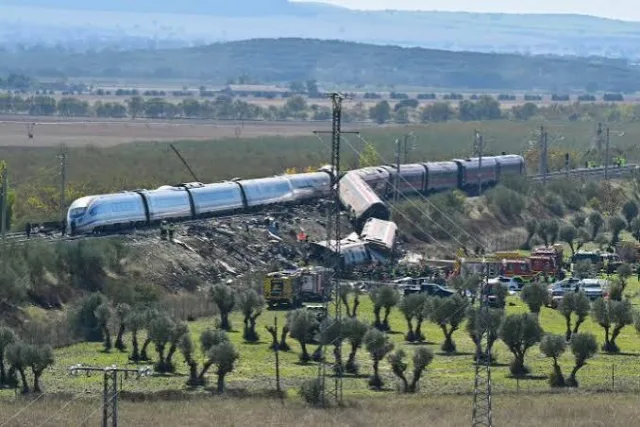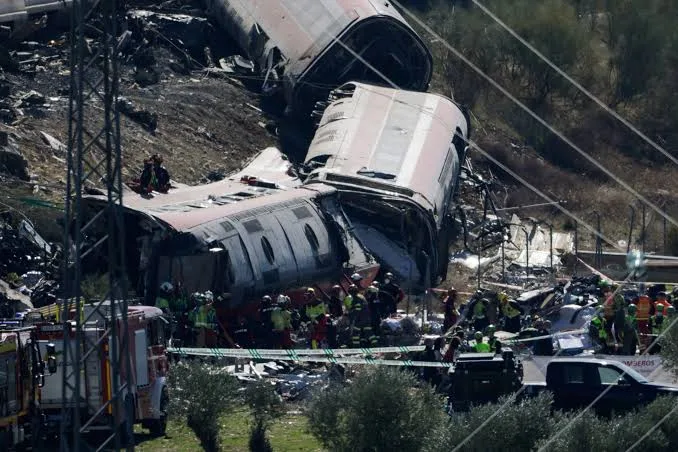
Spain is dealing with the political fallout of its second major high-speed rail disaster in under a year. At least 68 people were killed and dozens injured on Wednesday 28 October, shortly before 9am, when a Renfe train travelling from Madrid to Seville ran into a stationary locomotive operated by the Italian-owned operator Iryo on a rural stretch between Urda and Los Yébenes, south of Toledo. The three front carriages of the Renfe train were badly crushed. Counts of the injured and of the passengers on board varied between accounts, with figures for those hurt ranging from 53 treated by health services to more than 100.
What officials say happened
Transport Minister Óscar Puente said a computer communications failure triggered a red signal that automatically halted traffic. He said the central command centre nonetheless ordered the Renfe train to continue, an order he called inexplicable, and he said the train engineers were not to blame. Renfe has opened an internal investigation, a judicial inquiry is expected, and the national rail accident investigation body is also at work.
Prime Minister Pedro Sánchez declared three days of national mourning and said it was unacceptable for Spain to suffer two such accidents in one year. He promised a firm response if failures in safety systems are confirmed. He spoke without taking questions.
Protest and strike
On Wednesday night a union linked to the far-right Vox party held a demonstration in Madrid demanding Puente's resignation, with riot police deployed. Rail unions had planned a strike for Thursday over what they describe as a poor safety record. Opposition leader Alberto Núñez Feijóo of the People's Party called for a complete and independent review of the rail network. A general election is scheduled for 29 November.
The record behind the anger
In January a collision at Adamuz near Córdoba on the same line killed 46 people. A preliminary investigation attributed that crash to a fracture in the rail, and a police inquiry remains open. Spain's railway safety authority recorded 45 rail accidents in 2016, 57 in 2024 and 69 in 2025. High-speed rail use nearly doubled between 2019 and 2024 to about 40 million passengers, although passenger numbers fell 14 percent year on year in the first half of 2026.
Official European figures show Spain spent about $1.67 billion a year on high-speed lines from 2018 to 2022 but only 16 percent of it went on maintenance or repairs, against 33 to 39 percent in Italy, Germany and France. Experts warn that underinvestment in upkeep is putting safety at risk.
Survivors described chaos. One passenger said he held a woman in his arms as she died, and a doctor who reached the scene described devastation. With the election a month away, the open questions are who gave the order to proceed, whether the strike goes ahead, and whether the minister remains in post.