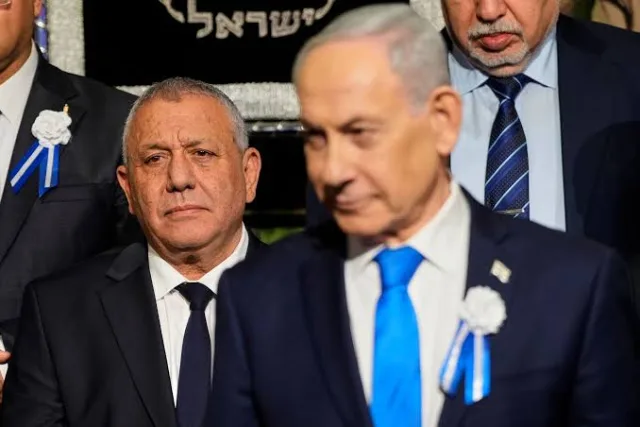
Israel's Central Elections Committee published its final results on Friday, confirming a deadlock. Turnout was 77.9 percent. Prime Minister Benjamin Netanyahu's bloc won 53 of the 120 Knesset seats and the opposition bloc led by Gadi Eisenkot won 48. The Arab-led Ra'am and Joint List together took 19. A government needs 61. At least 500,000 double-envelope ballots, cast by soldiers and diplomats, were counted on Thursday before the totals were fixed.
How the process works
President Isaac Herzog now consults the parties. If those talks fail, he gives the task of forming a government to the candidate most likely to manage it, who has about 28 days, with extensions possible. If that candidate fails, Herzog can pick another. If the second also fails, a 21-day window opens in which 61 members of the Knesset can ask Herzog to assign the task to one of them. If every step fails, Israelis go back to the polls.
Where the parties stand
Netanyahu has ruled out working with the Arab parties and has said it is forbidden to form a government with them. His Likud accuses them of stealing the election. Eisenkot is reported to be prepared to consider only partners who recognise Israel as a Jewish and democratic state, back the values in its Declaration of Independence and commit to national service, and he has not said whether the Arab-led parties meet that test. Avigdor Lieberman of Yisrael Beytenu has ruled out certain coalitions with a slogan rejecting both Netanyahu and the Arab politician Ahmad Tibi. Yousef Jabareen of the Joint List said his party is ready for the removal of Netanyahu's government. Activists have urged Eisenkot to form a government with the Arab parties.
Analyst Ahmed Najar says Ra'am is open to joining a government led by Eisenkot, while the Joint List might back a minority government from outside if it won commitments on equality, crime, home demolitions and a Palestinian political path. He says the main obstacle is the refusal of Eisenkot and his partners to treat the Arab parties as legitimate. Nimrod Flaschenberg sees three possible roles for them: inside the government, inside the coalition without ministers, as Ra'am was in the 2021-22 Bennett government, or as outside supporters.
Netanyahu's options
Roi Zur says the numbers do not add up for any side. Yossi Mekelberg argues that Netanyahu could try to draw Eisenkot and others into a coalition while painting the Arab parties as illegitimate, which would block an alternative. Flaschenberg expects Netanyahu to push for another election, hoping for lower Arab turnout and a demoralised opposition, and thinks luring Naftali Bennett or Lieberman looks unlikely for now.
The Knesset is due to be sworn in on 10 November, and the committee must certify the results by 4 November. Until then, nothing in the arithmetic changes unless a party breaks the position it has taken in public.