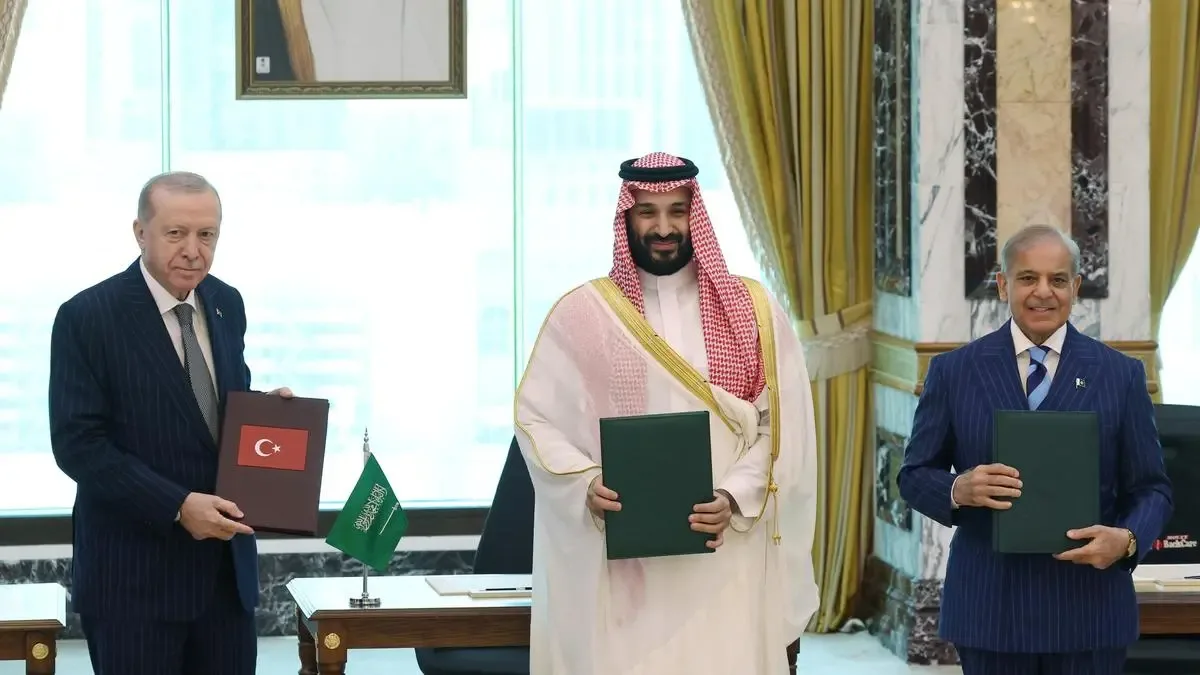
The newly formed Mecca Defence Alliance is moving toward its first operational deployment, with Pakistan and Türkiye agreeing to provide designated military forces and capabilities to Saudi Arabia as attacks by Yemen’s Houthi movement intensify.
The decision was taken at an emergency meeting of the alliance’s Strategic-Political and Defence Committee in Riyadh on October 5. The three countries agreed to immediately begin implementing their collective-defence commitments and take measures to ensure the rapid deployment of agreed forces and capabilities inside Saudi Arabia.
The announcement represents a significant shift for the alliance, which was established only in August. Until now, the Makkah Joint Defence Agreement had largely remained a political and strategic commitment. The latest decision gives it an immediate military dimension.
Saudi Arabia, Pakistan and Türkiye also condemned what they described as attempts to target the holy cities of Mecca and Medina, along with continuing attacks against Saudi cities and civilian and economic infrastructure. The statement did not explicitly name the Houthis, but the meeting comes amid an escalation in attacks attributed to the Iran-aligned group.
The three governments have not publicly specified the number of troops to be deployed, the units involved or the timetable for their arrival. The agreement states that deployment will take place according to arrangements approved by the three governments and their respective national laws.
The development follows weeks of increasing pressure on Saudi Arabia.
Houthi forces have launched missile and drone attacks against Saudi territory, including strikes targeting cities and critical infrastructure. The renewed conflict has also coincided with major territorial gains by the Houthis in Yemen, including advances along the Red Sea coast and around the Bab el-Mandeb maritime chokepoint.
Saudi-backed Yemeni forces have now begun a counteroffensive aimed at reversing those gains, adding a new military dimension to the confrontation. The escalation has increased the pressure on Riyadh to strengthen both its air-defence posture and its ability to support operations in Yemen.
Pakistan has previously made clear that it regards its commitment to Saudi security as binding under the new pact. Defence Minister Khawaja Asif said last month that Pakistan would make its available capabilities accessible to Saudi Arabia, although he did not confirm whether Pakistani forces had participated in airstrikes or whether Riyadh had requested such assistance.
Islamabad has simultaneously advocated dialogue with the Houthis. Pakistan’s foreign minister said Iran had suggested political engagement with the group, and the proposal was expected to be discussed by the alliance’s members.
That diplomatic position highlights the complexity of Pakistan’s new military commitment. Islamabad maintains important ties with both Saudi Arabia and Iran and has sought to avoid being drawn directly into a wider regional confrontation.
Türkiye has also signalled its willingness to support Saudi Arabia. Turkish Foreign Minister Hakan Fidan said last month that Riyadh could have military requirements arising from the Houthi attacks and that Ankara was prepared to meet them under the trilateral agreement.
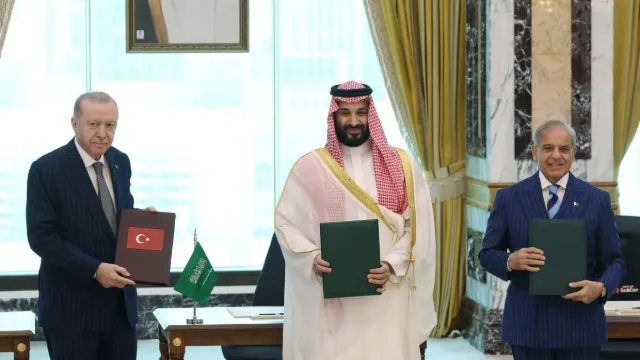
The alliance has also begun building an institutional structure. At Monday’s meeting, the three countries appointed retired Pakistani Lieutenant General Nauman Mahmood as the alliance’s first secretary-general for a three-year term.
The Makkah agreement was signed on August 7 and commits the three countries to collective defence. Its members have described the pact as a defensive arrangement, with an attack on one member treated as an attack on all three.
Its first major test has arrived much sooner than expected.
The immediate question is what the promised deployment will actually involve. The governments have announced the provision and rapid deployment of agreed capabilities but have yet to publicly disclose their precise composition, mission or rules of engagement.
That distinction will matter as the conflict develops.
For Saudi Arabia, the alliance offers additional military capacity at a time when its territory and infrastructure are facing repeated attacks. For Pakistan and Türkiye, the deployment will demonstrate how far their commitments under the new pact extend beyond diplomatic declarations.
The Makkah Defence Alliance is therefore entering a new phase.
What began as a political commitment in August is now being translated into military arrangements on the ground, with Saudi Arabia facing a widening security challenge on its southern and western approaches.
The effectiveness — and limits — of the new alliance will now be measured not by the language of its treaty, but by what forces it can actually put in place and how they are used.