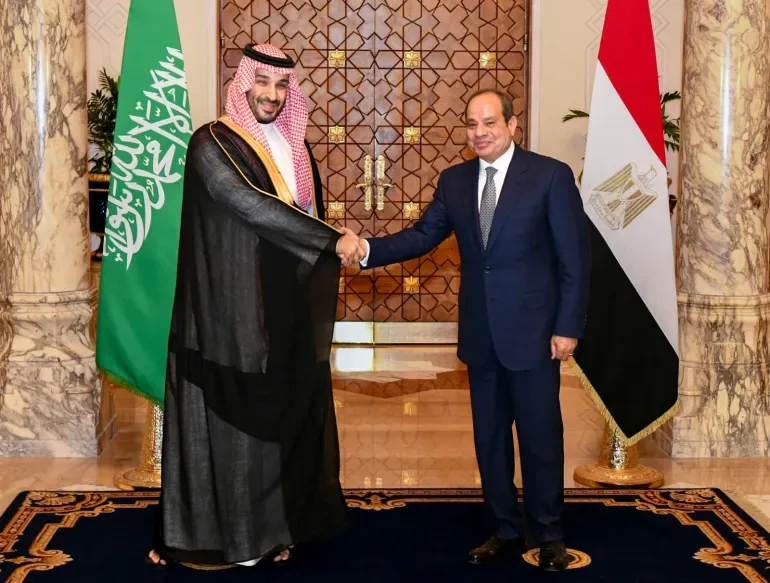
Egypt has pledged to provide Saudi Arabia with “all necessary and possible support” to defend its security and stability as attacks by Yemen’s Houthi rebels intensify, signalling stronger coordination between two of the Arab world’s most influential countries.
Egypt’s National Defence Council, chaired by President Abdel Fattah el-Sisi, announced the commitment on Sunday after reviewing the deteriorating regional situation. The council said Cairo stood in full solidarity with Riyadh and would support efforts to protect Saudi territory, national resources and Islamic holy sites.
The announcement comes after renewed fighting in Yemen and attacks attributed to the Iran-aligned Houthi movement against Saudi targets, including Riyadh’s international airport and the state oil company Saudi Aramco.
Military assistance remains a key question
The pledge follows a statement by Sisi on Saturday that Egypt would take necessary measures to help defend Saudi Arabia if requested. He said Cairo would act in coordination with Saudi King Salman and Crown Prince Mohammed bin Salman.
Egypt’s parliament was due to hold an emergency session to consider authorising potential defence assistance. However, the announcement of support does not itself confirm that Egyptian troops will be deployed or that Cairo has committed to a direct military intervention.
The scope of any assistance remains unclear. It could involve military cooperation and defensive support, but the Egyptian government has not publicly detailed specific operational commitments.
Strategic ties underpin Egypt’s decision
Egypt and Saudi Arabia maintain close political, economic and security relations. Riyadh has provided substantial financial assistance to Cairo over the years, while both governments regard regional stability and maritime security as important national interests.
The renewed Houthi attacks pose particular concerns for Saudi Arabia because of the threat to critical infrastructure and the potential disruption of regional trade and energy supplies. The escalation also threatens stability around the Red Sea and the strategic Bab el-Mandeb Strait, a key route for international shipping.
Egypt’s response reflects its view that Saudi security is closely connected to its own national interests. At the same time, Cairo has emphasised the need to intensify diplomatic engagement with regional and international partners to reduce tensions and pursue peaceful solutions.
A wider regional conflict
The latest developments come amid renewed fighting between the Houthis and forces aligned with Yemen’s internationally recognised government following the collapse of a truce. The conflict has repeatedly drawn in regional powers and raised concerns about the wider confrontation involving Iran and its regional rivals.
For Saudi Arabia, securing additional regional support could strengthen its defensive position. For Egypt, however, any deeper military involvement would carry risks, including the possibility of becoming more directly entangled in a protracted conflict.
Cairo’s pledge therefore signals strong political solidarity with Riyadh, but the extent of its practical military contribution remains to be established. The next steps will depend on Saudi Arabia’s requests, Egypt’s parliamentary process and whether diplomatic efforts can contain the escalation before it spreads further.