The Omani co-pilot accused of attacking the captain of a flydubai flight bound for Israel had allegedly planned the attack before he was hired by the airline, according to Israeli officials familiar with the investigation.
Two Israeli officials briefed on the UAE-led probe said the co-pilot told interrogators that he had applied to fly for flydubai after specifically looking for an airline operating routes to Tel Aviv. A third source familiar with the investigation said he had intended to crash the September 30 flight into Ben Gurion Airport.
The revelations could significantly widen the investigation into the cockpit attack, which has already been described by UAE authorities as a suspected terrorist act.
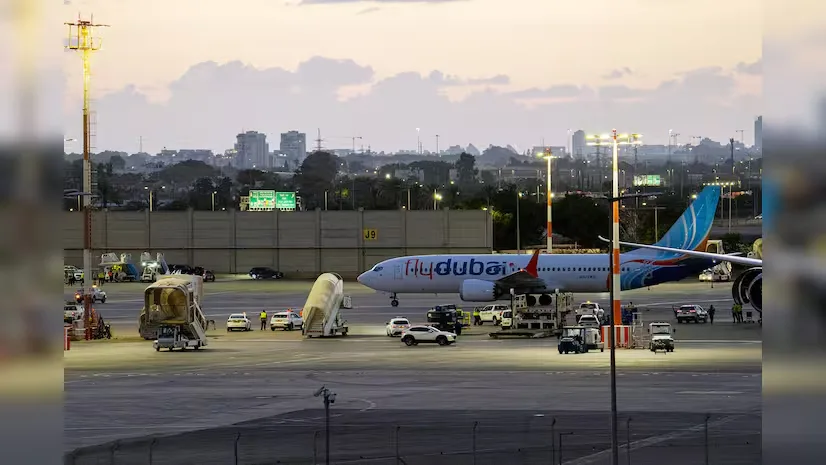
The flight, FZ1073, was travelling from Dubai to Tel Aviv when the co-pilot allegedly attacked Indian Captain Smit Machchhar inside the cockpit with an emergency crash axe. The aircraft subsequently entered a steep descent, losing more than 14,000 feet in roughly 30 seconds, according to flight-tracking data.
Machchhar, despite suffering serious injuries, managed to open the cockpit door. Passengers rushed forward and helped restrain the attacker. Two off-duty flydubai pilots travelling as passengers also intervened, and one later helped take control of the aircraft.
The Boeing 737-8 MAX was diverted to Tabuk in northwestern Saudi Arabia, where it landed safely. More than 170 people were aboard.
The alleged plans described by investigators raise questions about whether the September 30 attack was an isolated act or the culmination of preparations that began before the co-pilot entered flydubai employment.
According to the sources, the same pilot had operated an earlier flight to Tel Aviv and had allegedly considered hijacking and crashing that aircraft as well. He ultimately did not carry out the plan. The reason for that decision remains unclear.
The sources also said he may have known someone travelling on that earlier flight, although that detail has not been independently established.
The co-pilot is being held in the United Arab Emirates after initially being detained by Saudi authorities following the emergency landing. UAE authorities have not publicly announced formal charges against him, and his legal representation is not known.
His identity has been reported as Hamam al-Hammami, an Omani national, although UAE authorities and flydubai have not publicly confirmed his name.
The investigation has now expanded beyond the UAE and Israel.
Australian authorities are examining his links to the country, where he previously studied. A joint counterterrorism unit in Australia is investigating his time there, while New Zealand authorities have also confirmed that he had spent time in the country.
He was reportedly enrolled at RMIT University in Melbourne but did not complete an engineering qualification. Australian authorities are examining whether his activities during his time in the country have any relevance to the wider investigation.
His professional history is also coming under scrutiny.
The Moroccan airline Royal Air Maroc has said he completed three months of theoretical training with the company in 2025 but was subsequently rejected for employment. Reports have also raised questions about whether concerns about his ideological views had emerged before he joined flydubai.
Israeli Prime Minister Benjamin Netanyahu has said the co-pilot had undergone radical Islamist indoctrination and was suicidal. Those claims have not been independently established in the ongoing investigation.
The incident has also triggered questions about how the co-pilot was assigned to a flight to Israel.
Netanyahu has said that pilots who are citizens of countries with which Israel has no diplomatic relations, including Oman, are not permitted to operate flights to Israel. He has ordered a broader review of security arrangements involving foreign airlines operating routes to the country.
The investigation will now have to establish what information was available to the airline, regulators and security agencies before the flight took off and whether any warning signs were missed.
That question is becoming more important as investigators examine the claim that the co-pilot had sought employment with an airline precisely because it operated flights to Tel Aviv.
The cockpit attack itself was narrowly prevented from becoming a mass-casualty disaster.
Machchhar's decision to open the cockpit door allowed passengers to enter. Their intervention gave the reserve pilots time to stabilise the aircraft and divert it to Saudi Arabia. The captain is recovering from his injuries.
But the latest revelations shift attention from what happened in the cockpit to what happened before the aircraft ever left Dubai.
If investigators confirm that the co-pilot had contemplated a similar attack before joining flydubai, the case will raise a far more fundamental aviation-security question: how did someone allegedly preparing for a deliberate cockpit attack pass through the systems designed to prevent exactly that threat?
That question may prove as consequential as the attack itself.
:::