France Unrest: Mass Protests Erupt Across the Country
Over 400,000 people took to the streets of France on Saturday to protest against rising living costs, economic inequality, and deteriorating public services, with police deploying tear gas and water cannons to disperse demonstrators in several cities.
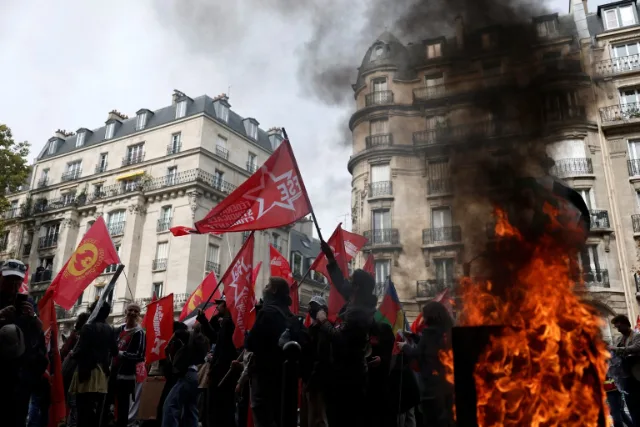
The demonstrations, which unfolded despite a massive security deployment aimed at preventing a repeat of last weekend's violence, saw clashes break out in Paris, Lyon, Marseille, Bordeaux, Lille, Nantes, and other cities. According to the French Interior Ministry, the nationwide turnout was around 410,000, while trade unions estimated that nearly 800,000 people had participated.
In Paris, where police estimated that 110,000 people joined the march, clashes erupted towards the end of an otherwise largely peaceful demonstration. Police used batons and tear gas to push back groups of protesters, while water cannons were also deployed. Clashes were reported in other cities, with police firing tear gas at several locations as tensions escalated.
Security Deployment and Arrests
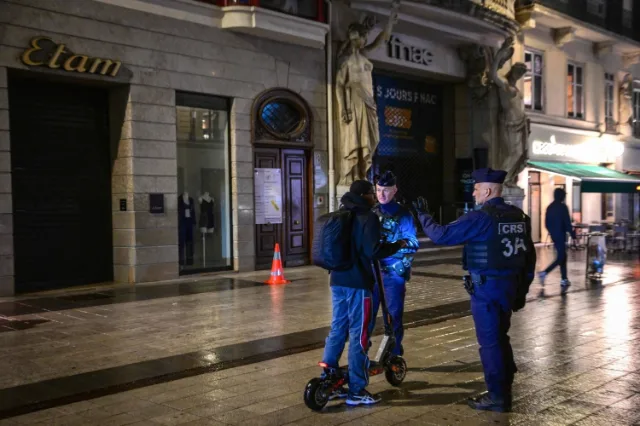
Authorities deployed 70,000 police officers and gendarmes across the country, 10,000 more than the previous weekend, when widespread looting and vandalism damaged thousands of shops and businesses. French Interior Minister Laurent Nunez said 135 people had been arrested nationwide by early afternoon, with police searches uncovering fireworks, metal balls, and other objects that could be used as weapons.
The city of Paris had taken on the appearance of a city under lockdown, with shopkeepers boarding up storefronts, and major museums, including the Louvre and Musee d'Orsay, shutting their doors. Over 20 metro stations were closed as a precaution, and the Paris demonstration was moved at the last minute from Bastille in the city centre to Porte d'Italie on the southeastern edge of the capital.
Protests and Restrictions
Unions criticized the decision to move the demonstration, with one representative calling it "scandalous" and accusing the authorities of restricting the right to demonstrate. The protests began last month with student demonstrations over school conditions in suburban Paris before expanding into a broader movement against rising living costs and the government's handling of public services.
Left-wing leader Jean-Luc Melenchon, who joined the Paris march, praised demonstrators for their restraint but warned that protests would continue until President Emmanuel Macron addressed the country's growing social discontent. The Yellow Vests movement, which began in 2018 over rising fuel prices and living costs, has called for another round of demonstrations on October 31, including rallies and a sit-in outside parliament and city halls across the country.
The protests have highlighted the deep-seated frustrations of the French people, who are struggling to make ends meet amidst rising living costs and economic inequality. The government's handling of public services has also come under scrutiny, with many protesters calling for improved healthcare, education, and social welfare programs.
As the situation continues to unfold, it remains to be seen how the government will respond to the protesters' demands. With the Yellow Vests movement calling for further demonstrations, it is likely that the unrest will continue in the coming days and weeks. The international community will be watching closely as France navigates this challenging period, and the outcome will have significant implications for the country's social and economic landscape.
In the meantime, the people of France will continue to take to the streets, demanding change and calling for a better future. The protests have already had a significant impact, with the government facing increased pressure to address the country's social and economic issues. As the situation develops, it is clear that the fate of France hangs in the balance, and the outcome will be shaped by the actions of the government, the protesters, and the international community.
The French government has faced criticism for its handling of the protests, with many accusing the authorities of using excessive force and restricting the right to demonstrate. The deployment of 70,000 police officers and gendarmes has been seen as a heavy-handed approach, and the use of tear gas and water cannons has been criticized by human rights groups.
Despite the challenges, the protesters remain determined to bring about change. The movement has gained momentum in recent weeks, with more and more people joining the demonstrations. The Yellow Vests movement has become a symbol of resistance against the government's policies, and its leaders have vowed to continue the protests until their demands are met.
As the protests continue, the international community will be watching closely to see how the situation unfolds. The outcome will have significant implications for France and the wider world, and it is clear that the fate of the country hangs in the balance. The people of France are demanding change, and it is up to the government to respond to their demands and address the country's social and economic issues.
In conclusion, the protests in France have highlighted the deep-seated frustrations of the French people, who are struggling to make ends meet amidst rising living costs and economic inequality. The government's handling of public services has also come under scrutiny, and the deployment of 70,000 police officers and gendarmes has been seen as a heavy-handed approach. As the situation continues to unfold, it remains to be seen how the government will respond to the protesters' demands, and the outcome will have significant implications for the country's social and economic landscape.