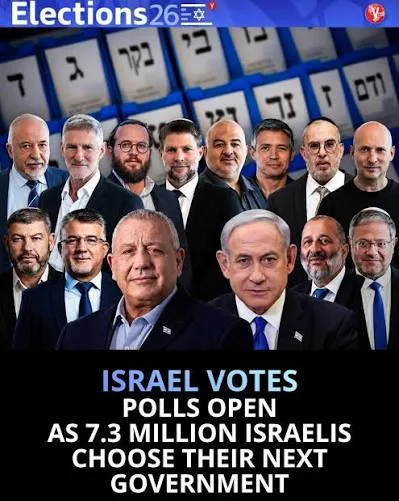
Israelis are voting in what is being described as one of the most pivotal elections in the country's history, with turnout at its highest in more than four decades. The campaign has been shaped by issues of democracy and security, with many viewing the election as a referendum on incumbent Prime Minister Benjamin Netanyahu's rule.
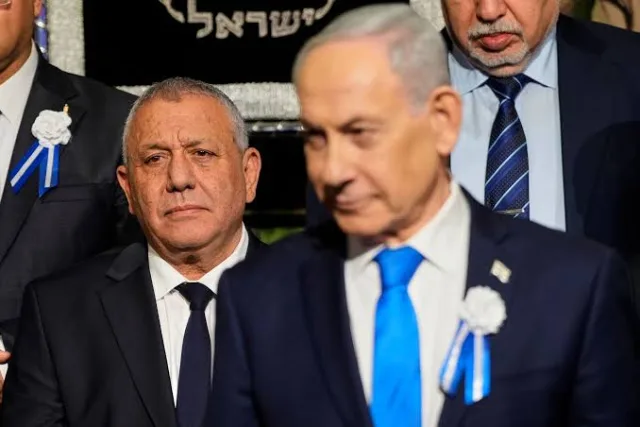
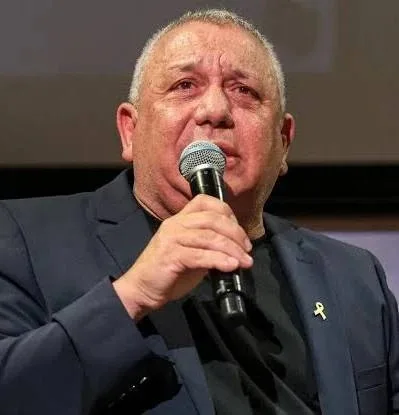
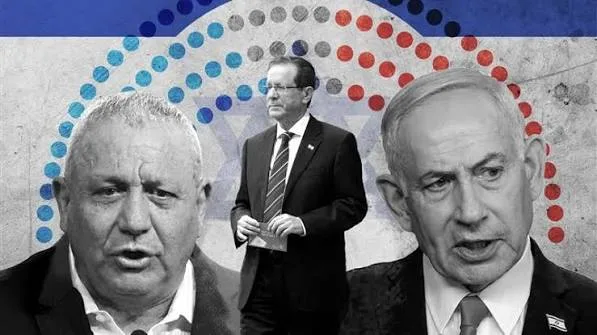
The latest polling suggests that Netanyahu is almost neck-and-neck with former military chief Gadi Eisenkot, who leads the newly formed Yashar Party. However, neither of their political blocs is projected to win the 61 seats needed to form a majority government, which could lead to weeks or months of political wrangling.
Eisenkot's Yashar Party is part of the so-called 'change bloc', a collection of parties with ideological differences but a shared goal of ousting Netanyahu. Other leaders in the bloc include former Prime Minister Naftali Bennett and Avigdor Lieberman, both right-wingers who take hardline positions on security, and Yair Golan, a left-leaning former general.
Netanyahu, who has been a titan of Israeli politics since first serving as prime minister in 1996, will need to form another alliance with the far-right and ultra-Orthodox parties that make up his current governing coalition if he is to return to power. However, the campaign has been dominated by the issue of security, with the opposition bloc hammering Netanyahu for the unprecedented security failure that led to the 7 October Hamas-led attacks on Israel.
The opposition has also pushed for an independent commission of inquiry into the attacks, which Netanyahu has long resisted. They have also pointed to what they see as threats to democracy under Netanyahu, who faces an ongoing trial on corruption charges and is still pursuing contentious plans for reforms to the judicial system.
Despite the opposition's attack lines, Netanyahu has once again framed himself as 'Mr Security', pointing to what he says are strategic victories in Israel's wars across the Middle East and his close relationship with US President Donald Trump. However, his campaign has been marked by controversy, including the posting of an AI-generated image of a nuclear bomb hitting Tel Aviv, which Eisenkot described as 'hysterical'.
The issue of conscription has also been a major point of contention, with Netanyahu's government failing to enforce a Supreme Court ruling that ultra-Orthodox Jewish men in full-time religious study should be conscripted to the military. Eisenkot has pledged to end Hamas rule in the Gaza Strip within 18 months, through a US-led peace plan or, if necessary, military means.
As the results begin to come in, hundreds of thousands of Israelis will gather to watch the outcome, with Netanyahu's Likud meeting in Jerusalem and Eisenkot's Yashar assembling in Tel Aviv. The election is being closely watched around the world, with many speculating about the potential consequences for the region and beyond.
With an unprecedented 70,000 people reportedly flying home from abroad to vote, and hundreds of thousands set to cast ballots for the first time, the electoral arithmetic is complex. Red lines have already been drawn, with some parties ruling out working with others, and it remains to be seen what kind of concessions, deals, and U-turns can be reached once the results come in.
The possibility of political deadlock, where no bloc is able to reach a majority and a minority government cannot be formed, is a scenario dreaded by many. In that event, new elections would be called, with Netanyahu to remain as interim prime minister. Between 2019 and 2022, Israel held five separate elections as parties struggled to co-operate, and many are hoping that this election will bring some much-needed stability to the country.
As the world waits with bated breath for the outcome of the election, one thing is clear: the consequences of this pivotal vote will be felt far beyond Israel's borders, with potential implications for the region and the world at large.