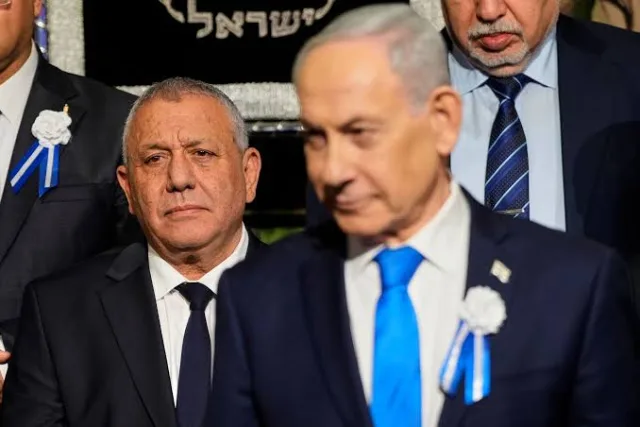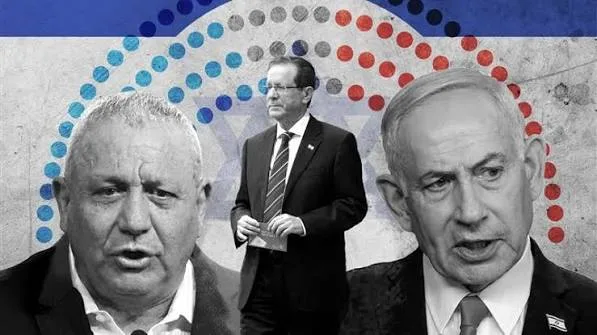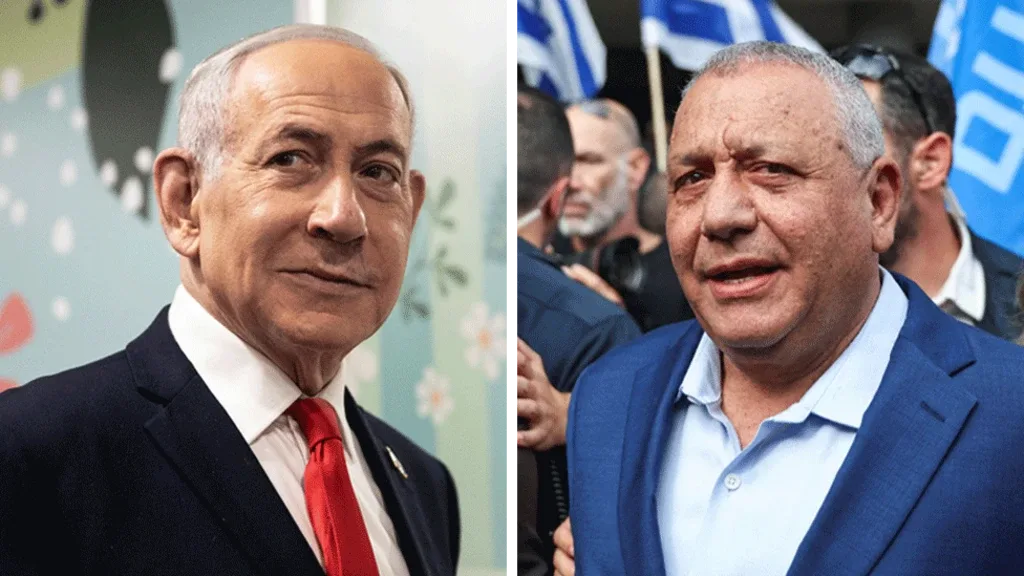
Israel's election on Tuesday 27 October produced no clear winner, according to exit polls released when voting closed at 10pm. Three television networks put Prime Minister Benjamin Netanyahu's bloc on 50 seats and the bloc led by former army chief of staff Gadi Eisenkot on 52, with the remaining 18 seats going to Arab-led parties that sit in neither camp. A fourth channel, strongly favourable to Netanyahu, gave his coalition 60 seats and Eisenkot's bloc 43. Parliament has 120 seats, so a bloc needs 61 to govern. The numbers moved through the night: earlier figures put both blocs level at about 51, and one early version had Netanyahu's side ahead.
Turnout reached 77.7 per cent, according to the Central Elections Committee, the highest since 1999. About 5.7 million people voted, 7.1 per cent more than in 2022. Early counting of a small number of polling stations, which is not a reliable guide, showed Likud with about 26.5 per cent and Eisenkot's list with about 19.3 per cent.
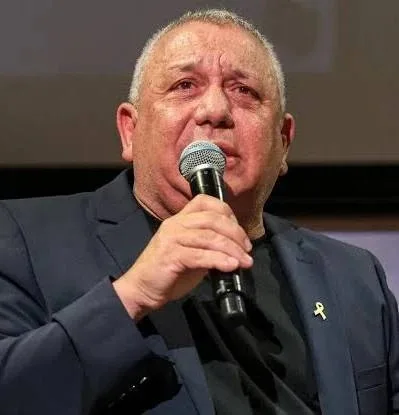
Both men claimed momentum. Eisenkot said that if the exit polls hold, the result is a victory for Israel's mainstream Zionist majority, and early on Wednesday he said Israelis had chosen change and that he would try to form a government. Netanyahu, who had told voters to vote correctly without spelling out what he meant, pointed to long queues in Arab communities in his social media posts. Experts on disinformation criticised several of those posts, including an image that may have been generated by artificial intelligence. Defence Minister Israel Katz had urged voters on election day to back Netanyahu so that he could finish the job in Iran.
Official results are due within eight days, by 4 November, although a final tally is expected sooner and an official result is unlikely before Thursday. About a week after the results are certified, President Isaac Herzog will ask a lawmaker to try to form a government. That is normally the leader of the largest party but is not required to be. The chosen lawmaker then has seven weeks to assemble 61 seats, and if the attempt fails, another may be tried. If the deadlock continues, Herzog can dissolve parliament and call fresh elections within 90 days.
The next stage turns on arithmetic and on who will sit with whom. Several parties in the anti-Netanyahu camp have ruled out cooperation with the Arab list Ra'am, while Netanyahu's allies depend on small parties that may or may not clear the 3.25 per cent threshold. Weeks of talks are likely, and a repeat election in early 2027, with Netanyahu as caretaker prime minister, remains possible.