Elon Musk has unveiled a redesigned Tesla Roadster capable of briefly lifting off the ground, performing aerial manoeuvres and landing, presenting an ambitious fusion of electric-car engineering and rocket technology that could push the boundaries of what a sports car can do.
The demonstration took place on October 15 at a SpaceX test facility in McGregor, Texas. The vehicle drove up a specially designed curved ramp, travelled upside down along part of the structure and then launched into the air before performing a mid-air manoeuvre and landing on its wheels. Musk described the achievement as proof that flying cars were becoming a reality.
View this post on X
The event showcased technology developed through collaboration between Tesla and SpaceX, two of Musk’s companies. But despite the dramatic display, the Roadster remains a specialised prototype rather than a conventional flying vehicle ready for everyday use.
A sports car with rocket technology
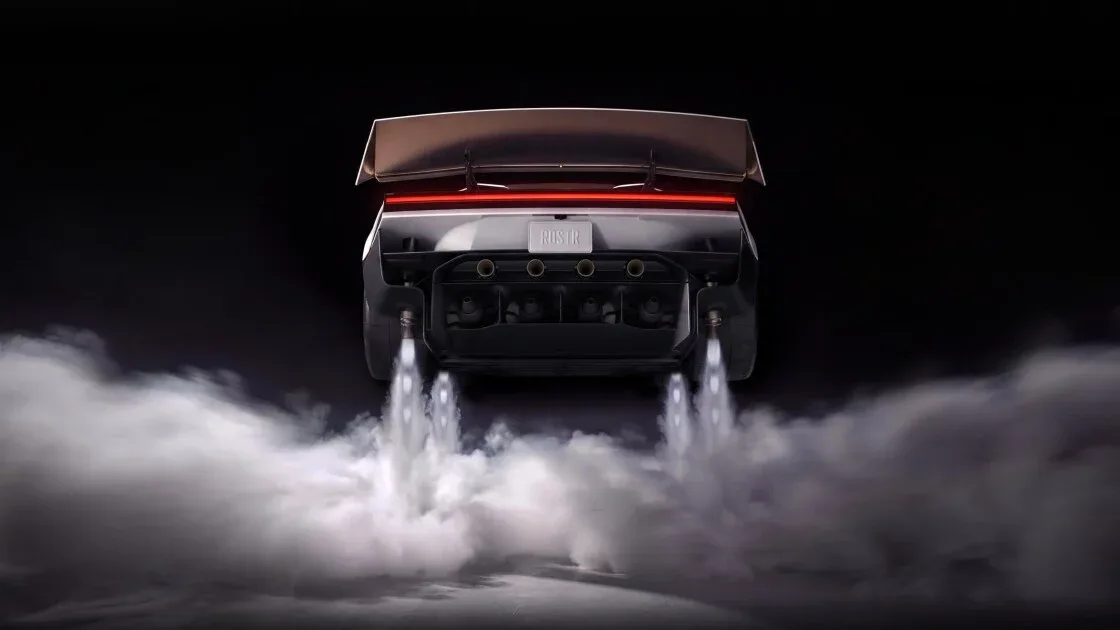
The redesigned Roadster combines an electric sports-car platform with high-pressure compressed-air systems and SpaceX-developed thrusters. According to the demonstration and the technical details presented by Tesla executives, the system can generate thrust to lift the vehicle and enable controlled movements in the air.
The car also incorporates an underbody fan system designed to create suction and increase grip against the road. Tesla says this could produce exceptional downforce, improving acceleration and cornering performance. The combination of traction technology and thrusters is intended to give the vehicle capabilities beyond those of conventional high-performance cars.
Musk said the vehicle could accelerate from zero to 60 miles per hour in less than a second, although independent verification of that performance claim remains outstanding. He also acknowledged that the design was not necessarily optimised for safety, underscoring the experimental nature of the project.
The demonstration was conducted in a controlled environment. It did not establish that the car could safely take off, manoeuvre or land in ordinary traffic conditions.
A long-delayed project
Tesla first unveiled plans for the next-generation Roadster in 2017, presenting it as an electric supercar intended to combine extreme performance with long-distance driving capability. Production expectations subsequently shifted, leaving the project delayed for years.
The latest unveiling offers a more concrete demonstration of the vehicle’s unusual capabilities, but commercial availability remains in the future. Musk said production was expected to begin in 2028.
The company has not yet resolved every question surrounding the flying version, including the precise limits of its airborne performance, the duration of flight, the vehicle’s practical operating range and the conditions under which its aerial functions could be used.
Those uncertainties matter because a successful demonstration is not the same as a commercially viable product. Tesla must still establish that the technology can be manufactured reliably, operated safely and supported by an appropriate regulatory framework.
The regulatory challenge
A vehicle that drives on public roads and one that deliberately takes flight fall under different safety and regulatory considerations. Any system that enables a car to leave the ground would raise questions about airspace, collision avoidance, emergency landing procedures and the protection of people nearby.
Musk acknowledged that the vehicle might not be legal in every jurisdiction. There is currently no indication that the Roadster’s flying function has received approval for ordinary public-road use.
The technology also raises practical questions about whether such capabilities would be useful outside carefully controlled demonstrations. A vehicle designed to fly would need to operate safely around buildings, power lines, pedestrians and other aircraft, while accounting for changing weather and unexpected mechanical failures.
For now, Tesla has demonstrated a striking technical capability rather than a complete transportation solution.
Innovation or spectacle?
The Roadster reflects Musk’s willingness to pursue projects that combine technologies from different industries. Tesla has concentrated on electric vehicles and automotive software, while SpaceX develops launch systems and spacecraft. Bringing elements of aerospace engineering into a road vehicle creates opportunities for experimentation, but it also introduces complexity that conventional cars do not face.
The commercial case remains uncertain. A flying sports car could appeal to wealthy buyers attracted by novelty and extreme performance, but that market is different from the mass-market transport segment where safety, reliability, affordability and convenience dominate purchasing decisions.
There may be applications for some of the underlying technologies beyond the flying-car concept itself. Advanced traction systems, active vehicle control and compact propulsion mechanisms could influence future automotive engineering. Whether those developments translate into practical benefits will depend on further testing and production experience.
Musk’s record also offers a reason for caution. Tesla has previously announced ambitious product timelines that were subsequently delayed. The Roadster’s projected 2028 production date should therefore be treated as a company target rather than a guarantee.
The future has not quite landed
The Roadster demonstration has revived an idea that has occupied engineers and popular culture for generations: a personal vehicle that can travel on roads and take to the air when needed.
But making a car fly briefly under controlled conditions is only one part of that challenge. Building a vehicle that can do so safely, legally, affordably and reliably in the real world is a much more demanding undertaking.
For Tesla and SpaceX, the unveiling demonstrates the possibilities that emerge when automotive and aerospace technologies intersect. It does not yet establish that flying cars are ready to become a practical part of everyday life.
Musk has shown that a sports car can do more than drive. The harder test will be proving that it can fly safely—and that anyone outside a carefully staged demonstration has a compelling reason to want it to.