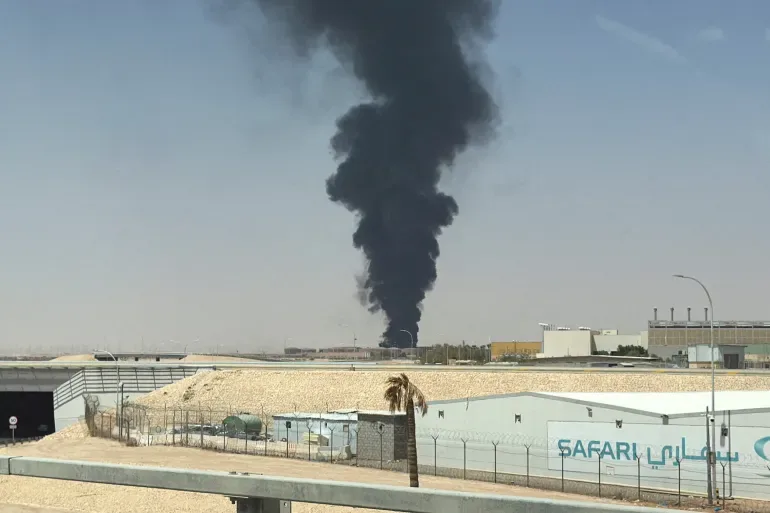
A missile attack on King Khalid International Airport in Riyadh killed at least 12 people and injured more than 300 on October 10, marking one of the deadliest attacks on Saudi Arabia in more than a decade and raising the risk of a wider regional confrontation. Saudi civil aviation authorities reported that 309 people were wounded, some critically, as emergency services treated casualties across several hospitals.
The strike hit the airport complex housing Terminals 3 and 4, which serve domestic flights, according to a regional official cited by the Associated Press. The attack caused damage to airport facilities and forced authorities to suspend operations while security teams assessed the site. Flights were diverted, and several countries advised their citizens to avoid the airport.
The Saudi-led coalition fighting in Yemen blamed the attack on the Iran-backed Houthi movement, which has intensified strikes against Saudi targets amid renewed fighting in Yemen. The coalition condemned the assault and pledged a decisive response under international humanitarian law.
The dead included four Saudi citizens and nationals of Bangladesh, the United States, Egypt, Jordan, Syria, Palestine and Sudan, according to the Saudi General Authority of Civil Aviation. The injuries were reported across multiple hospitals, with some victims in critical condition. The toll subsequently rose after an Indian national injured in the Saturday attack died, according to the Indian embassy in Saudi Arabia.
The attack was the latest in a series of strikes on Saudi aviation infrastructure. The Houthis had targeted King Khalid International Airport earlier in the week, while Saudi authorities also reported a separate projectile incident near King Fahd International Airport in Dammam. The repeated attacks have disrupted air travel and heightened concerns about the security of civilian infrastructure across the Gulf.
The escalation comes as fighting intensifies between Houthi forces and troops aligned with Yemen’s internationally recognised government, which is backed by Saudi Arabia. Riyadh has conducted military operations in support of the Yemeni government, while the Houthis have expanded their attacks on Saudi airports, military installations and oil-related infrastructure.
The conflict has acquired wider strategic implications because of the importance of Saudi Arabia to global energy markets and the vulnerability of shipping routes around the Arabian Peninsula. The Houthis’ position near the Bab el-Mandeb Strait, which connects the Red Sea to the Gulf of Aden, gives the group potential leverage over a major international maritime corridor. Any sustained disruption there could compound existing pressures on regional trade and energy supplies.
US President Donald Trump said Washington was considering whether to join Saudi strikes against the Houthis. Such an intervention could widen the conflict and invite further retaliation against Saudi or other regional targets. The possibility of deeper US involvement has added uncertainty to a confrontation already linked to the wider war involving Iran.
Saudi Arabia has also faced questions over its capacity to sustain its air-defence response. Repeated attacks on airports and other strategic facilities place pressure on missile-interception systems and raise the costs of protecting critical infrastructure. The kingdom has sought assistance from international partners as the campaign against the Houthis expands.
India condemned the attack on Riyadh airport, describing repeated assaults on civilians and civilian infrastructure as unacceptable and calling for them to stop. New Delhi also expressed condolences to the victims’ families and voiced support for Saudi Arabia’s sovereignty.
The immediate challenge for Saudi Arabia is to restore confidence in the safety of its airports while deciding how to respond without triggering a still broader regional war. The attack has demonstrated the reach of the Houthis’ campaign and the risks facing civilian aviation, while the prospect of additional military involvement by the United States raises the stakes for the wider Middle East.