Pakistan’s decision to impose emergency and governor’s rule in Khyber Pakhtunkhwa has exposed a fundamental weakness in the country’s political system: the persistent tendency to treat political opposition as a problem of state security rather than a legitimate feature of democratic government.
The federal government says the intervention was necessary because the Pakistan Tehreek-e-Insaf (PTI), which governed the northwestern province, failed to contain rising militancy. Yet the decision, announced on October 11, coincided with a protest campaign led by provincial Chief Minister Sohail Afridi demanding the release of jailed former prime minister Imran Khan.
That timing has raised questions about whether the emergency is solely a response to deteriorating security or also an attempt to neutralise a political challenge to the federal government and the military establishment.
The distinction matters. Pakistan faces a genuine militant threat, particularly along its border with Afghanistan. But a security emergency does not automatically justify removing an elected government, nor does the concentration of authority guarantee that militancy will decline.
If the intervention is intended to restore order, its success must be measured by whether it improves public security and strengthens civilian institutions—not by whether it weakens the political opposition.
The security argument—and its limits
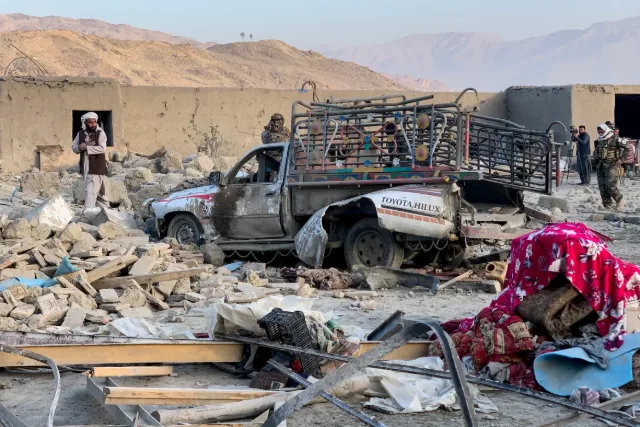
Khyber Pakhtunkhwa has endured years of militant violence, with attacks targeting security personnel, government installations and civilians. The resurgence of the Tehreek-e-Taliban Pakistan (TTP) has intensified pressure on authorities to develop a more effective response.
The federal government has accused the provincial administration of failing to cooperate adequately in counterterrorism efforts. The PTI, in turn, has criticised Islamabad’s security approach and argued that military operations can cause civilian displacement without addressing the underlying causes of militancy.
Neither position should be accepted uncritically. The provincial government cannot absolve itself of responsibility for public safety simply by blaming federal policy. Having governed Khyber Pakhtunkhwa for years, the PTI must answer questions about policing, administration, intelligence coordination and its earlier approach to negotiations with the TTP.
But the federal government also needs to demonstrate that its intervention is necessary, proportionate and likely to achieve its stated purpose.
The existence of militancy does not, by itself, establish that an elected administration has become incapable of governing. Nor does transferring authority to the centre resolve the institutional weaknesses that allow armed groups to operate.
Pakistan’s challenge is not simply to conduct more military operations. It is to establish a system in which intelligence, policing, local administration and political leadership work together consistently, including when they are controlled by rival parties.
The danger of turning political rivalry into a security question
The political context surrounding the emergency cannot be ignored. Afridi’s protest campaign sought access to Imran Khan, who has been imprisoned since 2023, and demanded his release. The federal government had warned that demonstrators would not be allowed to enter Islamabad.
The emergency followed failed negotiations between the PTI and the federal government. Afridi and other party figures were subsequently taken into custody, while the provincial administration was displaced.
The sequence has strengthened the opposition’s argument that extraordinary powers are being used to suppress political mobilisation. The government maintains that the measures are justified by the severity of the security situation.
The question is whether the state can establish a convincing distinction between the legitimate need to confront militancy and the political objective of weakening an opponent.
When authorities invoke national security during a confrontation with an opposition movement, transparency and legal scrutiny become particularly important. Without them, emergency powers risk being viewed as tools of political management rather than exceptional measures directed at a demonstrable threat.
That perception can have consequences beyond the immediate dispute. Citizens who believe constitutional institutions cannot protect their political choices may become less willing to rely on peaceful channels to express grievances.
A petition challenging the emergency and governor’s rule was filed in the Peshawar High Court shortly after the announcement, placing the constitutional basis of the intervention before the judiciary. The legal process will be important in determining whether the measures satisfy the requirements of Pakistan’s constitutional framework.
The broader political issue, however, extends beyond the courtroom. Even a government that can defend its actions legally must still demonstrate that those actions improve the security and welfare of the people affected by them.
Pakistan’s history offers a warning
Pakistan has repeatedly struggled to maintain a stable balance between federal authority and provincial autonomy. Governments have been dismissed, constitutional arrangements suspended and political institutions weakened during periods of confrontation between elected leaders and powerful state institutions.
Such interventions have often been justified as necessary to restore order or protect national interests. Yet removing political leadership does not necessarily remove the grievances that produced the conflict.
The dismissal of Balochistan’s provincial government in 1973, for example, was followed by a prolonged insurgency. The circumstances were different, and history does not offer a direct prediction of what will happen in Khyber Pakhtunkhwa. But the episode illustrates the dangers of treating a province’s political problems primarily through coercion.
Khyber Pakhtunkhwa has its own complex history of militancy, displacement, political mobilisation and strained relations with Islamabad. Any attempt to govern it through emergency powers must account for those realities.
The province’s population has borne the consequences of armed conflict for years. Residents need protection from militant violence, reliable public services and accountable government. They also need confidence that their electoral choices will not be set aside whenever political relations between Islamabad and the provincial leadership deteriorate.
A policy that delivers short-term administrative control but deepens public alienation could leave the state confronting a more complicated crisis later.
Military operations cannot substitute for civilian governance
The military may be able to clear areas of militant presence through sustained operations. But holding territory and preventing armed groups from returning require more than force.
Effective counterterrorism depends on local police capable of gathering intelligence, investigating attacks and maintaining public confidence. It requires functioning courts, credible administration, economic opportunities and cooperation between communities and state institutions.
Military operations can disrupt militant networks, but their longer-term success depends on what follows. If local institutions remain weak, public grievances go unresolved and political representatives lose legitimacy, armed groups may find opportunities to reorganise.
The federal government’s intervention could improve coordination if it removes genuine administrative obstacles and establishes a coherent security policy. But centralised authority can also produce the opposite result if decisions become detached from local conditions and political accountability weakens.
The central test is therefore not whether Islamabad can exercise greater control over Khyber Pakhtunkhwa. It is whether that control can produce lasting security without further eroding the institutions needed to sustain it.
The PTI’s objections to military operations also deserve scrutiny on their merits. Civilian displacement and the impact of counterterrorism campaigns are legitimate policy concerns, but they cannot become a blanket justification for inaction against armed groups. The choice is not necessarily between unchecked military force and negotiations that leave militants free to operate.
A durable strategy must combine targeted security measures with effective policing, political engagement and protection for civilians.
Afghanistan remains part of the equation
Khyber Pakhtunkhwa’s security crisis cannot be separated from Pakistan’s troubled relationship with Afghanistan.
Islamabad accuses the Afghan Taliban authorities of allowing the TTP to operate from Afghan territory. Kabul has rejected Pakistani accusations and condemned cross-border military action. The continuing dispute has complicated efforts to contain militancy along the frontier.
The PTI has favoured dialogue with the Afghan Taliban at various points, while Pakistan’s military establishment has placed greater emphasis on coercive pressure and security operations. The disagreement reflects a wider debate over whether militancy can be reduced through negotiations, force or a combination of both.
Neither approach offers an easy solution. Negotiations can fail if militant groups use them to regroup, while military pressure can produce retaliation and worsen relations with neighbouring authorities.
Pakistan needs a coherent Afghanistan policy that combines credible border security with diplomatic engagement and clear expectations regarding militant activity. Removing a provincial government does not resolve those external challenges.
Indeed, if the emergency further polarises domestic politics, Islamabad could find it harder to build the sustained political consensus needed for a long-term security strategy.
The cost of weakening democratic institutions
The emergency in Khyber Pakhtunkhwa may provide the federal government with greater immediate control. But control and legitimacy are not the same thing.
An elected provincial administration can be criticised, challenged in court and held accountable through elections. Removing it through extraordinary constitutional measures raises a different question: under what circumstances can a government’s mandate be set aside, and what safeguards prevent that power from becoming a political instrument?
Those questions are especially important in a country where civilian governments have repeatedly operated under the shadow of the military establishment.
Pakistan’s security institutions have substantial responsibilities, and the state cannot ignore genuine threats from armed groups. But democratic legitimacy is not an obstacle to national security. It is one of the foundations on which sustainable security must rest.
If emergency rule becomes a substitute for political negotiation, it risks creating a cycle in which opposition produces confrontation, confrontation produces exceptional powers, and exceptional powers deepen the opposition’s distrust of the state.
That cycle would serve neither the federal government nor the people of Khyber Pakhtunkhwa.
A test of the state’s priorities
Pakistan’s leadership now faces a choice. It can treat the emergency as an opportunity to establish a more effective counterterrorism framework, with clear legal limits, accountable civilian institutions and a credible plan for restoring elected governance. Or it can allow the intervention to become another chapter in the country’s history of resolving political disputes through administrative and coercive power.
The PTI must also confront its responsibilities. Its years in provincial government and its earlier dealings with the TTP are part of the record. Democratic legitimacy does not exempt a party from scrutiny over its security policies or governing performance.
But the shortcomings of an elected government do not automatically justify its removal. Political accountability and security effectiveness require evidence, due process and functioning institutions—not merely the assertion that extraordinary measures are necessary.
The immediate challenge is to reduce militant violence and protect civilians. The longer-term challenge is to ensure that the response does not create fresh grievances or further weaken the political system.
Pakistan’s military and federal authorities may be able to impose order in Khyber Pakhtunkhwa through emergency powers. Whether they can build lasting peace will depend on a more difficult task: restoring public trust, strengthening civilian institutions and ensuring that security policy does not become inseparable from the struggle for political control.
A state can suppress dissent and still fail to defeat militancy. The real measure of success is whether it can protect its citizens without making legitimate political participation appear futile.