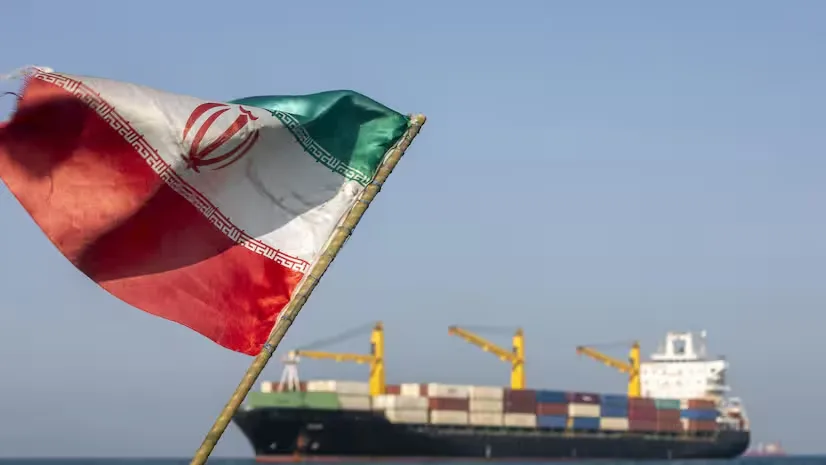
Iran has made clear that the Strait of Hormuz will remain closed until the United States accepts seven conditions agreed under an interim understanding reached in June, placing the strategic waterway at the centre of an increasingly difficult diplomatic confrontation.
Iranian Parliament Speaker Mohammad Baqer Qalibaf said on Sunday that Tehran’s position was firm and that the strait would not reopen until the conditions were fulfilled. His remarks came days after Iran received Washington’s response to a diplomatic proposal aimed at ending the confrontation.
Iranian Foreign Minister Abbas Araghchi separately said Tehran’s proposal could allow the waterway to reopen within seven days if Washington accepted its conditions. He also warned that Iran was prepared to respond if the United States returned to military action.
The message from Tehran is unmistakable: the Strait of Hormuz is no longer simply a maritime-security issue. It has become one of Iran’s principal bargaining instruments.
That creates a problem far beyond the immediate dispute between Washington and Tehran.
The strait is one of the world’s most important energy corridors. Before the conflict disrupted shipping, roughly one-fifth of global oil and liquefied natural gas shipments passed through the waterway. Prolonged disruption therefore carries consequences for energy markets, shipping costs and economies far beyond the Middle East.
Iran understands that leverage.
By linking reopening to diplomatic concessions, Tehran is attempting to transform control over maritime access into political leverage. Washington, meanwhile, faces the challenge of balancing pressure on Iran with the economic consequences of keeping one of the world's critical energy routes closed.
That makes the current stalemate particularly difficult to resolve.
Iran's conditions are tied to commitments Tehran says Washington must fulfil under the June interim understanding. The broader Iranian proposal has included an end to hostilities, the lifting of the US naval blockade on Iranian ports, the release of frozen Iranian funds and relief from sanctions on Iranian oil exports.
Washington has shown little willingness to accept the Iranian package in its current form.
US President Donald Trump has previously rejected Tehran’s proposal as insufficient, while continuing to signal that negotiations remain possible. The gap between the two positions has therefore remained substantial.
The danger is that the longer the strait remains closed, the more economic pressure will accumulate on both sides.
Iran is already under severe pressure from sanctions and the disruption of its energy exports. Maintaining the closure therefore comes with costs for Tehran as well. But Iranian leaders appear to believe that controlling access to Hormuz gives them leverage that economic pressure alone cannot provide.
For Washington, reopening the waterway is strategically important but accepting Tehran’s conditions could be seen as rewarding the use of maritime disruption as a negotiating tool.
That creates a classic bargaining dilemma.
If the United States makes major concessions simply to restore shipping, Iran could conclude that closing the strait is an effective method of extracting concessions. If Washington refuses to compromise, the economic damage from prolonged disruption could spread across global energy markets.
Neither option is attractive.
The wider regional conflict makes the calculation even more complicated.
The Houthis have also targeted maritime routes around the Red Sea and Bab el-Mandeb, creating pressure at another major shipping chokepoint. With both ends of the broader Middle Eastern maritime network facing disruption, shipping companies and energy traders are confronting a security environment in which alternative routes are becoming increasingly important but also more expensive.
The consequences are already being felt in energy markets. Gulf producers have been unable to maintain normal export flows amid the continuing conflict, while OPEC+ has faced uncertainty over future production and export capacity.
The Strait of Hormuz therefore represents more than a narrow dispute over navigation.
It is a test of whether geopolitical pressure can be converted into control over global economic flows.
For Iran, the strategy offers obvious advantages. Tehran does not need to dominate global energy markets to create disruption. It only needs to demonstrate that a critical waterway cannot operate normally without an agreement acceptable to Iran.
For the United States and its allies, that possibility is deeply uncomfortable.
A permanent precedent in which Iran can condition the reopening of Hormuz on political concessions would alter the strategic calculation around the Gulf. It could also encourage other states and non-state actors to view maritime chokepoints as instruments of geopolitical bargaining.
That is why the diplomatic route remains the least dangerous option.
The alternative is escalation.
Iranian officials have repeatedly warned that they are prepared to respond to further military action. Washington, for its part, retains substantial military capabilities in the region and has continued to apply economic pressure on Tehran.
A confrontation around Hormuz could therefore move rapidly from economic coercion to military escalation.
The irony is that both sides have an interest in avoiding that outcome.
Iran needs economic relief and access to international trade. The United States and its partners need secure maritime routes and stable energy supplies.
That overlap creates the basis for diplomacy, even if neither side currently appears ready to abandon its leverage.
The real question is whether Washington and Tehran can separate the immediate need to reopen the waterway from their much larger disputes over sanctions, Iran’s nuclear programme and regional security.
Until they do, Hormuz will remain more than a strait.
It will remain a pressure point capable of influencing energy markets, military calculations and diplomatic decisions far beyond the waters between Iran and Oman.
Iran has discovered that the most powerful bargaining chip may not be its missiles or nuclear programme, but the ability to decide when one of the world’s most important waterways opens again.