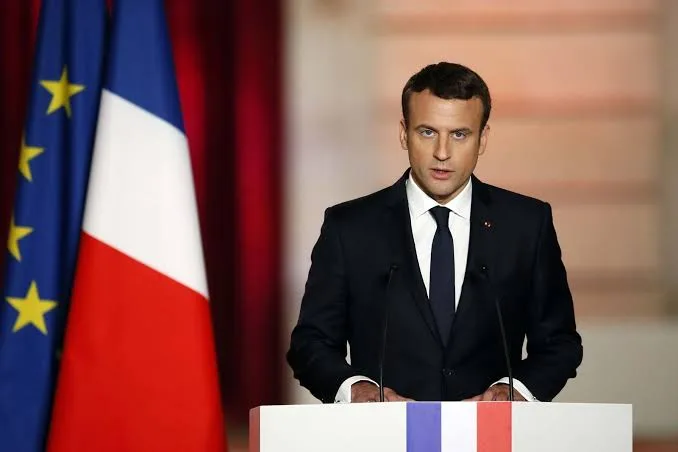
French President Emmanuel Macron has rejected the resignation of Interior Minister Laurent Nuñez following a weekend of violent unrest that exposed serious weaknesses in the government’s preparations for nationwide protests. The decision keeps the minister responsible for internal security in office while placing him under pressure to explain how demonstrations escalated into widespread rioting, arson and looting across the country.
Nuñez submitted his resignation on Sunday, October 18, after violence accompanying demonstrations against rising living costs and deteriorating public services left public buildings damaged, businesses ransacked and a historic town hall in Limoges devastated by fire. The Élysée Palace confirmed on Monday that Macron had refused the offer, citing the need to maintain continuity in the leadership of France’s police and security forces during the crisis.
The president has instructed Nuñez to establish what went wrong and rapidly introduce new operational measures to prevent further violence. The decision reflects the government’s immediate priority: restoring public order without creating an additional leadership vacuum at a moment of heightened political tension.
A crisis of security and political authority
The rejection of Nuñez’s resignation comes as Macron faces mounting criticism over the government’s handling of the protests. The demonstrations began with student grievances over inadequate school facilities, teacher shortages and deteriorating educational conditions before expanding into a wider expression of anger over inflation, public spending and the cost of everyday life.
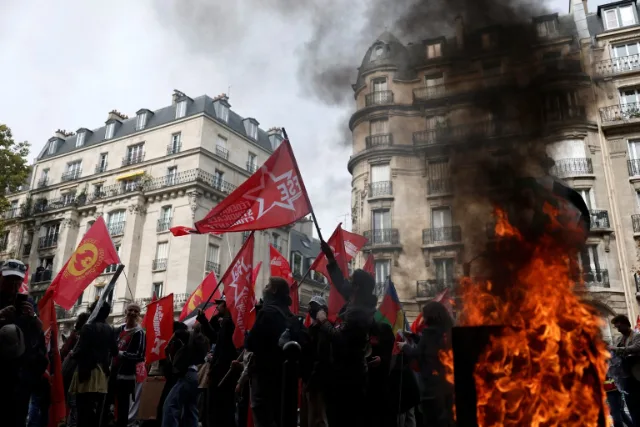
Saturday’s mobilisation drew large crowds across France. While many demonstrators marched peacefully, violent groups clashed with police, set fires, vandalised buildings and looted commercial premises. Paris, Marseille, Lyon and Limoges were among the cities affected.
Authorities reported approximately 2,400 arrests nationwide during the initial wave of unrest, with further confrontations occurring in Paris and Marseille on Sunday. The destruction of the Limoges town hall, a historic civic building, became one of the most visible symbols of the violence.
The scale of the disorder has raised questions about whether intelligence services and police commanders adequately anticipated the risks. Macron acknowledged failures in planning and intelligence and demanded transparency over the decisions that preceded the violence.
Those questions are now central to Nuñez’s political position. By refusing his resignation, Macron has preserved ministerial continuity but also made clear that the interior minister must deliver answers and changes to the security response.
Why Macron wants Nuñez to remain
The president’s decision suggests that an immediate change of leadership would be unlikely to help stabilise the situation. The interior minister oversees the national police, security coordination and the administrative machinery responsible for responding to public disorder. Replacing him during an active crisis could complicate command arrangements and delay decisions on the deployment of security forces.
The Élysée has therefore prioritised continuity while requiring a review of the failures that allowed the violence to spread. Nuñez has been tasked with developing new approaches to deal with looting and violent groups, alongside measures to establish what went wrong in the preparation for the demonstrations.
The distinction is important. Macron has not dismissed the concerns that prompted the resignation offer; he has chosen to address them through an internal review and changes to operational methods rather than an immediate ministerial departure.
Nuñez must now demonstrate that the security apparatus can respond more effectively to future demonstrations while respecting the right to peaceful protest. The government also faces questions about whether existing intelligence assessments, coordination between police units and decisions on preventive measures were adequate for the scale of the mobilisation.
The findings could have consequences beyond the interior minister himself, particularly if the review identifies broader weaknesses in planning or coordination.
Government faces pressure over the protests
Macron’s refusal to accept Nuñez’s resignation has not ended criticism of the government. Opposition politicians have questioned its preparedness, while local officials and business representatives have demanded stronger measures to prevent further attacks on shops and public infrastructure.
The unrest has also exposed the difficulty of separating the grievances that brought people onto the streets from the violence that followed. Student groups, trade unions and activists have raised concerns about education, living costs and public services. Those demands have attracted support beyond the original student movement.
The government has condemned the destruction while insisting that peaceful demonstrators should not be equated with those responsible for arson and looting. Macron has called for political dialogue involving parties, trade unions, student organisations and local authorities to address the social demands behind the mobilisation.
However, critics have argued that the president has yet to offer sufficiently concrete measures to address those concerns. For them, restoring order alone will not resolve the pressures that brought so many people into the streets.
The government must therefore pursue two objectives simultaneously: prevent further violence and respond to the economic and institutional frustrations driving the protests. A security response without a credible political response could leave the underlying tensions unresolved.
Economic damage adds urgency
The destruction has also created an immediate economic challenge. Retailers and other businesses have reported damage and looting, while commercial organisations have warned of substantial losses and disruption.
Prime Minister Sébastien Lecornu was due to chair an interministerial crisis meeting on Monday covering economic and commercial issues, insurance and judicial follow-up. The discussions are intended to assess the damage, coordinate assistance and ensure that those responsible for criminal acts are investigated.
The authorities must also determine how affected businesses can resume operations and how public buildings can be secured against further attacks. The destruction in Limoges illustrates the cost of the unrest beyond the immediate confrontation between demonstrators and police.
For Nuñez, the economic consequences reinforce the urgency of restoring security. But the government’s response will also be judged by whether it can prevent a recurrence without escalating tensions with peaceful protesters.
The political consequences for Macron
By keeping Nuñez in office, Macron has chosen institutional continuity over an immediate concession to calls for ministerial accountability. The move gives the interior minister an opportunity to oversee the response and demonstrate that lessons are being learned, but it also ties the government’s credibility more closely to the outcome.
If further violence occurs or the review exposes major failures, pressure for changes in the security leadership could intensify. Conversely, improved coordination and a sustained reduction in disorder would give the government greater room to pursue political dialogue.
The crisis also arrives amid growing political competition ahead of France’s 2027 presidential election. Opposition parties are likely to use the unrest to challenge the government’s record on public order, economic policy and the provision of public services.
Yet the protests cannot be understood solely through their political consequences. The original grievances concern the everyday conditions facing students, workers and households, and those issues will remain even after the immediate security emergency subsides.
Macron’s refusal to accept Nuñez’s resignation is therefore a decision to manage the crisis from within the existing government rather than signal a change of direction through a ministerial departure. Its success will depend on whether the authorities can establish what failed, prevent renewed violence and provide a credible response to the concerns that fuelled the demonstrations.
For now, Nuñez remains in office with a clear mandate to reform the security response. The government’s next test is whether it can restore public confidence while ensuring that the legitimate right to protest is protected and the destruction witnessed across France is not repeated.