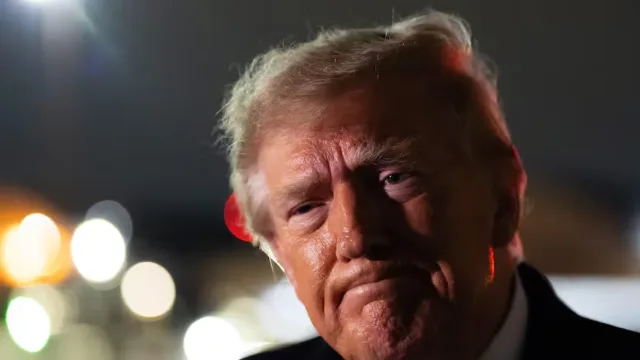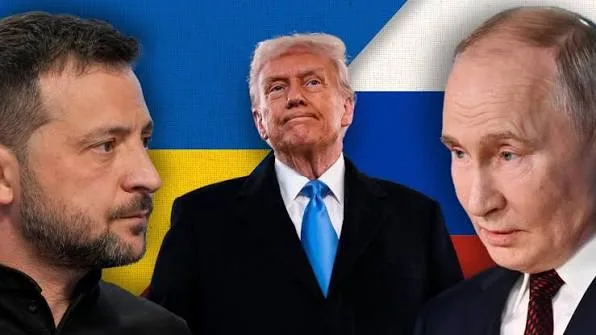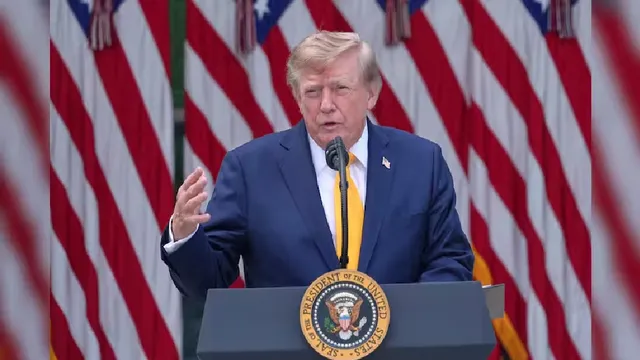
The relationship between US President Donald Trump and Ukrainian President Volodymyr Zelensky is deteriorating as disagreements over the war with Russia increasingly turn into a crisis of trust between Washington and Kyiv. A series of American policy decisions, including easing sanctions on Russian energy exports and pressing Ukraine to halt attacks on Russian oil facilities, has intensified concerns in Kyiv that the United States is prioritising its own economic and diplomatic objectives over Ukraine’s security.
The dispute has grown beyond competing views on how to end the war. Ukrainian officials are increasingly concerned about the reliability of American intelligence, military assistance and satellite communications, all of which remain important to Ukraine’s ability to defend itself against Russian missile and drone attacks.
Trump, meanwhile, has criticised Zelensky over Ukrainian strikes on Russian energy infrastructure, arguing that attacks on refineries are contributing to higher fuel prices. The US president has also expressed frustration with the Ukrainian leader’s approach to negotiations, while insisting that his priority is to end the war.
The widening disagreement leaves Ukraine facing a difficult strategic calculation: how to maintain its defence against Russia while reducing its vulnerability to decisions made by an American administration whose priorities increasingly diverge from those of Kyiv.
Sanctions dispute exposes competing priorities
One of the most consequential sources of friction has been Trump’s decision to relax restrictions on Russian energy exports, including a deal permitting Russian diesel supplies. The administration has defended the move as part of an effort to ease fuel shortages and create incentives for Moscow to engage in negotiations.
Ukrainian officials see the decision differently. Zelensky has criticised the arrangement, arguing that easing economic pressure on Russia risks providing the Kremlin with additional revenue while Russian forces continue attacking Ukrainian cities and infrastructure. The decision has also attracted criticism from American lawmakers concerned that sanctions relief could weaken Washington’s leverage over Russian President Vladimir Putin.
Reuters
+1
The disagreement reflects a fundamental difference in priorities. For Trump, lowering energy costs and securing a negotiated end to the war are increasingly prominent objectives. For Kyiv, restricting Russia’s ability to finance its military campaign remains central to any strategy that could produce a durable settlement.
These objectives are not necessarily incompatible, but they create tension when Washington pursues immediate economic relief or diplomatic engagement through measures Ukraine believes could strengthen its adversary.
The dispute has become more serious because it is accompanied by pressure on Ukraine to stop attacking Russian refineries and other energy facilities. Kyiv views such operations as a means of weakening Russia’s war economy, particularly while Moscow continues striking Ukrainian power infrastructure.
An energy ceasefire neither side fully trusts
Trump’s announcement of an energy ceasefire between Russia and Ukraine added another layer of uncertainty. The US president presented the arrangement as an immediate step towards reducing attacks on energy infrastructure, but the announcement caught Kyiv and Moscow by surprise, with neither side having clearly confirmed an agreed framework in advance.
Zelensky initially indicated that Ukraine was prepared to respect a halt to attacks on energy facilities. However, Ukrainian officials subsequently argued that Russia continued striking Ukrainian infrastructure, undermining the basis for restraint.
Kyiv has therefore resisted accepting restrictions that it believes would leave its own energy system exposed while limiting its ability to retaliate against Russian targets. The dispute illustrates the difficulties of securing a ceasefire when the parties disagree over its terms, monitoring arrangements and consequences for violations.
ABC17NEWS
+1
For Ukraine, the central concern is that an informal understanding announced by Washington could become a constraint on its military operations without providing equivalent protection against Russian attacks. For the Trump administration, however, continued Ukrainian strikes risk complicating negotiations with Moscow and undermining efforts to bring the conflict to an end.
Without a mutually accepted framework and credible mechanisms for verifying compliance, the ceasefire initiative risks becoming another source of mistrust rather than a foundation for diplomacy.
Intelligence sharing and satellite communications raise alarm
The most immediate security concern for Kyiv is whether the deterioration in political relations could affect the American support on which Ukraine’s defence depends.
Zelensky has said Ukraine received no advance warning from international partners before a series of Russian ballistic missile strikes targeting infrastructure in Kyiv. Ukrainian officials have stressed that early warnings can give civilians time to seek shelter and allow military forces to prepare air defences.
The absence of warnings has raised questions about intelligence coordination with Washington, although the precise reasons for the reported gaps have not been conclusively established. American officials have disputed suggestions that intelligence cooperation has been deliberately suspended, and the circumstances surrounding individual warning failures remain important to establishing what happened.
The Guardian
+1
Concerns have also emerged over disruptions affecting satellite communications used by Ukrainian forces. Starlink connectivity has become an important part of Ukraine’s military communications infrastructure, supporting coordination between units operating across the battlefield. Any interruption can create operational difficulties, particularly when forces depend on rapid communication to coordinate movements and respond to attacks.
The Starlink system is operated by SpaceX, while the more secure Starshield service is subject to US government control. Disagreements over responsibility for reported disruptions have added to the uncertainty, with the Trump administration denying that it deliberately restricted support in the manner alleged by some Ukrainian officials.
Taken together, the intelligence and communications disputes have reinforced a broader concern in Kyiv: even if Washington does not formally withdraw its support, changes in the availability, timing or reliability of assistance could materially affect Ukraine’s ability to defend itself.
Zelensky adopts a more confrontational approach
For much of Trump’s second presidency, Zelensky has had to balance public diplomacy with the need to preserve American military and political backing. That has often required careful language, particularly when disagreements with the White House threatened to disrupt assistance.
His recent statements suggest a more direct approach. Zelensky has criticised the US-Russia energy arrangement and warned that Washington siding with Moscow would constitute a historic mistake. He has also welcomed a stronger European role in efforts to end the war, signalling that Kyiv wants alternatives if American policy becomes less dependable.
At a European summit in Belgium, Zelensky praised European leaders as “real leaders”, a remark widely interpreted as an indirect criticism of Trump. The language reflects a shift from attempting to manage disagreements quietly towards publicly highlighting the consequences of American decisions for Ukraine’s security.
ABC17NEWS
+1
That approach carries risks. Public confrontation could make cooperation with Washington more difficult, particularly if Trump interprets Zelensky’s criticism as an obstacle to his diplomatic objectives. Yet remaining silent could also leave Ukraine vulnerable to policy changes that directly affect its military position.
Zelensky’s challenge is to defend Ukraine’s interests without allowing the dispute to become so personal that practical cooperation becomes impossible.
Europe prepares for a larger role
The deterioration in US-Ukraine relations has increased the importance of European support. European governments have rallied around Zelensky and signalled their willingness to take a more prominent role in diplomacy, financial assistance and Ukraine’s long-term security.
However, replacing American capabilities would be difficult. Europe can provide substantial financial resources, weapons and training, but it remains dependent on the United States for certain intelligence, satellite and advanced military capabilities. Developing independent alternatives will require investment, coordination and time.
European leaders also face difficult choices over the level and duration of support they can sustain. Maintaining Ukraine’s defence while managing domestic economic pressures and political disagreements will test the cohesion of the European response.
For Kyiv, a stronger European role offers a means of reducing dependence on Washington, but it cannot provide an immediate substitute for every form of American assistance. The most effective outcome would be a more resilient system of support in which European contributions expand without an abrupt loss of US capabilities.
Moscow benefits from uncertainty among Ukraine’s allies
The widening rift between Washington and Kyiv creates opportunities for Moscow, even without a formal change in American policy. Uncertainty over sanctions, intelligence sharing and military assistance can complicate Ukrainian planning and encourage Russia to test whether Western support is weakening.
The Kremlin has an incentive to exploit differences between Ukraine and its partners, particularly if it believes the United States may prioritise a diplomatic agreement over maintaining pressure on Russian forces. Sanctions relief could also provide economic benefits to Moscow, depending on the scope and duration of the measures.
That does not mean every American decision is intended to favour Russia. The Trump administration argues that economic incentives and direct negotiations can help bring the war to an end. But the effectiveness of that approach will depend on whether Moscow responds with meaningful concessions rather than using negotiations to consolidate its position.
A settlement that leaves Ukraine exposed to renewed Russian aggression would not resolve the underlying security problem. Equally, a prolonged conflict without a credible diplomatic path would continue to impose severe human and economic costs.
The central challenge is therefore to ensure that negotiations do not weaken Ukraine’s defensive position before there is an enforceable agreement capable of protecting it.
A crisis of confidence with consequences for the war
The Trump-Zelensky dispute is no longer simply a disagreement between two presidents over negotiating tactics. It concerns the reliability of the alliance supporting Ukraine’s defence, the role of economic pressure in diplomacy and the conditions under which a ceasefire could become sustainable.
For Washington, the task is to demonstrate that pursuing negotiations with Moscow does not require abandoning the security interests of its Ukrainian partner. For Kyiv, it is to preserve essential American cooperation while building stronger European support and maintaining its capacity to defend against Russian attacks.
The coming months will test whether both sides can separate their political disagreements from the practical requirements of managing the war. Clearer arrangements for intelligence sharing, reliable military communications and a mutually understood approach to energy infrastructure could help reduce the uncertainty.
Without those safeguards, mistrust could become a strategic liability in its own right. Ukraine would have to plan not only for Russian military action but also for the possibility that crucial external support might change with little warning.
The future of the relationship will ultimately depend on whether Washington and Kyiv can agree on what a viable peace requires—and whether their differences can be managed without undermining Ukraine’s ability to survive the war.