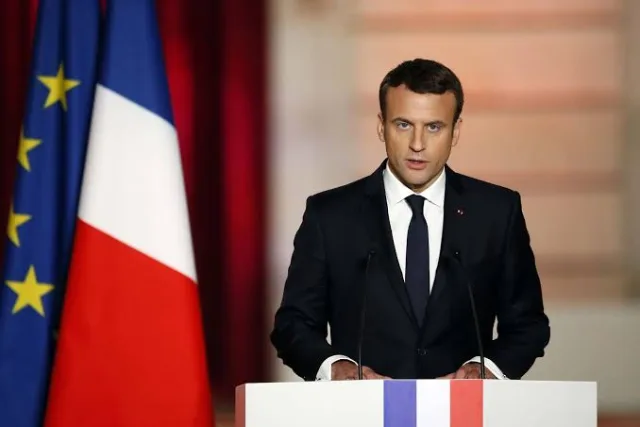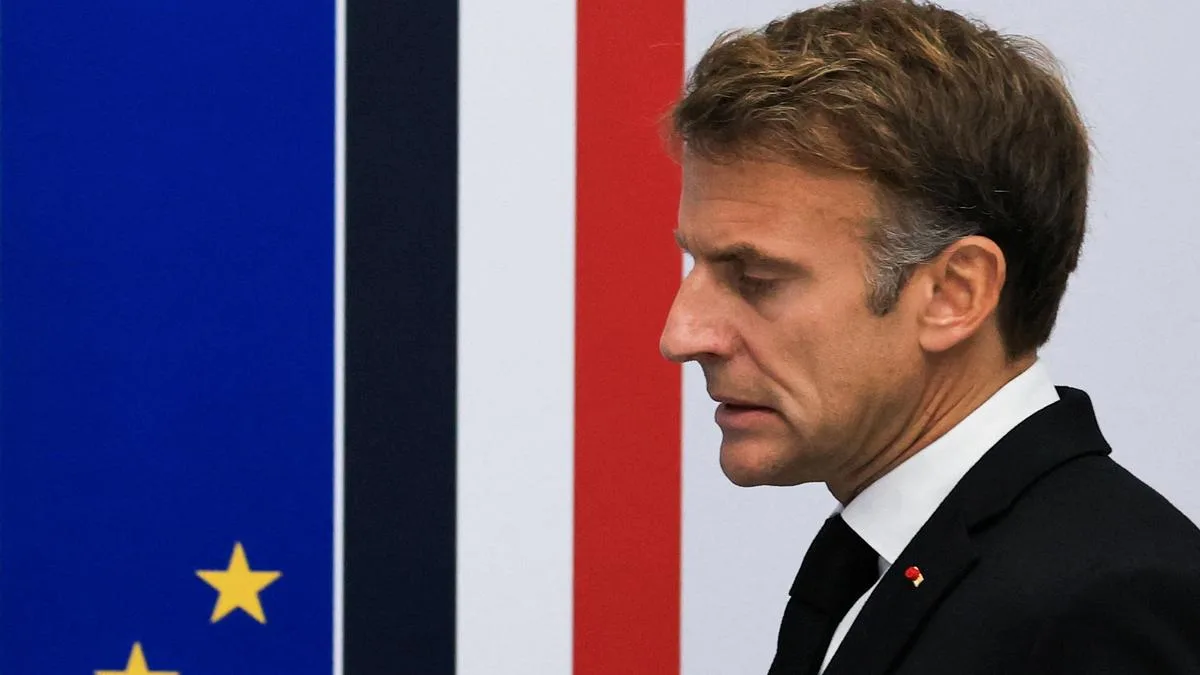
French President Emmanuel Macron has acknowledged serious failures in the authorities’ preparations for a wave of violent protests but has refused to accept the resignation of Interior Minister Laurent Nuñez, as the government faces mounting pressure to restore order across the country.
The Élysée Palace said on Monday, October 19, that Macron had rejected Nuñez’s resignation, submitted a day earlier, because maintaining a continuous chain of command within the security forces was essential during the crisis.
The president has instructed the interior minister to ensure transparency over shortcomings in planning and intelligence-gathering that contributed to the violence. He has also called for new operational methods to help security forces respond more effectively to looting and violent disturbances.
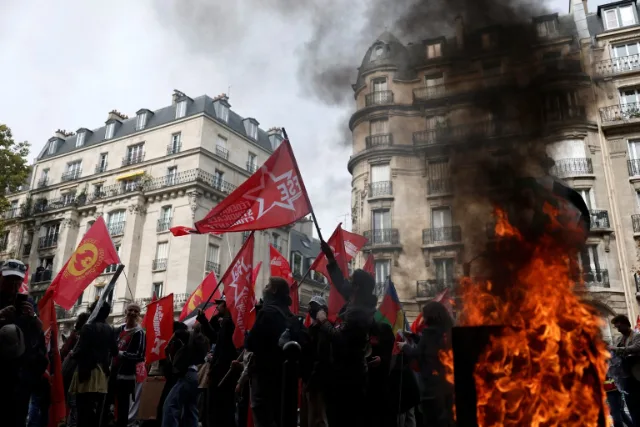
The decision comes after demonstrations against the rising cost of living, high fuel prices and broader social inequality escalated into some of the worst urban unrest France has experienced in years. Nearly 2,400 people were arrested and almost 1,000 police officers and gendarmes were injured, according to figures released by the Interior Ministry.
Nuñez admits police lost control
Nuñez acknowledged on Monday that police had lost control of the situation in parts of the country during the weekend’s disturbances. He said he had offered to resign because he felt responsible for what had happened.
His admission followed criticism of the authorities’ preparations and response, with opposition politicians questioning whether the government had adequately anticipated the scale and intensity of the demonstrations.
Macron also conceded that authorities had failed in their anticipation and intelligence work. By refusing to dismiss Nuñez, however, the president has opted to keep the minister in place while demanding a review of how the security operation was planned and executed.
The government’s immediate challenge is to prevent further violence without allowing the response to undermine the right to peaceful protest.
The demonstrations brought together students, workers, retirees, farmers, climate activists and trade unionists, reflecting a broad range of grievances about France’s economic and social outlook. While many gatherings were peaceful, groups of mostly young men, many wearing masks, clashed with police, looted shops and set fire to public and private property.
One of the most serious incidents occurred in Limoges, where the historic city hall was set ablaze. The destruction of the building became a prominent symbol of the damage caused during the unrest.
Government considers local curfews
Prime Minister Sébastien Lecornu has called on local authorities to consider imposing limited, geographically targeted curfews to prevent further rioting and looting.
Speaking after a crisis meeting on Monday, Lecornu said restoring order was an absolute priority and warned that the government could consider declaring a state of emergency if necessary. For the moment, however, he suggested that localized curfews would be more appropriate to the situation.
The measures would give local authorities greater scope to restrict movement in areas where officials believe further violence is likely, while avoiding an immediate nationwide emergency response.
Marseille has already announced a ban on gatherings and demonstrations between noon and 8 p.m. on Monday. Nuñez was expected to visit the southern port city later in the day.
The unrest also affected public life in Paris. Students blocked entrances to the Louvre in solidarity with the protesters, while union representatives said the museum would remain closed. Students also blockaded the Sciences Po university in the French capital.
Despite the disruption, the government said there were no plans to cancel Paris Saint-Germain’s Champions League home match against Barcelona scheduled for Tuesday.
Protest movement draws on wider discontent
The demonstrations were organized in part by activists seeking to revive the momentum of France’s 2018–2019 Yellow Vest movement, which challenged Macron’s government over fuel taxes, living costs and perceptions of economic unfairness.
The latest protests have similarly brought together people dissatisfied with the cost of everyday necessities and the country’s broader social and economic direction. Rising fuel prices have been a prominent concern, alongside frustration over public services and inequality.
France’s CGT trade union estimated that around 500,000 people took part in the nationwide mobilization. The Interior Ministry said 60,000 police officers and gendarmes had been mobilized ahead of the protests, including 5,000 in Paris, after an initial report gave a much lower national deployment figure.
The scale of the operation and the subsequent violence have raised questions about whether the deployment was sufficient, how police resources were distributed and whether intelligence agencies correctly assessed the threat posed by groups intent on causing disorder.
Those questions are likely to become central to the government’s review of the response.
Political divisions deepen over the violence
The unrest has intensified an already polarized political debate, with parties on the left and right offering sharply different interpretations of the demonstrations and their causes.
Jean-Luc Mélenchon, leader of the left-wing France Unbowed party, attended the Paris rally and criticized media coverage that focused heavily on the violence. He argued that the disorder should not obscure the fact that many participants had demonstrated peacefully.
Marine Le Pen, a leading figure on the far right, accused Mélenchon of legitimizing violence and contributing to political instability. Jordan Bardella, leader of the National Rally, blamed far-left groups for the destruction and argued that their actions discredited legitimate social demands.
Benoît Payan, the left-wing mayor of Marseille, also condemned those who used the protests as an opportunity to destroy property and attack police. He argued that social grievances could not justify assaults or damage to public institutions.
The competing responses illustrate the difficulty facing the government: separating the grievances of peaceful demonstrators from the actions of those involved in arson, looting and clashes with law enforcement.
Pressure on Macron’s government
Macron’s refusal to accept Nuñez’s resignation keeps the interior minister responsible for managing the security response while placing him under direct pressure to demonstrate that the government has learned from the failures.
The president must also address criticism from opponents who argue that the authorities were unprepared, while avoiding measures that could further inflame public anger.
The proposed curfews and changes to policing tactics may help contain immediate disorder, but they will not resolve the economic concerns that brought large numbers of people into the streets.
For the government, the crisis therefore has two distinct dimensions: restoring public safety and rebuilding confidence among citizens who believe that rising costs and deteriorating services have gone inadequately addressed.
The immediate priority is to prevent another wave of violence and protect public institutions, businesses and residents. The longer-term test will be whether the authorities can respond to the protesters’ underlying concerns while maintaining public order and political legitimacy.