Ukraine and Europe face an uncomfortable strategic reality: they cannot afford to let their differences with US President Donald Trump become a lasting break in transatlantic cooperation. Their concerns about Washington’s changing approach to Russia are substantial, but the military and diplomatic costs of losing American support would be even more consequential.
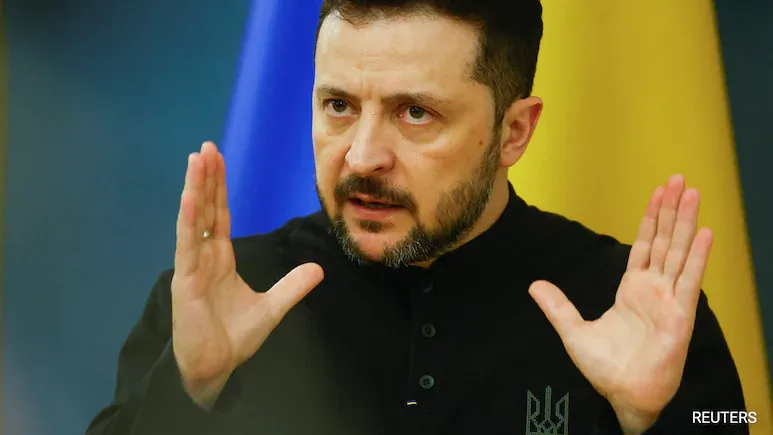
The latest tensions over a US-Russia diesel arrangement, sanctions relief for Moscow and uncertainty surrounding American military assistance have deepened doubts about Washington’s commitment to Kyiv. Ukrainian President Volodymyr Zelensky has openly criticised decisions that he believes could benefit Russia, while European leaders have reaffirmed their support for Ukraine.
The dispute comes at a dangerous moment. Russia continues to attack Ukrainian cities and critical infrastructure, placing additional pressure on air defences and the country’s ability to protect its energy system ahead of winter. Ukraine needs reliable intelligence, weapons, ammunition and financial assistance. Europe can provide substantial support, but it cannot immediately replace every American capability.
That reality makes engagement with Trump a strategic necessity rather than an endorsement of his approach to Russia. Kyiv and European capitals must preserve their access to Washington while building the capacity to withstand future shifts in American policy.
Washington’s Uncertainty Has Real Consequences
The relationship between Trump and Zelensky has repeatedly been strained by disagreements over how to end the war and what concessions, if any, Ukraine should make. The latest dispute has intensified concerns that Washington could reduce pressure on Moscow while expecting Kyiv to accommodate an American-led diplomatic initiative.
The reported US-Russia diesel arrangement and the easing of planned sanctions have become symbols of that uncertainty. From Kyiv’s perspective, economic concessions to Moscow risk weakening the pressure intended to persuade Russia to end its war. European governments share concerns that a settlement reached without credible safeguards could leave Ukraine exposed to renewed aggression.
The military implications are immediate. Ukraine relies on American intelligence to detect incoming Russian missiles and support its defensive operations. US weapons and equipment also remain important to its ability to sustain the fight. Even a temporary interruption can create operational difficulties when Russian attacks continue.
On October 18, Zelensky said US intelligence-sharing with Ukraine had resumed after a temporary halt. He welcomed the restoration but warned that other American decisions, including measures affecting Russia-related sanctions, could undermine Ukraine’s position.
The episode illustrates the vulnerability created by dependence on a partner whose policy can change quickly. It also demonstrates why a complete rupture would be dangerous: the consequences would extend beyond diplomatic relations into the practical conduct of the war.
Trump’s approach may be driven by his preference for negotiated deals, domestic economic priorities and a desire to maintain channels with Russian President Vladimir Putin. Whatever the motivations, Ukraine and Europe must assess American policy through its effects rather than assume that Washington’s long-term strategic commitments will remain unchanged.
Europe Has Become Indispensable, but It Is Not a Substitute for America
European governments have substantially expanded their support for Ukraine and assumed a larger share of the financial and military burden. Their assistance has helped Kyiv sustain its resistance, while European institutions have continued to advance Ukraine’s closer integration with the continent.
But increased responsibility does not automatically translate into the ability to replace the United States.
Europe still faces significant limitations in the supply of advanced air-defence systems, interceptors, intelligence capabilities and other military resources required for a prolonged conflict. Its defence industries need time to increase production, and European governments must balance support for Ukraine against their own military requirements.
The challenge is particularly acute in air defence. Protecting Ukrainian cities and energy infrastructure against waves of missiles and drones requires a sustained supply of interceptors, sophisticated surveillance and reliable intelligence. European contributions are important, but replacing American capabilities across these areas would be difficult in the short term.
The same applies to satellite communications and battlefield intelligence. European countries possess valuable capabilities of their own, yet the continent does not have a fully equivalent replacement for every American system on which Ukraine depends.
This imbalance should not be interpreted as evidence that Europe cannot support Ukraine. It means that European strategic autonomy remains a long-term project rather than an immediate solution to the current war.
Europe therefore has two simultaneous responsibilities. It must continue supporting Ukraine with the resources available today, while investing in the industrial capacity and technological systems needed to reduce its dependence on Washington tomorrow.
Treating these objectives as alternatives would be a mistake. Immediate support is necessary to preserve Ukraine’s position; long-term investment is necessary to make European policy less vulnerable to changes in the White House.
The Cost of Waiting for American Politics to Change
Some European policymakers may hope that Trump's current approach to Russia will become less consequential after the US midterm elections or as domestic political calculations evolve. Such an outcome is possible, but it cannot form the foundation of European security planning.
Elections can change political incentives without guaranteeing a change in foreign policy. Even if congressional pressure constrains the administration, Ukraine cannot assume that American military support will return to a predictable pattern.
The risk is that Europe could postpone difficult decisions while waiting for a more favourable political environment in Washington. Ukraine’s military requirements, however, are immediate. Its financial needs extend beyond the next few months, while the expansion of European defence production will require sustained investment and political agreement.
European governments must therefore plan for several possibilities: continued US assistance, a more conditional American role or a significant reduction in support. Preparing for these scenarios is not an act of hostility towards Washington. It is a necessary response to uncertainty.
This preparation should include expanding ammunition production, improving air-defence capacity, strengthening intelligence cooperation and creating more predictable mechanisms for financing Ukraine. It should also involve closer coordination among European governments so that differences over spending and national priorities do not undermine collective support.
The objective should be to make Ukraine’s defence more sustainable, regardless of the direction of American politics.
Diplomacy Must Not Become a Substitute for Deterrence
Trump has presented himself as a president capable of negotiating an end to the war. A diplomatic settlement would be welcome if it produced a durable end to the fighting and credible protections against renewed Russian aggression.
But negotiations alone cannot guarantee those outcomes.
Russia has continued military operations while diplomatic initiatives have proceeded. Moscow’s rejection or limited acceptance of proposed arrangements has repeatedly complicated efforts to secure even partial understandings. Any agreement that leaves Ukraine unable to defend itself could create the conditions for another conflict rather than deliver lasting peace.
This is why European and Ukrainian leaders must distinguish between keeping diplomatic channels open and accepting a settlement on unfavourable terms. Working with Trump does not require Kyiv to abandon its security interests, nor does it require Europe to endorse every American concession to Moscow.
Instead, diplomacy must be supported by a credible military position. Ukraine needs sufficient capabilities to defend its territory, while European governments must be prepared to sustain assistance if negotiations fail. Sanctions policy also needs to remain connected to clearly defined objectives rather than become a series of concessions without measurable changes in Russian behaviour.
The challenge is to keep negotiations viable without allowing the desire for a rapid agreement to override the conditions required for a durable one.
Ukraine’s Future Is European, but Its Immediate Security Is Transatlantic
Ukraine’s long-term future is closely linked to European institutions, economic integration and security cooperation. Membership of the European Union, or a deeply integrated relationship with the bloc, could offer Kyiv a stronger economic foundation and a clearer political direction.
Yet European integration cannot solve Ukraine’s immediate military problems. Accession takes time, while the war requires daily decisions about weapons, air defence, intelligence and financing.
The European Union must therefore avoid confusing its long-term strategic role with its present military limitations. Supporting Ukraine’s future integration and sustaining its defence are connected goals, but they require different tools and operate on different timelines.
At the same time, Washington should recognise that a Europe capable of defending itself and supporting Ukraine would strengthen the broader transatlantic relationship. European investment in defence production and military readiness should not be viewed merely as a response to American unpredictability. It can help distribute the security burden more sustainably.
For Ukraine, the immediate priority is to maintain access to American assistance while broadening its sources of support. For Europe, it is to continue helping Kyiv without assuming that Washington will always fill the gaps. For the United States, a durable settlement requires more than pressure on Ukraine to compromise; it requires an approach that addresses the security consequences of Russia's continued aggression.
Cooperation Without Illusions
Ukraine and Europe have little choice but to work with Trump because the United States retains capabilities that neither can replace quickly. But cooperation must be accompanied by realism about the limits of American reliability and the risks of a policy centred on short-term deals.
Kyiv should preserve dialogue with Washington even when public disagreements become sharp. European leaders should use their influence to explain why sustained support for Ukraine serves broader security interests, while avoiding a confrontation that would further narrow their options.
At the same time, Europe must accelerate the investments needed to make its support more dependable. Strategic autonomy will not be achieved through declarations or summit statements. It will depend on industrial output, military readiness, intelligence capacity and the political willingness to finance long-term security.
The central lesson is that engagement with Trump and greater European independence are not competing strategies. They are complementary necessities. The former addresses Ukraine’s immediate dependence on American power; the latter reduces the danger that future changes in Washington could leave Europe and Kyiv exposed.
Neither approach guarantees a favourable outcome. But a strategy built on diplomatic engagement, sustained military support and greater European capacity offers a more credible path than either unconditional reliance on Washington or an abrupt attempt to replace it.
The war has made clear that Europe can no longer treat its security as something guaranteed by geography or inherited alliances. Ukraine’s survival remains closely tied to American capabilities, while Europe’s long-term security depends on its willingness to build more of its own.
Working with Trump is therefore not a choice between principle and pragmatism. It is a recognition that, in the current strategic environment, protecting Ukraine requires both.