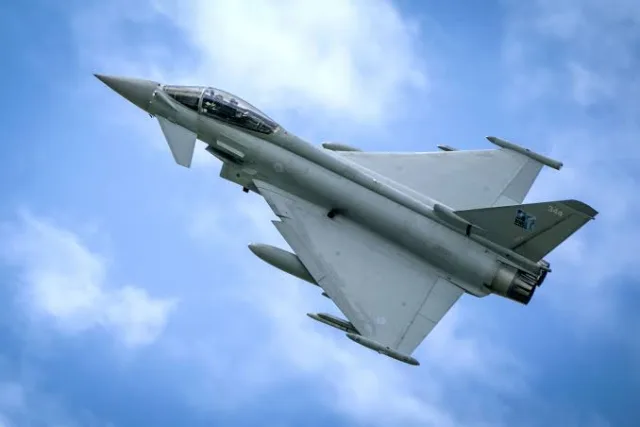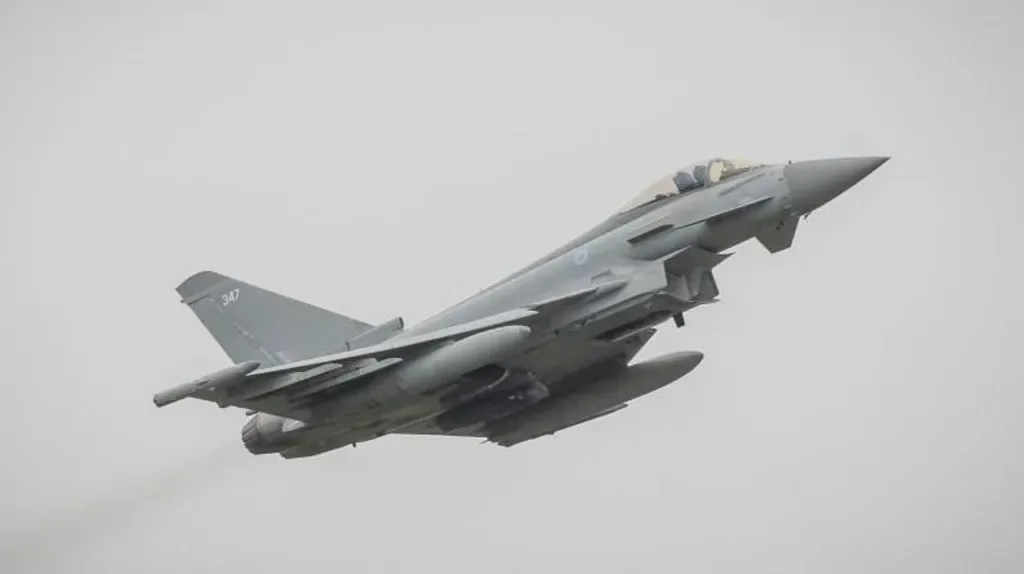
The United Kingdom has announced plans to deploy Royal Air Force (RAF) Typhoon jets to Saudi Arabia in response to increasing Houthi missile and drone attacks. The decision, authorised by Prime Minister Andy Burnham, is intended to help defend Saudi cities and infrastructure against aerial attacks by the Iran-backed group.
The Houthi attacks have escalated in recent months, with the group targeting Saudi Arabia's capital, Riyadh, as well as energy sites on the country's coast. Since September, Saudi Arabia has struggled to defend its skies from Houthi attacks, following the breakdown of a ceasefire in Yemen.
Defence Secretary Wes Streeting stated that the RAF Typhoon jets will operate in a defensive role and will not conduct offensive strikes against the Houthis. The UK will also deploy military advisers and an RAF A400M transport aircraft to support the movement of defence equipment within Saudi Arabia.
The Houthi attacks have resulted in significant casualties, with Saudi authorities reporting that 19 people have been killed in recent attacks on the kingdom's airports. A missile strike on Riyadh's international airport on 10 October killed 13 people and injured 308 others, marking the deadliest attack in Saudi Arabia in over a decade.
The conflict in Yemen has been ongoing since 2014, when the Houthis ousted the internationally recognised government from the capital, Sanaa. The Houthis have been retaliating against strikes on territory they control in western Yemen, including the capital Sanaa.
The UK's decision to deploy RAF Typhoon jets to Saudi Arabia is seen as a significant development in the conflict. The UK warplanes will not only help Saudi Arabia defend its skies but will also free up the country's own aircraft to carry out offensive strikes against the Houthis.
In addition to the deployment of RAF Typhoon jets, the UK is also providing Saudi Arabia with defence support equipment to protect against aerial attacks and air-to-air refuelling for defensive Saudi operations. The refuelling has been extended by 90 days.
The situation in the region remains volatile, with the Houthis vowing to continue their operations against Saudi Arabia. The conflict has disrupted energy supplies and increased costs for families and businesses, with Defence Secretary Wes Streeting highlighting the need for further UK military support to address the situation.
The Houthi movement, officially known as Ansar Allah, is a Shia Islamist rebel group that has been involved in the conflict in Yemen since the early 2000s. The group's primary objective is to establish an Islamic state in Yemen, with a focus on promoting Shia Islam and opposing Western and Saudi influence in the region.
The UK's involvement in the conflict is seen as a significant development, with the deployment of RAF Typhoon jets marking a major escalation in the country's military support for Saudi Arabia. The situation in the region remains complex, with multiple parties involved and competing interests at play.
Background on the Houthi Movement
The Houthi movement has its roots in the early 2000s, when the group's founder, Hussein al-Houthi, led a rebellion against the Yemeni government. The group's ideology is based on Shia Islam, with a focus on promoting the rights of the Shia minority in Yemen.
The Houthis have been involved in multiple conflicts with the Yemeni government and Saudi Arabia, with the group seizing control of the capital, Sanaa, in 2014. The conflict has resulted in significant humanitarian suffering, with thousands of civilians killed or displaced.
The UK's decision to deploy RAF Typhoon jets to Saudi Arabia is seen as a major development in the conflict, with the potential to significantly impact the balance of power in the region. The situation remains volatile, with the Houthis vowing to continue their operations against Saudi Arabia.
As the conflict continues to escalate, the international community is calling for a peaceful resolution to the crisis. The UK's involvement in the conflict is seen as a significant development, with the potential to shape the outcome of the conflict and promote stability in the region.
In conclusion, the UK's deployment of RAF Typhoon jets to Saudi Arabia marks a significant escalation in the country's military support for the kingdom. The situation in the region remains complex, with multiple parties involved and competing interests at play. The international community is calling for a peaceful resolution to the crisis, with the UK's involvement seen as a major development in the conflict.